
Key Takeaways
- Steel is available in many types and grades — each with unique properties (hardness, ductility, corrosion resistance, weldability).
- Understanding steel grades helps you choose the right material for construction, structural work, fabrication, or decorative projects.
- Common categories include carbon steels, alloy steels, stainless steels, tool steels — each suited for different needs.
- Factors like strength, toughness, corrosion resistance, cost, weldability, and machining requirements influence selection.
- Matching steel type to project demands helps ensure safety, durability, performance, and cost‑effectiveness.
Steel is one of the most widely used materials in engineering, construction, manufacturing, and fabrication — but not all steel is the same. Each “type” or “grade” of steel has a unique chemical makeup and mechanical behavior that makes it suitable (or unsuitable) for specific applications.
Choosing the correct steel type affects:
- Strength and durability of a structure
- Corrosion resistance in harsh environments
- Weldability and machinability during fabrication
- Cost efficiency and long-term performance
- Safety and compliance with engineering requirements
Whether you’re designing machinery, building a structure, or fabricating functional components, understanding these steel distinctions ensures your project performs as intended.
What Does “Steel Type” Mean?
“Steel type” or “steel grade” refers to the chemical formula, microstructure, and mechanical performance of a steel alloy.
Below are the key variables that determine how steel behaves:
-
Carbon content and alloying elements
The more carbon steel contains, the harder and stronger it becomes — but at the expense of ductility and weldability. Additional alloying elements like chromium, nickel, molybdenum, vanadium, and manganese modify properties such as corrosion resistance, strength at high temperatures, and toughness.
-
Heat treatment or tempering method
Processes like normalizing, annealing, quenching, or tempering change steel’s microstructure, affecting hardness, strength, and brittleness. Heat treatment allows manufacturers to tune the steel for specific performance needs.
-
Corrosion or weather resistance
Some steels resist rust naturally (stainless steel), while others must be coated or painted. Weathering steels (like Corten) purposely form a protective rust layer in outdoor environments.
-
Mechanical properties: yield strength, tensile strength, ductility, hardness, toughness
These determine how steel reacts to stress, impact, bending, and long-term fatigue. For example, high-tough steels resist cracking, while high-hardness steels resist wear.
-
Fabrication characteristics: weldability, machinability, formability
Different steels respond differently to fabrication processes. Some steels bend or weld easily, while others crack or warp without special handling.
Understanding these variables is essential for selecting the right steel for structures, tools, machinery, and load-bearing components.
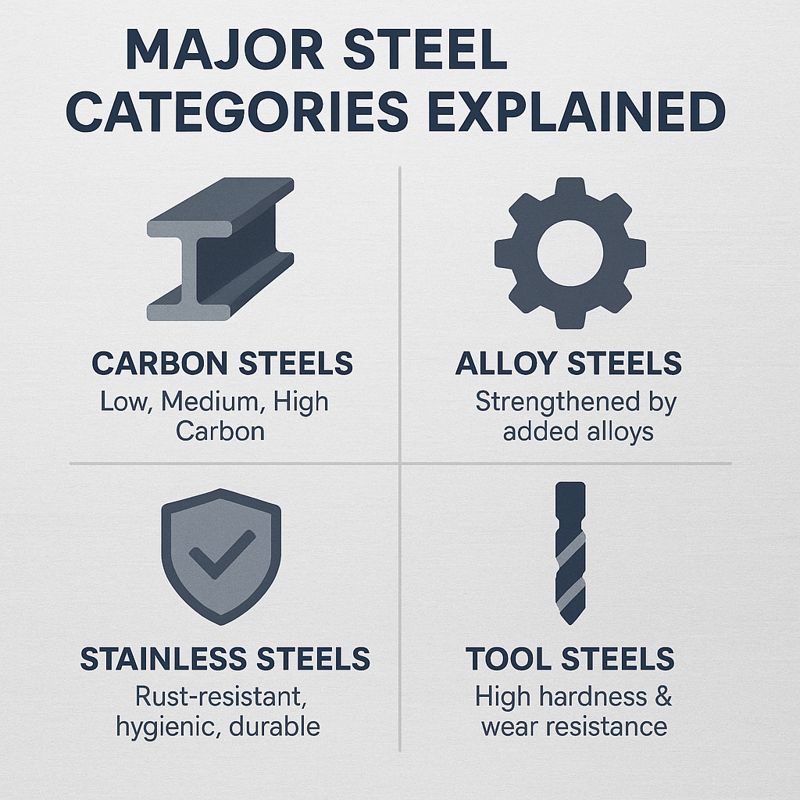
Major Categories of Steel Types & Typical Uses
Each steel category below includes full descriptions explaining how the steel behaves and why it’s used for certain applications.
1. Carbon Steels (Low, Medium, High Carbon)
Carbon steel contains primarily iron and carbon, with minimal alloying elements. Its properties depend heavily on carbon content.
Low-Carbon Steel (< 0.25% carbon)
Low-carbon steels are soft, ductile, and highly workable. They bend, cut, and weld easily and are the most affordable steel type. Because of their low strength compared to other steels, they are used for general-purpose applications where heavy loads aren’t expected.
Use Cases:
- Building frames and structural beams
- Sheet metal, panels, and formed components
- Fences, gates, brackets
- General fabrication and welding projects
Medium-Carbon Steel (0.25–0.55% carbon)
Medium-carbon steels offer a strong balance of toughness, strength, and hardness. They can be heat-treated to increase durability. This makes them ideal for parts requiring higher strength than low-carbon steel but still needing ductility for shock or impact resistance.
Use Cases:
- Automotive parts like axles, gears, and crankshafts
- Railway components
- Machine parts and mechanical couplings
- Moderate-load structural applications
High-Carbon Steel (> 0.55% carbon)
High-carbon steels are very hard and strong once heat-treated. They resist abrasion and deformation but become more brittle and difficult to weld. They retain shape under heavy use, making them ideal for tools and high-stress parts.
Use Cases:
- Springs and high-tension wires
- Cutting tools, knives, and blades
- Industrial chisels and punches
- High-wear mechanical parts
2. Alloy Steels
Alloy steels incorporate additional elements that enhance performance far beyond plain carbon steel.
Low-Alloy Structural Steels
These steels offer higher strength-to-weight ratios and improved toughness. They perform better under heavy loads and high stress, making them ideal for structural projects.
Use Cases:
- Bridges and high-rise frameworks
- Structural supports under heavy load
- Cranes and lifting machinery
- Earth-moving equipment frames
Heat-Resistant / High-Temperature Alloy Steels
With added chromium, molybdenum, or nickel, these steels maintain strength when exposed to extreme temperatures. They resist scaling, oxidation, and thermal fatigue.
Use Cases:
- Boilers and pressure vessels
- Engine components and exhaust systems
- Industrial furnaces
- High-temperature piping
Wear-Resistant Alloy Steels
These steels are engineered for surfaces that experience friction and abrasion. Their hardness allows them to resist wear longer than carbon steels.
Use Cases:
- Gears and sprockets
- Mining and drilling equipment
- Crusher liners
- Heavy-duty rail components
3. Stainless Steels
Stainless steels contain enough chromium (typically ≥11–12%) to form a self-healing oxide layer that prevents rust. They’re known for durability, hygiene, and resistance to corrosion.
Austenitic Stainless Steel (e.g. 304, 316)
The most common stainless category, offering excellent corrosion resistance, good weldability, and easy fabrication. 316 has added molybdenum for superior resistance to saltwater and chemicals.
Use Cases:
- Commercial kitchens and food processing equipment
- Brewing and distilling equipment
- Architectural accents
- Marine-grade fasteners and hardware
- Chemical processing equipment
Ferritic & Martensitic Stainless Steels
Ferritic stainless steels are magnetic, moderately corrosion-resistant, and inexpensive. Martensitic stainless steels can be hardened for higher strength and wear resistance.
Use Cases:
- Automotive components
- Kitchen cutlery and tools
- Interior architectural pieces
- Industrial components requiring strength and moderate corrosion protection
Duplex Stainless Steels
These steels combine austenitic and ferritic structures, offering exceptional strength and superior stress corrosion cracking resistance. Ideal where both strength and corrosion resistance are critical.
Use Cases:
- Offshore platforms
- Chemical plants
- High-pressure pipelines
- Marine structural components
4. Tool Steels & Special Purpose Steels
Tool steels are engineered for extreme durability, wear resistance, and the ability to withstand repeated stress and high temperatures.
These steels are rich in carbon and specialty alloying elements such as tungsten, vanadium, and molybdenum. They maintain hardness even when very hot and resist deformation during cutting or impact operations.
Use Cases:
- High-speed cutting tools (HSS drill bits, saw blades)
- Dies and molds for forming metal and plastic
- Punches, chisels, scraping tools
- Industrial tooling used in manufacturing and machining
- Hot-work and cold-work forming dies
How to Choose the Right Steel Type — Key Decision Factors
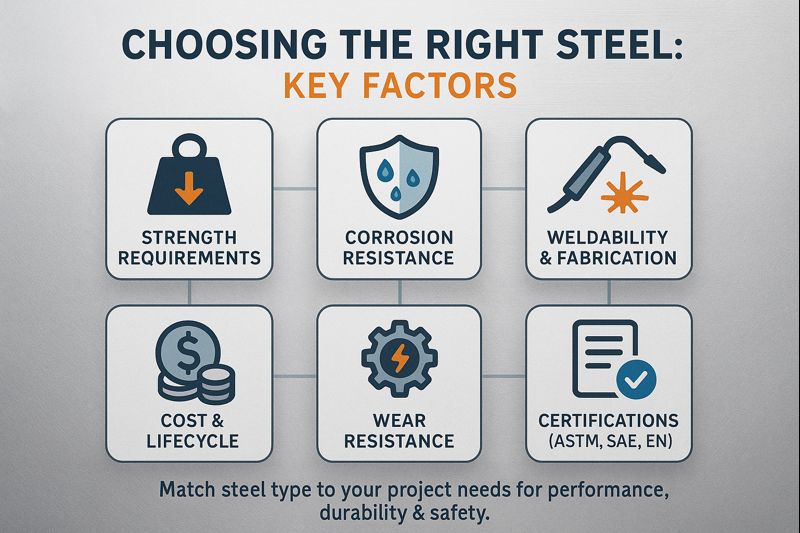
Selecting the right steel is not just about picking a material that “seems strong.” The ideal steel depends on the specific mechanical requirements, environmental conditions, fabrication methods, budget, and industry standards of your project. Below, we break down the main factors professionals consider when choosing steel for construction, manufacturing, or fabrication.
1. Strength & Load Requirements
The structural demands of your project are a primary factor in steel selection. Understanding the weight or stress your material must endure helps you choose the correct steel grade.
High Load / Heavy Structural Applications
- Use: Medium-carbon steel, high-carbon steel, alloy structural steels (e.g., 4140, S355)
- Why: These steels offer high yield and tensile strength, making them suitable for beams, columns, lifting equipment, shafts, and high-stress mechanical components. They resist bending or failure under heavy loads.
Light Load / General Construction
- Use: Low-carbon (mild) steel
- Why: Mild steel is cost-effective, easy to shape and weld, and strong enough for non-critical framing, sheet metal, and general fabrication projects.
2. Corrosion, Weather & Environmental Exposure
The location and conditions where steel will be used are crucial. Exposure to moisture, chemicals, or harsh weather can significantly affect steel longevity.
Outdoor, Moist or Marine Environments
- Use: Stainless steel (304, 316), weathering steel (Corten), corrosion-resistant alloys
- Why: These materials contain chromium, nickel, or other alloying elements that prevent rust and deterioration, making them ideal for marine structures, bridges, and chemical plants.
Indoor, Dry, or Controlled Environments
- Use: Carbon steel, standard alloy steels
- Why: When corrosion risk is minimal, these steels perform well. Coatings or paint can further extend their lifespan.
3. Weldability, Formability & Fabrication Requirements
The steel must match your intended fabrication methods, whether welding, forming, machining, or precision shaping.
For Welding, Bending, Rolling, or Forming
- Use: Low-carbon (mild) steel, ductile alloy steels
- Why: Low-carbon steels resist cracking during welding and can be bent or formed without losing structural integrity.
For Precision Machining or Hardened Components
- Use: Tool steels (H13, D2, O1), hardened alloy steels
- Why: These steels maintain hardness, resist deformation, and allow for tight tolerances during machining, making them perfect for wear parts, molds, and dies.
4. Durability & Wear Resistance
For applications involving friction, impact, or repeated use, wear-resistant steels prevent premature failure.
High-Wear Components (gears, bearings, shafts)
- Use: Alloy steels (4140, 4340), tool steels, case-hardened steels
- Why: These steels combine hardness and toughness, preventing wear or surface damage over time.
Decorative or Light-Duty Structural Parts
- Use: Stainless steel, mild steel
- Why: These steels offer good appearance and sufficient strength without the higher cost of hardened alloys.
5. Cost, Availability & Lifecycle Considerations
Budget is important, but long-term value should be prioritized over upfront costs.
Premium Steels
- Examples: High-grade stainless, alloy, and tool steels
- Pros: Longer lifespan, superior corrosion and wear resistance, lower long-term maintenance costs
- Ideal for: Marine structures, heavy-duty machinery, food-grade or chemical environments
Economical Steels
- Examples: Carbon and mild steels
- Pros: Low cost, widely available, easy to fabricate
- Cons: May require protective coatings or more frequent maintenance
- Ideal for: General construction, indoor components, fabrication projects
6. Compliance, Certification & Standards
Engineering projects often require certified steel to meet safety, legal, or architectural standards.
Common Certification Systems:
- ASTM (U.S. structural standards)
- SAE/AISI (composition-based grades)
- EN (European standards)
- JIS (Japanese standards)
Why: Certified steel ensures predictable performance, traceability, and approval for structural and industrial applications.
Steel Grades — Understanding the Letters and Numbers
Steel grades encode crucial information about composition, mechanical properties, and intended applications. Knowing how to read these designations can prevent costly mistakes when ordering steel for construction, fabrication, or machining.
1. Carbon / Structural Steels
Common examples: A36, A500, S275
A36 Steel
- Type: Mild structural steel
- Properties: Minimum yield strength of 36 ksi (~250 MPa), good weldability
- Typical Uses: Beams, plates, columns, and general structural projects
- When to Choose: Standard construction, framing, and general fabrication
A500 Steel
- Type: Cold-formed welded structural tubing
- Properties: Good strength-to-weight ratio, ductile, easy to fabricate
- Typical Uses: Structural tubing for buildings, industrial frameworks
S275 Steel (EN Standard)
- Type: European structural steel
- Properties: Minimum yield strength of 275 MPa, moderate strength, good weldability
- Typical Uses: General-purpose structural applications in Europe
2. Stainless Steels
Common examples: 304, 316, 430
304 Stainless Steel
- Type: Austenitic stainless
- Properties: Excellent corrosion resistance, non-magnetic, easy to fabricate
- Typical Uses: Food service, kitchen equipment, indoor/outdoor construction
- Why Choose: Ideal for general-purpose applications where corrosion resistance is needed
316 Stainless Steel
- Type: Austenitic with molybdenum
- Properties: Superior corrosion resistance, especially against chlorides
- Typical Uses: Marine environments, chemical exposure, coastal structures
- Why Choose: For harsh environments or saltwater contact
430 Stainless Steel
- Type: Ferritic, magnetic
- Properties: Moderate corrosion resistance, more affordable than 304
- Typical Uses: Kitchen surfaces, trim, appliances
- Why Choose: Cost-effective option for decorative or indoor applications
3. Alloy / High-Strength Steels
Common examples: 4140, 4340, EN S355
4140 Steel
- Type: Chromium-molybdenum alloy steel
- Properties: High toughness, good fatigue resistance, heat-treatable
- Typical Uses: Shafts, gears, tooling components, automotive parts
4340 Steel
- Type: Nickel-chromium-molybdenum alloy steel
- Properties: Higher toughness and hardenability than 4140, strong under dynamic loads
- Typical Uses: Aerospace components, heavy-duty machinery, high-stress mechanical parts
S355 (EN Standard)
- Type: High-strength structural steel
- Properties: High yield strength, good weldability, versatile for European construction
- Typical Uses: Structural beams, columns, bridges, and heavy fabrication projects
4. Tool Steels
Common examples: H13, D2, O1
H13 Steel
- Type: Hot-work tool steel
- Properties: Resists thermal fatigue and softening at high temperatures
- Typical Uses: Hot stamping dies, extrusion dies, forging tools
D2 Steel
- Type: High-carbon, high-chromium cold-work tool steel
- Properties: Extremely wear-resistant, excellent dimensional stability
- Typical Uses: Dies, cutting tools, industrial knives
O1 Steel
- Type: Oil-hardening tool steel
- Properties: Excellent edge retention, easy to machine and heat-treat
- Typical Uses: Blades, punches, chisels, general tooling requiring hardness
Key Takeaways
- Letters usually indicate the steel type or standard (A = ASTM, S = Structural, H = Hot-work tool steel).
- Numbers often indicate strength, yield, or alloy composition.
- Choosing the right grade depends on load requirements, environmental exposure, fabrication methods, and wear resistance.
Understanding these designations helps ensure your steel choice is fit for purpose, durable, and cost-effective.
Common Mistakes & Misconceptions When Choosing Steel
1. Assuming “stainless steel = always best”
Many believe stainless is universally superior, but it’s often unnecessary—and expensive—for structural parts that aren’t exposed to corrosion. Stainless can also be harder to machine, adding fabrication cost. In many applications, galvanized or coated carbon steel performs just as well at a fraction of the price.
2. Selecting high-carbon or tool steel for welded or structural applications
High-carbon steels (and especially tool steels) can become brittle when welded or thermally cycled. They may crack in the heat-affected zone, require complex preheat/postheat procedures, or produce unreliable joints. These steels are intended for wear resistance or hardness—not load-bearing structures.
3. Ignoring environmental factors such as humidity, salt exposure, or water hardness
Corrosion is heavily influenced by the environment. Plain carbon steel used outdoors, near saltwater, or in wash-down facilities can rust quickly without protection. Even stainless steel grades vary—304 may pit in chloride environments where 316 is needed. Overlooking these factors leads to premature failure and costly replacements.
4. Overlooking fabrication and processing requirements
Some steels are easy to work with; others are notoriously difficult. Certain alloys quickly damage tooling, require slow feeds/speeds, or need specialized cutters. Others warp during heat-treating or distort under welding. Failing to consider machinability, weldability, formability, or heat-treat behavior can significantly inflate labor and production costs.
5. Focusing only on upfront material cost
A lower-priced steel may seem economical at first, but frequent maintenance, painting, corrosion repair, or early replacement often makes it more expensive in the long run. Correct steel selection balances purchase price with lifecycle cost, performance, and reliability.
6. Assuming all steels behave the same under load
Different steels have different yield strengths, ductility, impact toughness, and fatigue resistance. Using a steel with insufficient strength—especially in dynamic or cyclic-loading applications—can lead to bending, cracking, or catastrophic failure.
7. Neglecting certification or traceability requirements
For critical applications (construction, food service, pressure vessels, etc.), traceability is mandatory. Using uncertified or mis-labeled steel can result in rejected parts, safety risks, or regulatory violations.
Practical Tips for Working With Steel
1. Always verify mill test reports (MTRs) and grade certificates
This confirms chemical composition, mechanical properties, and heat number. It helps ensure compliance with build specifications and reduces the risk of using substandard or substituted material.
2. Use weld-friendly steels for structural or load-bearing components
Look for steels with good weldability (e.g., A36, A572, 1018, 1020). If welding high-strength steels, follow proper preheat/postheat procedures and use compatible filler metals to avoid brittleness and cracking.
3. Protect plain carbon steel used outdoors
Use galvanizing, powder-coating, epoxy paint, or weathering steel (like COR-TEN) when corrosion is a concern. Even indoor applications in damp or chemical-exposed environments benefit from added protection.
4. Consider machinability when selecting materials for precision parts
Some tool steels and high-strength alloys require carbide tooling, coolant systems, or slower speeds. For tight tolerances, choose steels with stable heat-treat characteristics to minimize distortion during processing.
5. Choose steels with appropriate toughness and corrosion resistance for variable environments
Applications involving temperature swings, impact loads, or weather exposure need steels with good toughness (e.g., low-alloy steels like 4140, or stainless grades like 304/316). For marine or food-grade environments, select corrosion-resistant alloys specifically engineered for those conditions.
6. Plan for heat treatment early in the design process
Understand how the steel responds to quenching, tempering, or annealing. Some steels achieve excellent strength after heat-treating; others are air-quenched or oil-quenched. Heat treatment can also change machinability and dimensional stability.
7. Communicate requirements clearly to suppliers and fabricators
Specify grade, finish, thickness, tolerance, certification needs, and any post-processing. Precise communication reduces errors, delays, and cost overruns.
10-Step Checklist for Choosing the Right Steel
Selecting the right steel is about more than strength—it’s about matching the material to the project’s technical, environmental, and economic demands. Use this step-by-step guide to ensure your steel choice is safe, durable, and cost-effective.
1. Identify Project Requirements
Start by clearly defining the purpose of the steel in your project. Will it carry structural loads, resist wear, endure dynamic impact, or serve a decorative purpose? Will it be exposed to moisture, chemicals, or high temperatures? Knowing these requirements upfront prevents costly mis-specification.
Example: Structural beams for a warehouse need different steel than cutting tools or decorative panels.
2. Match Steel Grade to Application
Each steel grade is optimized for certain uses. Selecting the correct grade ensures performance and longevity.
- Structural steel (like A36, S275): Ideal for beams, columns, and general framing.
- Corrosion-resistant steel (304/316 stainless, weathering steel): Best for outdoor or marine applications.
- Tool or high-strength steel (4140, D2, H13): Necessary for wear resistance, high hardness, or precision machining.
3. Consider Environmental and Exposure Conditions
Environmental factors directly impact corrosion and material degradation. Consider moisture, salt, chemicals, UV exposure, and temperature variations. Even strong steel can fail prematurely if used in a harsh environment without proper protection.
Solution Options:
- Stainless or alloy steel for high-corrosion areas
- Galvanizing or protective coatings for mild steel
- Weathering steel for outdoor structures exposed to rain
4. Check Fabrication & Processing Requirements
The steel must be compatible with your fabrication methods: welding, bending, rolling, machining, or heat treatment. Some steels are harder to work with due to high carbon or alloy content. Choosing an unnecessarily difficult steel can increase labor costs, slow production, and risk defects.
Example: Mild steel is preferred for easy welding, whereas tool steel requires specialized heat treatment and tooling.
5. Review Long-Term Cost, Not Just Purchase Price
Upfront cost is important, but total lifecycle cost often matters more. Consider maintenance, coatings, repairs, replacements, and downtime. Sometimes investing in a more expensive, durable steel reduces long-term expenses.
Example: Stainless steel may cost more initially but avoids frequent repainting or corrosion repairs in outdoor projects.
6. Verify Certification, Traceability, and Spec Compliance
Always request mill test reports (MTRs), grade certificates, or other documentation to confirm the steel meets required specifications. Certified steel ensures predictable performance and compliance with legal, engineering, or architectural standards.
Standards to Check: ASTM, SAE/AISI, EN, JIS
7. Plan for Protection and Finishing
If the steel will be exposed to moisture, chemicals, or UV, incorporate protective finishes from the design stage. This can include galvanizing, powder coating, painting, or using inherently weather-resistant alloys. Pre-planning finishes prevents future corrosion issues and reduces maintenance.
8. Choose Steel with Suitable Toughness, Strength, and Ductility
Steel should not just be hard—it must withstand dynamic loads, impacts, vibrations, or temperature fluctuations without cracking. Assess the balance between hardness, tensile strength, and ductility for your application.
Example: Shafts in machinery need toughness to avoid brittle fracture under sudden loads.
9. Communicate Requirements Clearly to Supplier or Fabricator
Provide clear specifications including: steel type, grade, finish, required certifications, tolerances, and intended use (load, wear, environment). Clear communication ensures the supplier delivers the correct material and reduces the risk of mistakes.
10. Reassess During Design Changes or Repurposing
If project conditions or requirements change—such as moving from indoor to outdoor use, or from structural to decorative purposes—re-evaluate steel selection. Steel appropriate for one scenario may fail in another.
✅ Key Takeaways
- Steel selection is a balance of performance, durability, cost, and compliance.
- Early planning, environmental considerations, and clear communication prevent mistakes and save long-term costs.
- Certified and documented steel ensures predictable performance, traceability, and safety.
If you’re ready to source the right steel for your next project — whether it’s structural, industrial, or rural — visit Super Steel today. With a wide range of stock from pipes, beams, sheets, to mesh and fencing materials, Super Steel offers the flexibility, variety, and expert guidance to help you choose the best material for your needs.
👉 Get in touch with Super Steel Australia now — request a quote, confirm material certifications, and secure quality steel supplies delivered fast and ready for fabrication.