
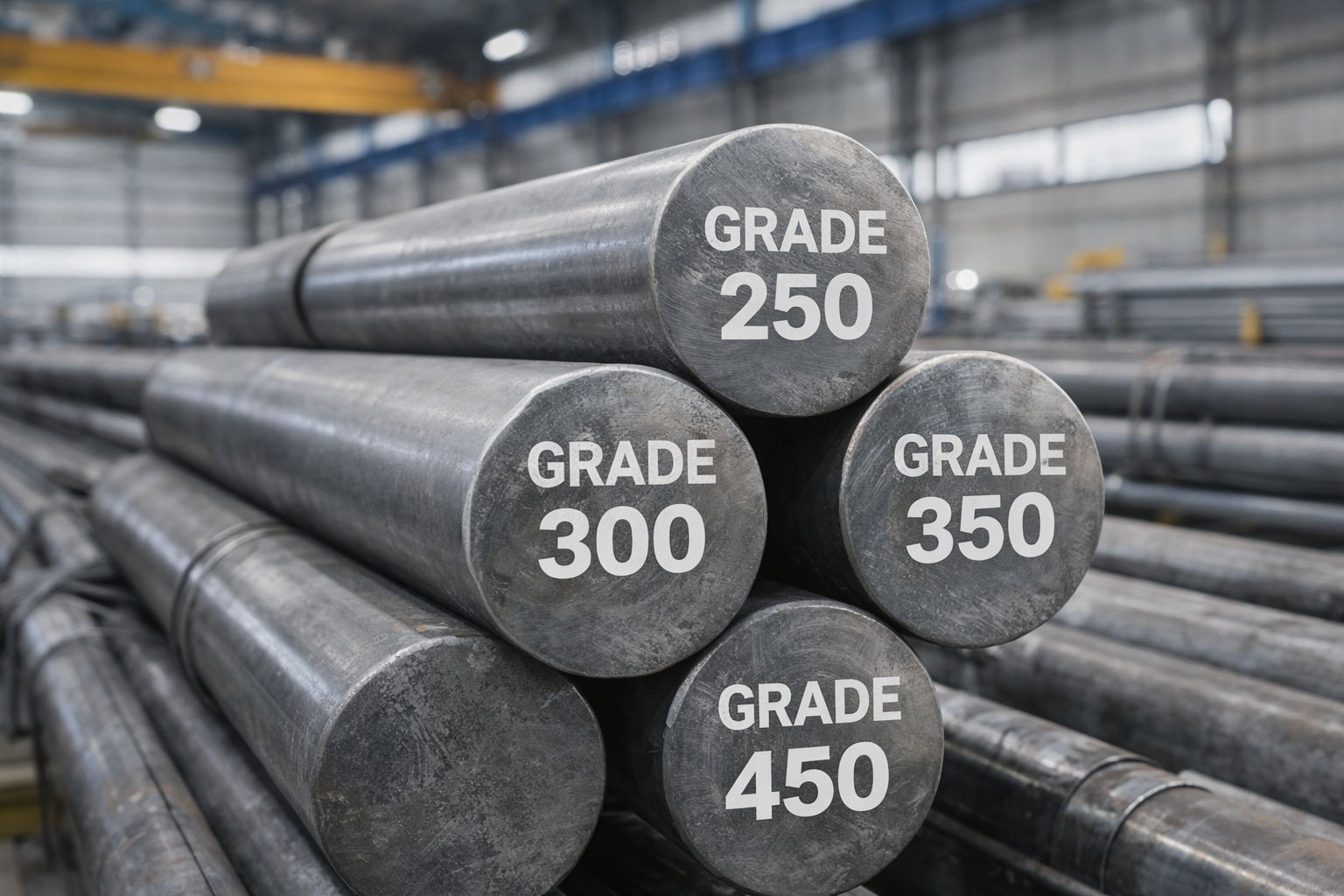
Choosing the right steel grade is one of the most important decisions in any construction, manufacturing, fabrication, or engineering project. The steel grade you select directly affects the material’s strength, durability, weldability, corrosion resistance, and overall cost. In practical terms, the right choice can improve performance, extend service life, and reduce maintenance or replacement costs over time.
On the other hand, choosing the wrong grade can lead to avoidable problems such as poor structural performance, premature corrosion, difficult fabrication, or unnecessary overspending. That is why understanding steel grades is essential for builders, fabricators, engineers, and buyers alike.
This guide explains what steel grades are, why they matter, and how to choose the best steel grade for your application. For a broader overview, you can also read our guide to different steel types.
What Are Steel Grades?
Steel grades are standardised classifications used to define the chemical composition, mechanical properties, and intended performance of a steel product. In simple terms, a steel grade tells you what the steel is made of and how it is expected to behave under different conditions.
A steel grade can indicate important characteristics such as:
- strength and hardness
- ductility and toughness
- weldability and formability
- corrosion resistance
- suitability for structural, industrial, or specialised applications
Because not all steel is the same, grades help manufacturers, engineers, and buyers choose a material that matches the technical demands of a project.
Why Steel Grades Matter
Steel may look similar across different products, but its internal composition and performance can vary significantly. Even when two steel sections appear the same size and shape, they may behave very differently depending on the grade.
Choosing the right steel grade matters because it affects:
- load-bearing performance
- resistance to wear and impact
- ease of welding, cutting, and fabrication
- performance in corrosive or outdoor environments
- compliance with industry and building standards
- overall project cost and efficiency
That is why steel grade selection should never be based on appearance alone. The correct grade must match the intended use of the steel.
What Steel Grades Tell You
A steel grade provides valuable information about how the material is likely to perform in service. Depending on the grading system, it may indicate strength, hardness, weldability, corrosion resistance, and intended application.
Strength and Hardness
Some grades are designed for high structural strength, while others prioritise machinability or flexibility. Stronger grades are often used in heavy construction and load-bearing applications.
Weldability and Formability
Certain grades are easier to cut, drill, weld, bend, or shape than others. This is particularly important in fabrication and manufacturing.
Corrosion Resistance
Some steel grades offer better resistance to rust and chemical exposure, either through alloying elements or compatibility with protective coatings such as hot-dip galvanised steel.
Intended Applications
Grades are often associated with specific uses, such as structural steel, pressure vessels, mechanical parts, pipelines, or stainless applications.
Key Factors That Define Steel Grades
Steel grades are determined by a combination of chemical composition, mechanical performance, and manufacturing method. These factors influence how the steel behaves in real-world conditions, including how strong it is, how easy it is to work with, and how well it resists corrosion or wear.
1. Chemical Composition
The elements added to steel have a major impact on its properties. Even small changes in composition can significantly affect strength, flexibility, corrosion resistance, and durability.
Key Elements in Steel
Carbon
Carbon is one of the most important elements in steel. Higher carbon content generally increases strength and hardness, but it can also reduce flexibility and make the steel more difficult to weld.
Chromium
Chromium is often added to improve corrosion resistance. It is a key element in stainless steel and helps protect the material against rust and oxidation.
Nickel
Nickel improves toughness and helps steel maintain strength under demanding conditions. It can also contribute to better corrosion resistance in certain grades.
Manganese
Manganese improves hardness, strength, and wear resistance. It is commonly used in structural and engineering steels to enhance performance under load.
Why it matters:
The chemical makeup of steel helps determine whether it is best suited for structural support, corrosion-prone environments, fabrication work, or high-wear industrial use.
2. Mechanical Properties
Steel grades are also defined by how the material performs under force or stress. These mechanical properties are critical for determining whether a steel grade is suitable for a particular project.
Important Mechanical Properties
Yield Strength
Yield strength is the maximum stress the steel can withstand before it begins to deform permanently. This is especially important in structural applications where maintaining shape under load is essential.
Tensile Strength
Tensile strength refers to the maximum load the steel can bear before it breaks. It indicates the steel’s overall strength and ability to resist failure.
Ductility
Ductility is the ability of steel to bend or stretch without breaking. This property is important in fabrication, forming, and applications where flexibility under stress is needed.
Hardness
Hardness measures the steel’s resistance to wear, indentation, and surface damage. Harder steels are often better for tooling, machinery, and heavy-duty industrial use.
3. Manufacturing Process
The way steel is processed can also affect its grade, performance, and end use. Two steels with similar chemistry may still perform differently depending on how they are manufactured and finished.
Processing Factors That Influence Steel Grade
Hot-Rolled vs Cold-Rolled
Hot-rolled steel is formed at high temperatures and is commonly used in structural applications. Cold-rolled steel is processed further for a smoother finish, tighter tolerances, and improved surface quality.
Heat-Treated vs Untreated
Heat treatment can change the hardness, strength, and toughness of steel. Treated steels are often used where higher performance is required.
Coated vs Uncoated
Protective coatings such as galvanising or zincanneal improve corrosion resistance and make steel more suitable for outdoor or exposed environments. Learn more about zincanneal sheet steel and its common uses.
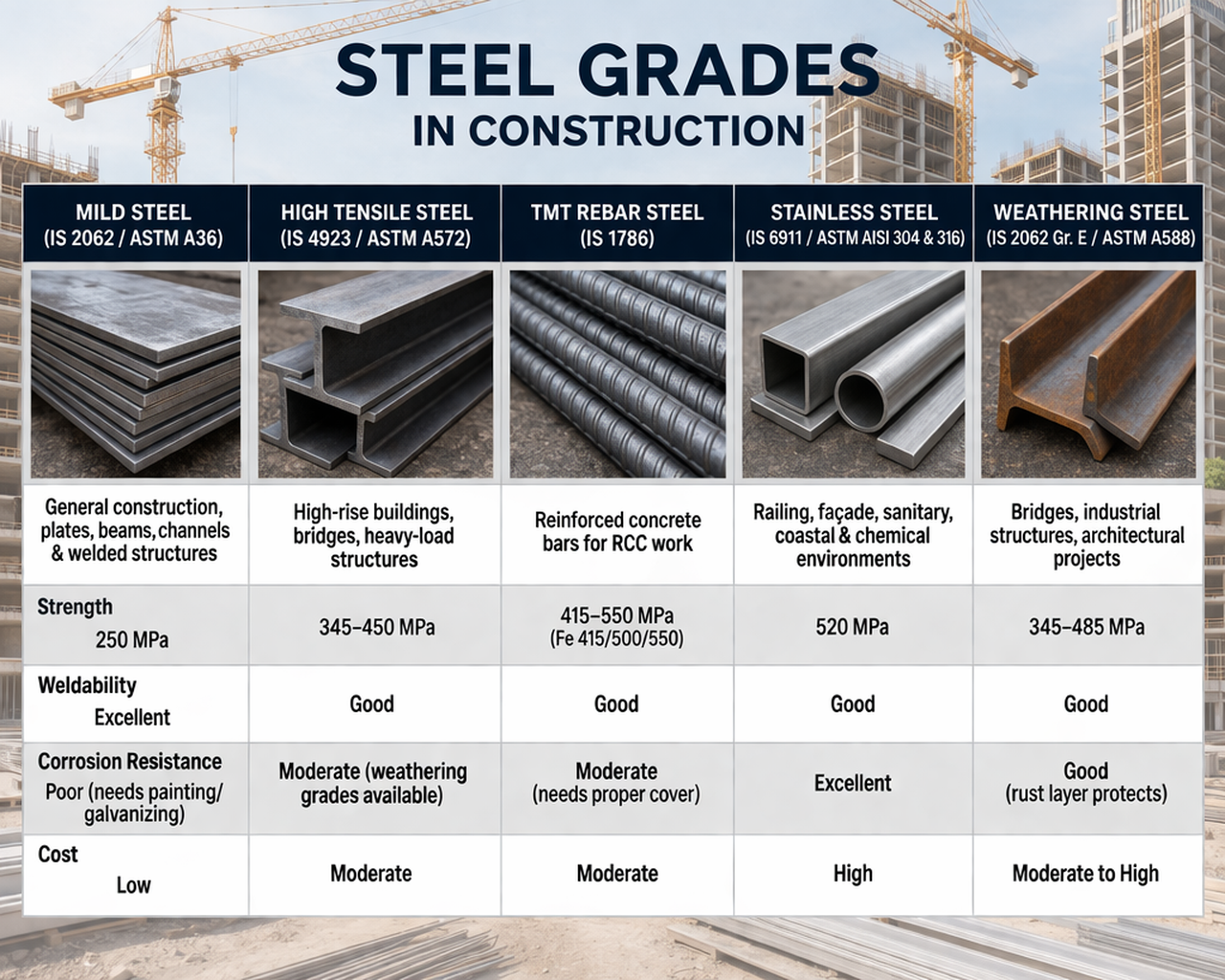
Common Steel Grades and Their Uses
Different steel grades are designed for different purposes. Below are some of the most common categories and where they are typically used.
Mild Steel
Examples: AS/NZS 3678, ASTM A36
Mild steel is one of the most widely used steel types. It has relatively low carbon content, which makes it easy to cut, weld, and fabricate.
Key Characteristics
- low carbon content
- good weldability
- easy to machine and form
- cost-effective for general use
Best For
- structural beams and columns
- general construction
- fabrication projects
- plates and flat sections
- light to medium structural work
Why it’s popular:
Mild steel is versatile, affordable, and practical for a wide range of structural and fabrication applications. You can compare it further in our guide to mild steel vs carbon steel.
High-Strength Structural Steel
Examples: AS/NZS 3679, ASTM A572
High-strength structural steel is designed for applications where greater load-bearing capacity is required. It offers higher yield strength than mild steel, allowing for improved structural performance.
Key Characteristics
- higher strength
- better performance under heavy loads
- suitable for major structural applications
- may allow more efficient structural design
Best For
- bridges
- high-rise buildings
- heavy-duty frameworks
- commercial and industrial structures
- infrastructure projects
Why it’s used:
It is ideal for projects where structural efficiency, strength, and load performance are critical. For a beginner-friendly overview, see our beginner guide to structural steel.
Stainless Steel
Examples: 304, 316
Stainless steel contains chromium, which gives it strong corrosion resistance. Some grades also include nickel and other elements to improve strength, hygiene, and durability.
Key Characteristics
- excellent corrosion resistance
- smooth, attractive finish
- hygienic and easy to clean
- strong performance in harsh environments
Best For
- marine environments
- food processing equipment
- medical equipment
- architectural applications
- chemical or corrosive settings
Tip:
Grade 316 is generally better for coastal and marine environments because it offers higher corrosion resistance than grade 304.
Galvanised Steel
Galvanised steel is coated with zinc to protect it from rust and corrosion. It is widely used where steel needs to withstand outdoor conditions without frequent maintenance.
Key Characteristics
- zinc-coated for rust protection
- well suited to outdoor exposure
- longer lifespan than untreated steel in exposed environments
- lower maintenance needs
Best For
- outdoor structures
- fencing and roofing
- agricultural applications
- sheds and rural buildings
- exposed support elements
Why it’s useful:
Galvanised steel provides a practical balance of strength, corrosion resistance, and cost-effectiveness for external use. Explore related hot-dip galvanised products or read about hot-dip galvanised steel for outdoor builds.
Tool Steel
Tool steel is a high-hardness steel designed for wear resistance, strength, and performance in demanding industrial conditions. It is typically used in precision tools and machinery components rather than general structural work.
Key Characteristics
- extremely hard and durable
- high wear resistance
- capable of retaining shape under repeated use
- suitable for cutting and shaping applications
Best For
- cutting tools
- dies and moulds
- industrial machinery components
- manufacturing tools
- high-wear applications
Why it’s used:
Tool steel is the preferred choice when strength, hardness, and wear resistance are more important than flexibility or ease of welding.
Why Matching Steel Grade to the Application Matters
Not every steel grade is suitable for every project. A steel that performs well in one environment may be the wrong choice in another.
- mild steel may be ideal for general fabrication but not for coastal exposure without coating
- stainless steel may be better in corrosive environments but more expensive than necessary for basic structural use
- high-strength structural steel may be essential for heavy loads but unnecessary for light framing
- galvanised steel may be the best choice for outdoor durability
- tool steel may be perfect for machinery parts but unsuitable for general building frames
Choosing the right grade means balancing performance, environment, fabrication needs, and cost.
How to Choose the Right Steel Grade
Choosing the right steel grade is essential for ensuring your project is safe, durable, and cost-effective. The best choice depends on how the steel will be used, the conditions it will face, and the level of performance required.
1. Define the Application
Start by clearly identifying how the steel will be used. This is the foundation of choosing the correct grade.
- Is it for structural support or load-bearing use?
- Will it be visible or decorative?
- Is it part of heavy machinery or light fabrication?
Why it matters:
Different applications require different properties. Structural projects demand strength and compliance, while decorative or fabricated uses may prioritise finish and workability.
2. Consider Load Requirements
The amount of load the steel needs to carry is one of the most critical factors.
- Higher loads require higher strength grades
- Structural applications often require certified structural steel grades
- Incorrect sizing or grading can lead to failure or overdesign
Why it matters:
Using the correct grade ensures the steel can safely handle stress without bending, deforming, or failing.
3. Evaluate Environmental Conditions
Environmental exposure plays a major role in steel performance and lifespan.
- Will the steel be exposed to rain, humidity, or moisture?
- Is it located in a coastal or industrial environment?
Recommended Solutions
- Use stainless steel for high corrosion resistance
- Use galvanised steel for outdoor applications
- Consider premium coatings such as Supergal or Zincanneal for harsh environments
Why it matters:
Ignoring environmental factors can lead to early corrosion, higher maintenance costs, and reduced lifespan.
4. Check Fabrication Requirements
Some steel grades are easier to work with than others, which can affect time, cost, and efficiency during fabrication.
- Mild steel – easy to cut, weld, and shape
- High-strength steel – stronger but harder to machine
- Specialty steels – may require specific tools or processes
Why it matters:
Choosing a grade that suits your fabrication method can reduce labour costs and improve project efficiency.
5. Balance Cost and Performance
It is important to strike the right balance between upfront cost and long-term value.
- Higher-grade steel may provide better performance, but often comes at a higher cost
- Lower-grade steel may be cheaper initially, but can require more maintenance
Best approach:
Focus on lifecycle cost, not just the purchase price. For more detail, read our steel pricing guide.
6. Ensure Compliance with Standards
Always choose steel that meets relevant local and international standards.
- AS/NZS for Australia and New Zealand
- ASTM for the United States
- EN for Europe
Why it matters:
Compliance supports structural safety, consistent material quality, successful approvals, and reduced engineering risk.
Tip: Consult a Professional
For structural or critical applications, always consult a structural engineer or experienced supplier. They can perform accurate calculations, recommend the correct grade and size, ensure compliance with standards, and optimise cost and performance.
Common Mistakes to Avoid
Avoiding these common errors can save time, money, and potential safety issues:
- Choosing steel based on price alone
- Ignoring environmental exposure
- Over-specifying and creating unnecessary cost
- Under-specifying and risking failure
- Not consulting a professional for structural applications
Quick Comparison of Common Steel Types
| Steel Type | Strength | Corrosion Resistance | Cost | Best Use |
|---|---|---|---|---|
| Mild Steel | Moderate | Low | Low | General construction |
| High-Strength Steel | High | Moderate | Medium | Structural projects |
| Stainless Steel | Moderate-High | Very High | High | Marine, food, medical |
| Galvanised Steel | Moderate | High | Medium | Outdoor use |
| Tool Steel | Very High | Low | High | Industrial tools |
Final Thoughts
Understanding steel grades is not just for engineers. It is essential knowledge for anyone working with steel in construction, fabrication, or manufacturing. The right grade ensures your project performs as expected, lasts longer, and avoids unnecessary costs.
Instead of guessing, focus on your project’s application, load requirements, environmental conditions, and fabrication needs. Taking the time to choose the right steel grade can make a significant difference in both performance and long-term value.
When in doubt, consult a professional. The right decision today can prevent costly mistakes tomorrow.
Find the Right Steel Grade for Your Project
Looking for high-quality steel products that meet industry standards and performance requirements? Super Steel Australia supplies dependable steel products for construction, fabrication, rural, and industrial projects.
Browse the steel range or contact Super Steel Australia for expert advice and a competitive quote.