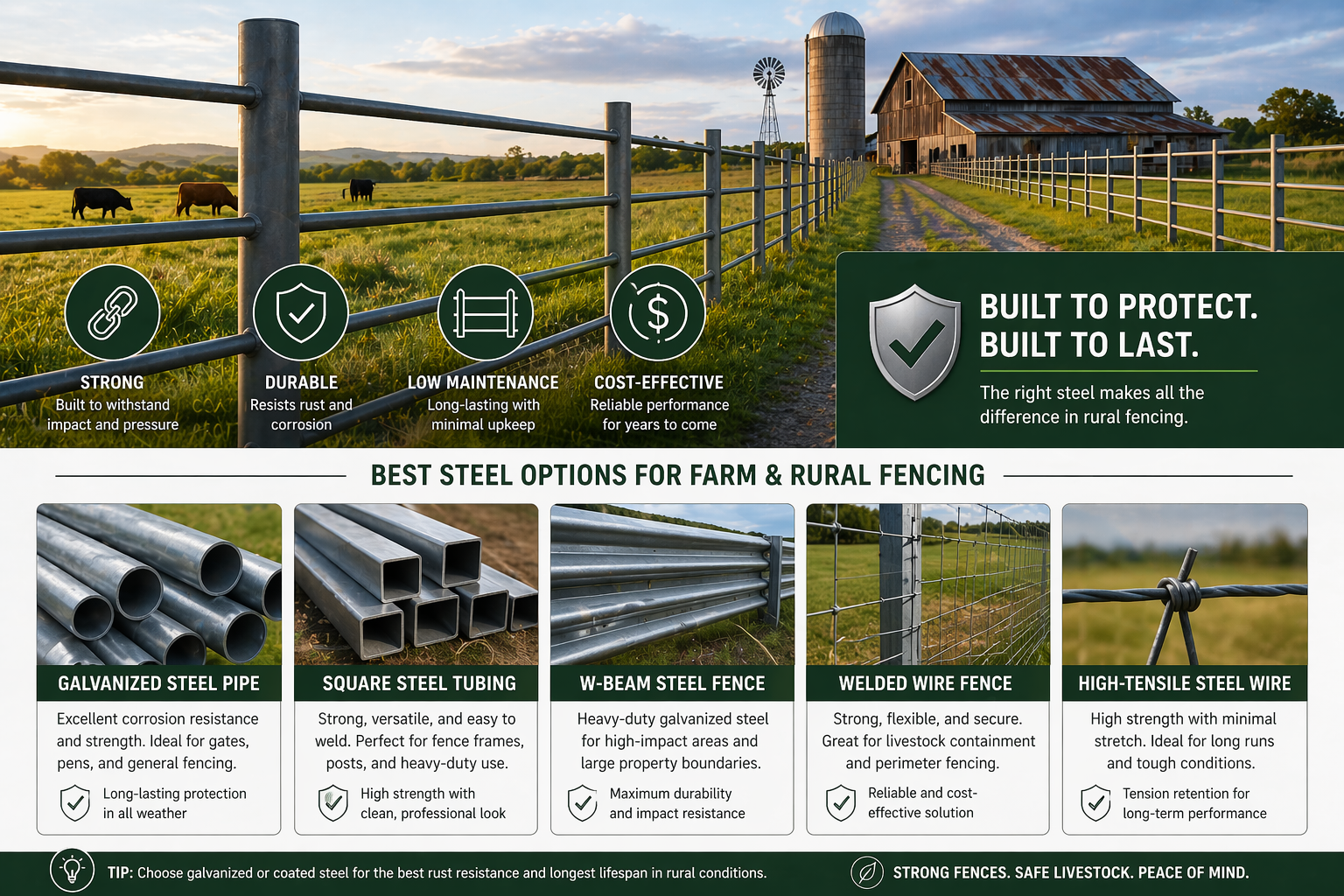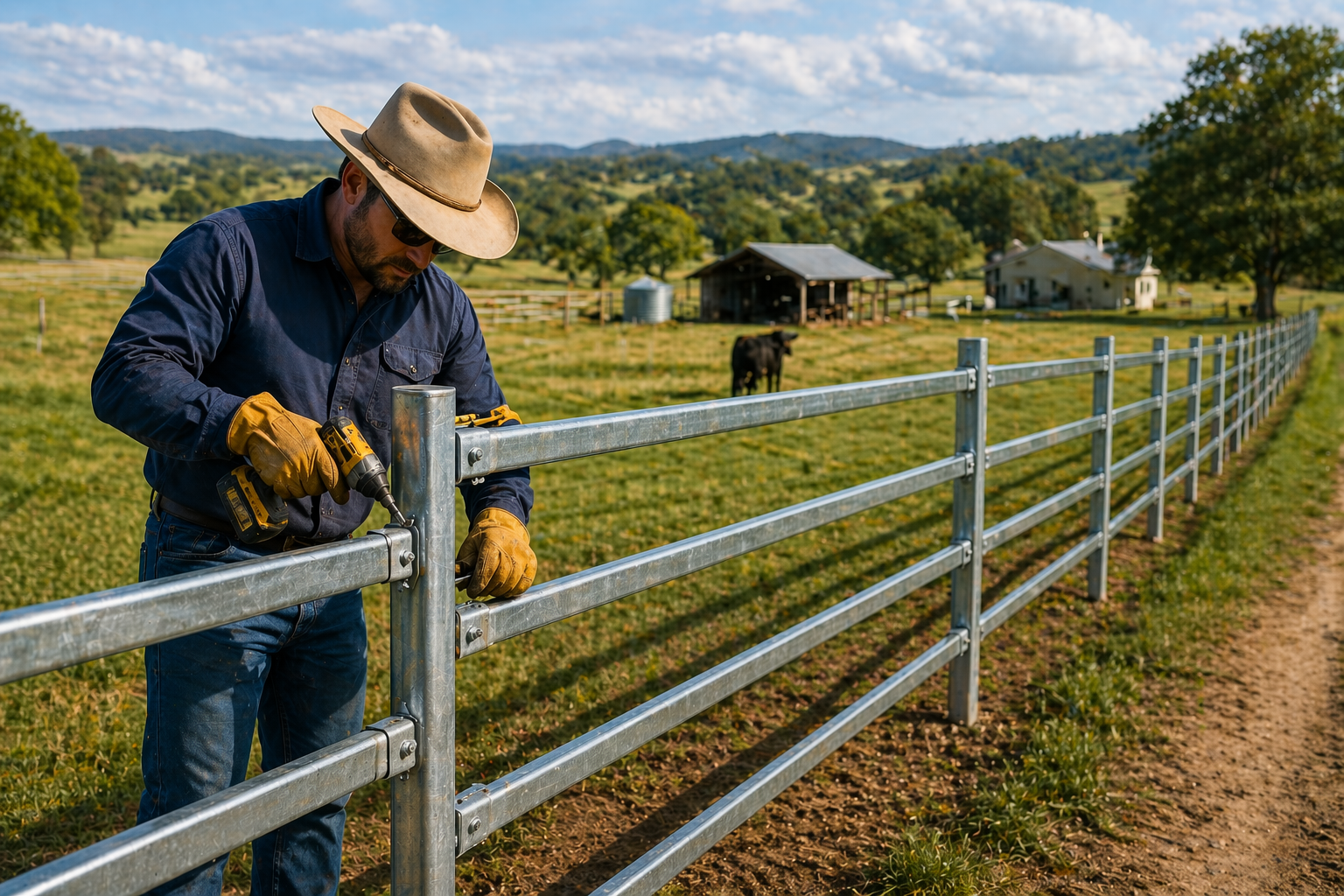
Choosing the right fencing material is one of the most important decisions for any farm or rural property. A good fence does more than mark boundaries—it helps protect livestock, secure land, withstand changing weather conditions, and reduce long-term maintenance costs. Because fencing is a long-term investment, selecting the right type of steel can make a major difference in how well your fence performs over the years.
So, what is the best steel for farm and rural fencing? The answer depends on several factors, including your budget, the local environment, the type of animals you need to contain, and how much maintenance you are willing to do. Some steel options are better for general-purpose use, while others are ideal for harsh climates, large properties, or premium long-term installations.
Below are the best steel options for farm and rural fencing, along with where each one performs best.
Top Steel Options for Farm Fencing
1. Galvanized Steel
Best for: all-around performance and value
Galvanized steel is the most popular choice for farm and rural fencing, and for good reason. It is coated with a layer of zinc that helps protect the steel underneath from rust and corrosion. This added protection makes it highly suitable for outdoor use, where fencing is regularly exposed to rain, humidity, mud, and temperature changes.
One of the biggest advantages of galvanized steel is its balance of affordability and durability. It offers a long service life without the higher price tag of more premium materials, making it a practical solution for many rural properties.
Why it works well:
- Zinc coating helps prevent rust and corrosion
- Long lifespan, often around 20 to 50+ years depending on conditions
- Cost-effective and easy to source
- Suitable for many common agricultural applications
Best used for:
- General livestock fencing
- Perimeter fences
- Rural properties in moderate to harsh weather conditions
For most farmers and landowners, galvanized steel is the best all-around option because it delivers reliable performance at a reasonable cost.
2. High-Tensile Steel
Best for: strength, large properties, and long fence runs
High-tensile steel is specially designed to handle greater tension than standard steel wire. This means it can stretch under pressure and return to shape without breaking as easily, making it especially useful for fencing large rural areas.
Because of its strength, high-tensile steel often requires fewer posts, which can reduce installation costs over long distances. It is also known for its durability and lower maintenance requirements when properly coated.
Advantages of high-tensile steel:
- Stronger than standard steel wire
- Handles tension and animal pressure effectively
- Requires fewer fence posts in some applications
- Long lifespan, often 30 to 50+ years with proper protection
Best used for:
- Large farms and rural properties
- Cattle fencing
- Long straight fence runs
- Landowners looking for low maintenance and strong performance
High-tensile steel is an excellent choice when durability and efficiency matter most. It is especially valuable on larger properties where installation and maintenance costs can add up quickly.
3. Stainless Steel
Best for: extreme corrosion resistance and premium long-term performance
Stainless steel is one of the most durable steel fencing options available. Its high chromium content gives it excellent resistance to rust, corrosion, and chemical exposure, even in demanding environments. While it is more expensive than galvanized or high-tensile steel, it offers exceptional longevity and minimal upkeep.
This makes stainless steel a strong option for farms located in areas with high moisture, heavy rainfall, or salt exposure. Although the higher upfront cost may not suit every budget, it can be worthwhile in locations where standard steel would deteriorate more quickly.
Pros of stainless steel:
- Superior resistance to rust and corrosion
- Performs well in wet, coastal, or chemically exposed environments
- Extremely long lifespan, often 50 to 100+ years
- Requires very little maintenance
Things to consider:
- Higher initial cost than other steel fencing materials
Best used for:
- Coastal farms with salt exposure
- High-moisture environments
- Premium long-term fencing projects
If your priority is maximum lifespan and minimal maintenance, stainless steel is one of the best long-term investments you can make.
4. Powder-Coated Steel
Best for: appearance, added protection, and visible fencing
Powder-coated steel combines durability with visual appeal. In this type of fencing, the steel is finished with a protective powder coating that is baked onto the surface, creating an extra barrier against the elements. This helps improve corrosion resistance while also giving the fence a cleaner, more attractive appearance.
Because of its finish, powder-coated steel is often chosen for farms or rural properties where fencing is highly visible and appearance matters, such as residential acreages, entryways, and boundary fencing near homes.
Benefits of powder-coated steel:
- Extra protective layer against corrosion
- More attractive finish than plain steel
- Better appearance for decorative or front-facing fencing
- Longer lifespan than untreated steel
Best used for:
- Residential farms and lifestyle properties
- Decorative fencing
- Visible boundary or entrance fencing
While it may not always be the first choice for large-scale livestock fencing, powder-coated steel is a strong option when both durability and presentation are important.
5. Woven Wire Steel Fencing
Best for: versatility and containing smaller animals
Woven wire fencing is a versatile option commonly made from galvanized steel or high-tensile steel wires. Its grid-like design makes it suitable for a wide range of animals and farm uses. Unlike single-strand or barbed wire fencing, woven wire helps prevent smaller animals from slipping through gaps.
This makes it especially useful for mixed-use farms or properties with sheep, goats, poultry, or other animals that require more secure containment.
Why choose woven wire steel fencing:
- Flexible and durable
- Suitable for a variety of livestock types
- Helps prevent smaller animals from escaping
- Can be paired with other steel materials for added strength
Best used for:
- Sheep fencing
- Goat fencing
- Poultry enclosures
- Mixed-animal farms
Woven wire fencing is one of the most practical choices for farms that need flexibility and better containment across different animal types.