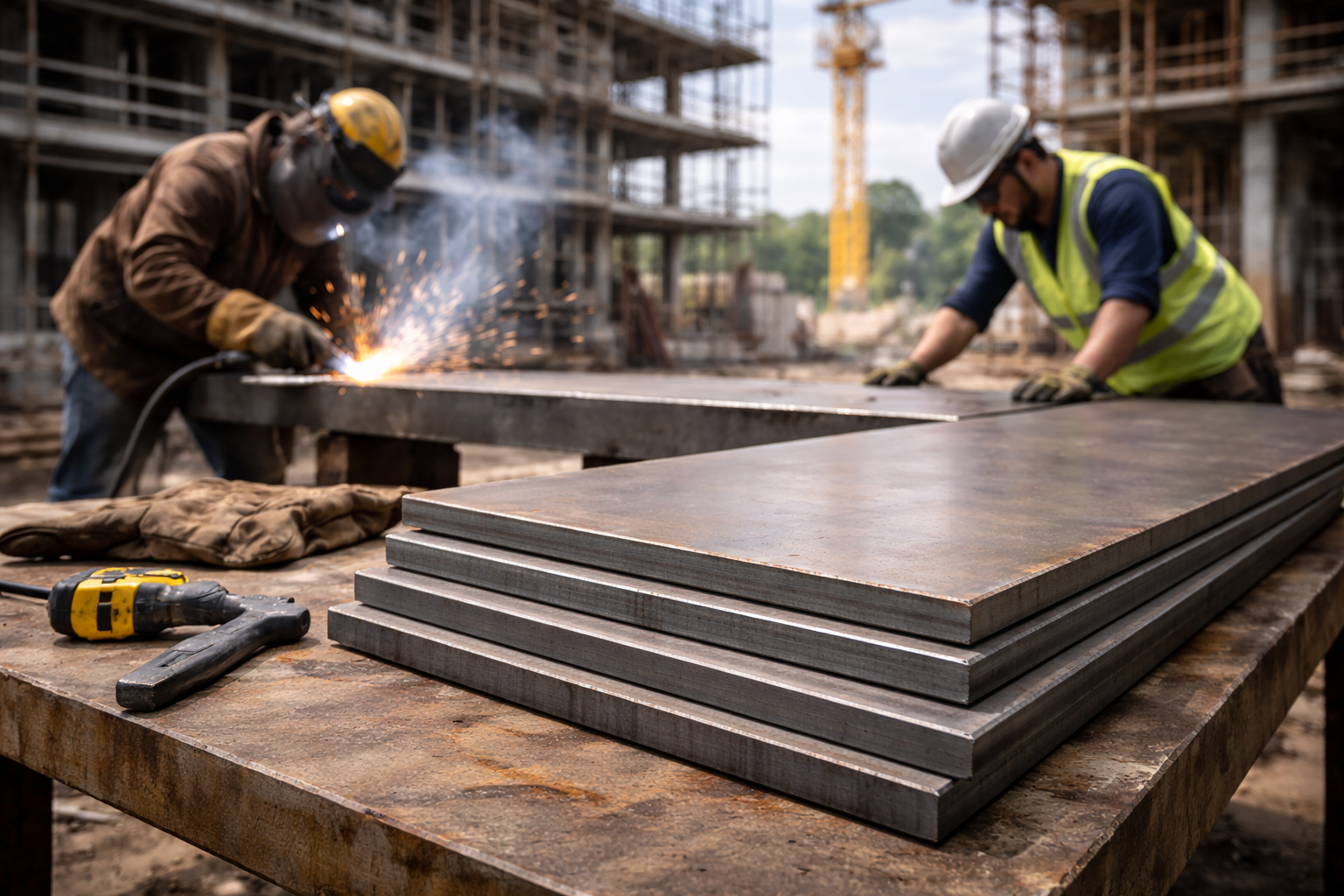
Hot rolled steel sheets are a staple material in construction, fabrication, and manufacturing. Known for their strength, workability, and cost-efficiency, they are especially well-suited for projects that involve welding, bending, and structural forming.
If your application requires durable steel that performs well under heavy loads and fabrication processes, hot rolled steel sheets are often the practical and economical choice.
What Are Hot Rolled Steel Sheets?
Hot rolled steel sheets are manufactured by rolling steel at extremely high temperatures—typically above 1,700°F (926°C). At this temperature, the steel becomes malleable and can be shaped into sheets of various thicknesses.
Once formed, the steel is cooled at room temperature. This cooling process gives hot rolled steel its characteristic:
-
Slightly rough surface texture
-
Rounded edges
-
Less precise dimensional tolerances compared to cold rolled steel
Because of the simplified production process, hot rolled steel is generally more cost-effective and ideal for structural and industrial use.
Key Characteristics
Hot rolled steel sheets are widely used because they offer:
-
Good weldability
-
High strength and durability
-
Excellent formability
-
Slightly rough surface finish
-
Cost-efficient manufacturing process
These properties make them suitable for demanding environments where performance matters more than cosmetic finish.
Why Hot Rolled Steel Is Ideal for Fabrication
1. Easy to Shape and Form
Since the steel is processed at high temperatures, it is easier to bend, cut, and shape during fabrication.
This makes it ideal for:
-
Structural frames
-
Brackets and supports
-
Base plates
-
Equipment components
-
Heavy-duty assemblies
Fabricators often choose hot rolled steel when projects involve structural forming or custom fabrication.
2. Excellent Weldability
Hot rolled steel sheets are highly compatible with welding processes. Many common grades contain lower carbon content, which supports strong weld joints and reduces the risk of cracking.
Benefits for welding include:
-
Strong bonding capability
-
Stable material structure
-
Good performance with common welding methods
This makes hot rolled steel a preferred material for welded frameworks, industrial supports, and structural assemblies.
3. Cost-Effective Material
Compared to cold rolled steel, hot rolled steel requires less finishing and processing, which lowers production costs.
It is often selected for:
-
Large-scale construction projects
-
Industrial fabrication
-
Heavy machinery components
-
Structural platforms and frames
When surface appearance is not a primary concern, hot rolled steel offers excellent value for structural use.
4. Strong and Durable
Hot rolled steel sheets provide reliable mechanical strength, making them suitable for demanding applications such as:
-
Load-bearing structures
-
Equipment bases
-
Automotive frames and chassis components
-
Infrastructure projects
Its durability ensures dependable performance in environments exposed to stress and impact.
Common Applications
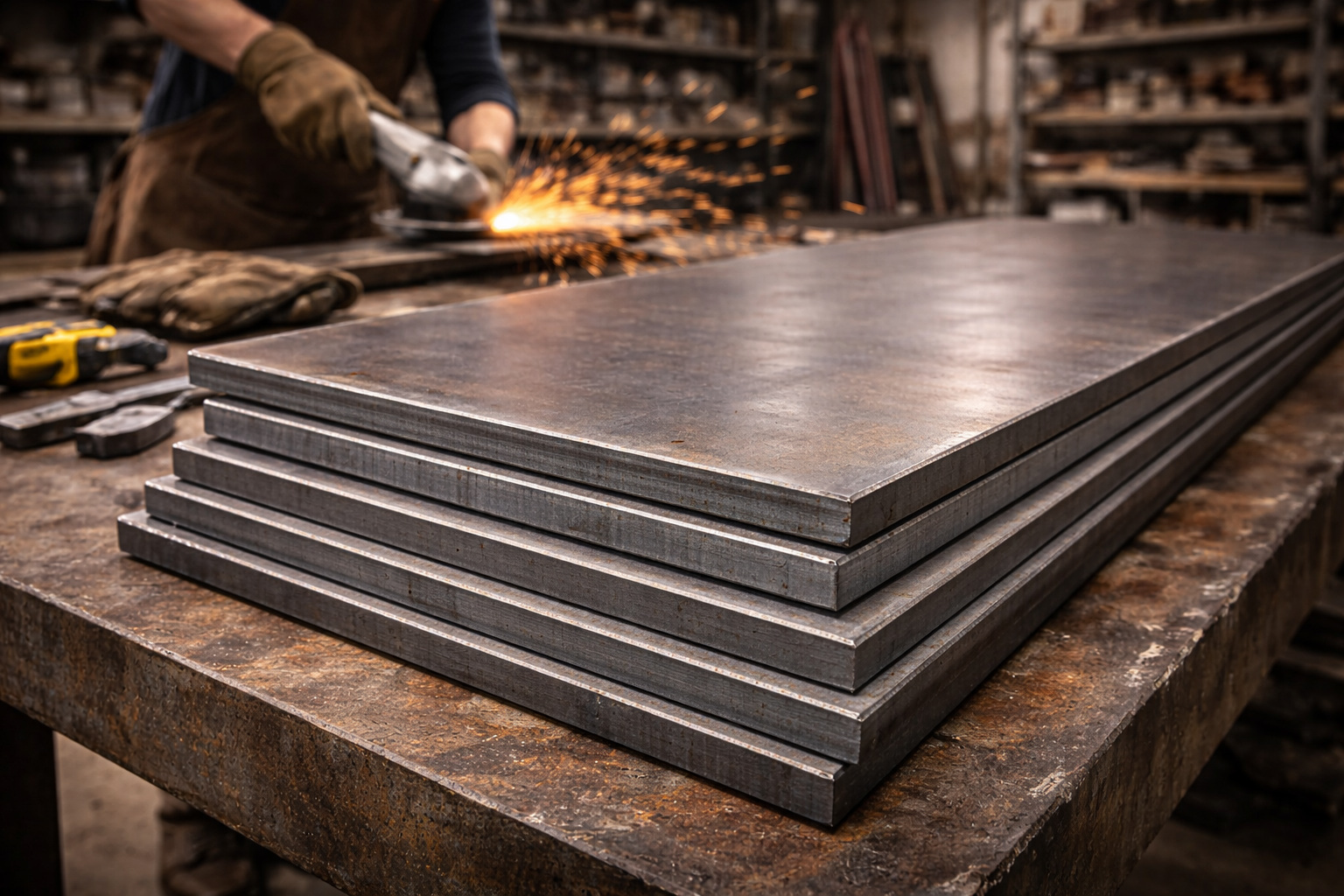
Hot rolled steel sheets are widely used across industries where strength, weldability, and durability are essential.
Construction
In construction, hot rolled sheets are commonly used for:
-
Structural beams and supports
-
Steel frames
-
Base plates
-
Reinforcement components
Their mechanical strength and ability to handle load-bearing demands make them suitable for foundational and structural elements.
Manufacturing
Manufacturers rely on hot rolled steel for:
-
Machinery parts
-
Equipment frames
-
Heavy-duty fabricated components
-
Structural housings
Because it’s easy to cut, bend, and weld, it integrates well into industrial production processes.
Automotive Industry
Hot rolled steel sheets are frequently used in:
-
Truck frames
-
Chassis components
-
Reinforcement sections
-
Structural automotive parts
Its durability and cost-efficiency make it practical for large structural automotive components.
Industrial Projects
In heavy industrial settings, hot rolled sheets are used for:
-
Storage tanks
-
Platforms and walkways
-
Industrial flooring
-
Equipment bases
Their versatility makes them a dependable choice across demanding environments.
Hot Rolled vs Cold Rolled Steel
Understanding the difference helps ensure you choose the right material for your application.
| Feature | Hot Rolled Steel | Cold Rolled Steel |
|---|---|---|
| Surface Finish | Rough, scaled | Smooth, polished |
| Cost | Lower | Higher |
| Precision | Moderate tolerances | High precision |
| Best For | Structural & welding | Precision parts & appearance |
Hot rolled steel is ideal when structural performance and weldability matter more than surface smoothness or tight dimensional tolerances.
Standard Sizes and Thickness
Hot rolled steel sheets are available in a wide range of sizes to meet structural and fabrication needs.
Common specifications include:
-
Thickness: Typically 1.6 mm to 25 mm or more
-
Width: Approximately 1,000 mm to 2,000 mm
-
Length: Standard sheet sizes or custom cut lengths
Exact dimensions vary depending on supplier capabilities and project requirements.
Corrosion Protection
Hot rolled steel sheets are not inherently corrosion-resistant. For outdoor or moisture-prone applications, protective treatment is essential.
Common protection methods include:
-
Painting
-
Powder coating
-
Galvanizing
-
Anti-rust primers
Proper surface preparation and coating significantly extend the lifespan of the steel.
Choosing the Right Hot Rolled Steel Sheet
Before selecting a sheet, evaluate:
-
Load-bearing requirements
-
Welding and fabrication needs
-
Environmental exposure
-
Required thickness and size
-
Applicable industry standards or certifications
For structural or safety-critical applications, consulting a structural engineer ensures appropriate material selection and compliance.
Maintenance Tips
To maintain performance over time:
-
Inspect periodically for signs of rust
-
Reapply protective coatings when necessary
-
Store materials in dry, covered environments
-
Repair surface damage promptly
Routine care enhances durability and prevents premature deterioration.
Final Thoughts
Hot rolled steel sheets remain a practical, durable, and cost-effective solution for fabrication and welding projects. Their strength, formability, and affordability make them ideal for structural components, heavy equipment, and industrial manufacturing.
When surface precision is secondary to strength and workability, hot rolled steel consistently delivers dependable performance.
Reliable, versatile, and built for demanding environments — hot rolled steel continues to be a foundation of modern fabrication.
Find Quality Hot Rolled Steel Sheets for Your Project
If you’re sourcing reliable, high-strength hot rolled steel sheets in a range of thicknesses and sizes for construction, fabrication, or industrial use, Super Steel Australia offers an extensive selection of steel products to meet your needs. Whether you’re building structural components, machinery frames, or heavy-duty assemblies, their stock and custom cutting services can help keep your project on schedule and within budget.
Explore available options or request a quote today:
https://supersteelaust.com.au/