facebook

Mild Steel vs Carbon Steel: What’s the Difference?

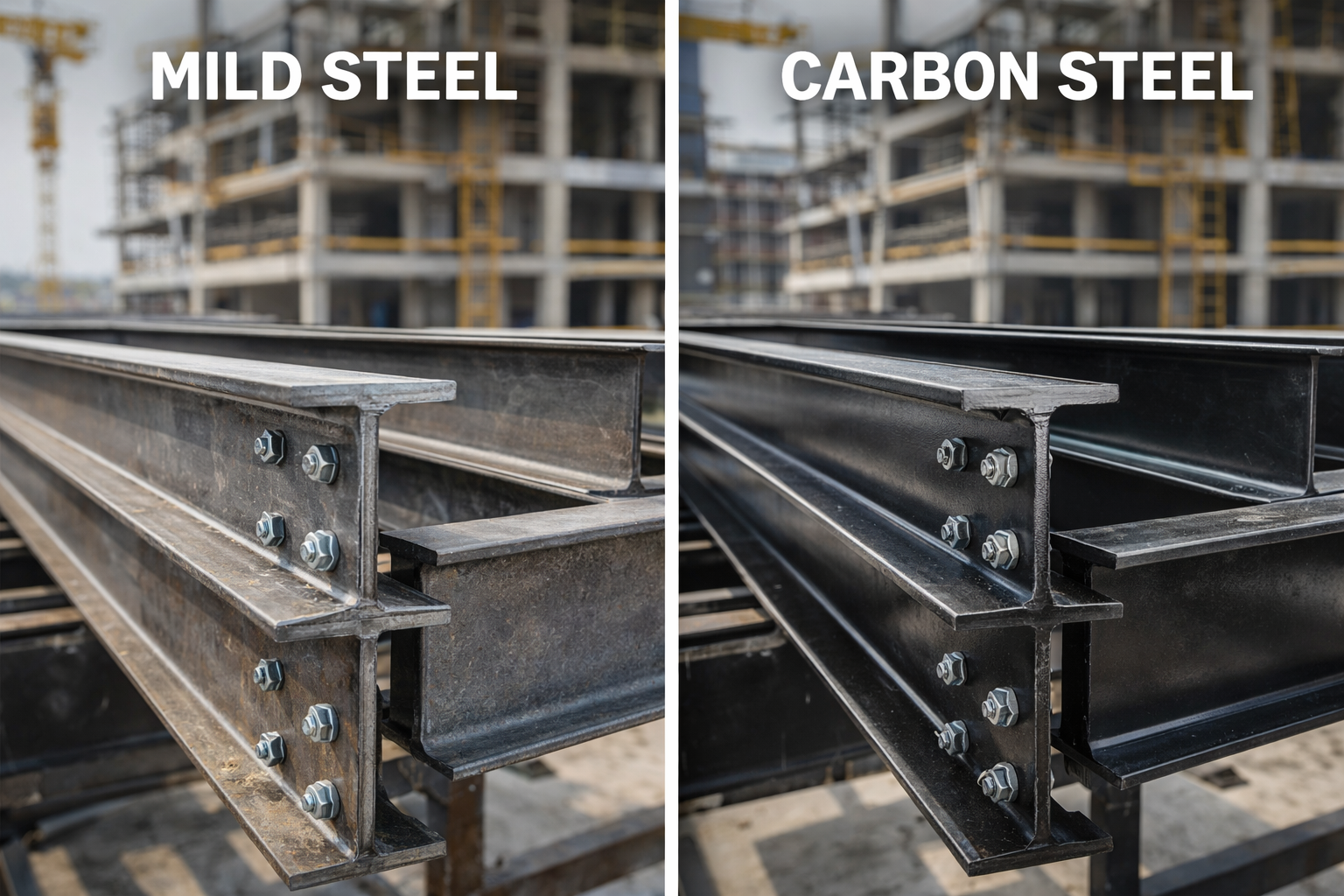
Steel beam comparison during construction

When working with steel, the terms mild steel and carbon steel are often used interchangeably. While they are closely related, they are not exactly the same. Understanding the difference is important when choosing the right material for construction, fabrication, engineering, or manufacturing projects.

In simple terms, mild steel is a type of carbon steel, but carbon steel includes a much wider range of materials with different carbon levels and performance characteristics. The amount of carbon in the steel affects its strength, hardness, ductility, weldability, and overall suitability for different applications.

If you are comparing steel options for your next project, knowing how mild steel and carbon steel differ can help you make a more informed and cost-effective decision.

What Is Carbon Steel?

Carbon steel is a broad category of steel in which carbon is the primary alloying element. Unlike stainless steel, which contains significant chromium for corrosion resistance, carbon steel relies mainly on carbon content to determine its properties.

The more carbon the steel contains, the stronger and harder it can become—but this often comes at the cost of flexibility and weldability.

Types of Carbon Steel

Carbon steel is generally classified into three main categories based on carbon content:

Low Carbon Steel

Also known as mild steel, this type typically contains around 0.05% to 0.25% carbon.

Medium Carbon Steel

Usually contains around 0.25% to 0.60% carbon and offers greater strength and hardness than mild steel.

High Carbon Steel

Typically contains around 0.60% to 1.0% carbon or more and is much harder and stronger, but also less ductile and more difficult to weld.

Key Characteristics of Carbon Steel

  • strong and durable
  • properties vary depending on carbon content
  • usually less corrosion-resistant than stainless steel
  • can range from highly formable to very hard and wear-resistant
  • often used in structural, industrial, and mechanical applications

Because carbon steel includes multiple grades and carbon levels, it is a much broader category than mild steel.

What Is Mild Steel?

Mild steel is a type of low carbon steel with a relatively small amount of carbon. Because it contains less carbon than medium or high carbon steel, it is softer, easier to work with, and more widely used in general construction and fabrication.

Mild steel is one of the most common steel materials in the world because it offers a practical balance of affordability, weldability, and versatility.

Key Features of Mild Steel

  • carbon content typically around 0.05% to 0.25%
  • high ductility, making it easy to bend and shape
  • excellent weldability
  • relatively easy to cut, machine, and fabricate
  • affordable and widely available
  • suitable for a wide range of general-purpose applications

Because of these characteristics, mild steel is often the preferred choice for projects that require easy fabrication rather than maximum hardness.

The Key Difference: It’s About Carbon Content

The simplest way to understand the difference is this:

All mild steel is carbon steel, but not all carbon steel is mild steel.

Mild steel is just one category within the broader carbon steel family. What separates mild steel from other carbon steels is its low carbon content.

As carbon content increases:

  • strength generally increases
  • hardness increases
  • ductility decreases
  • weldability becomes more difficult
  • brittleness can increase

This is why low carbon steel is easier to fabricate, while higher carbon steels are often used where strength, hardness, or wear resistance matter more.

Comparison: Mild Steel vs Carbon Steel

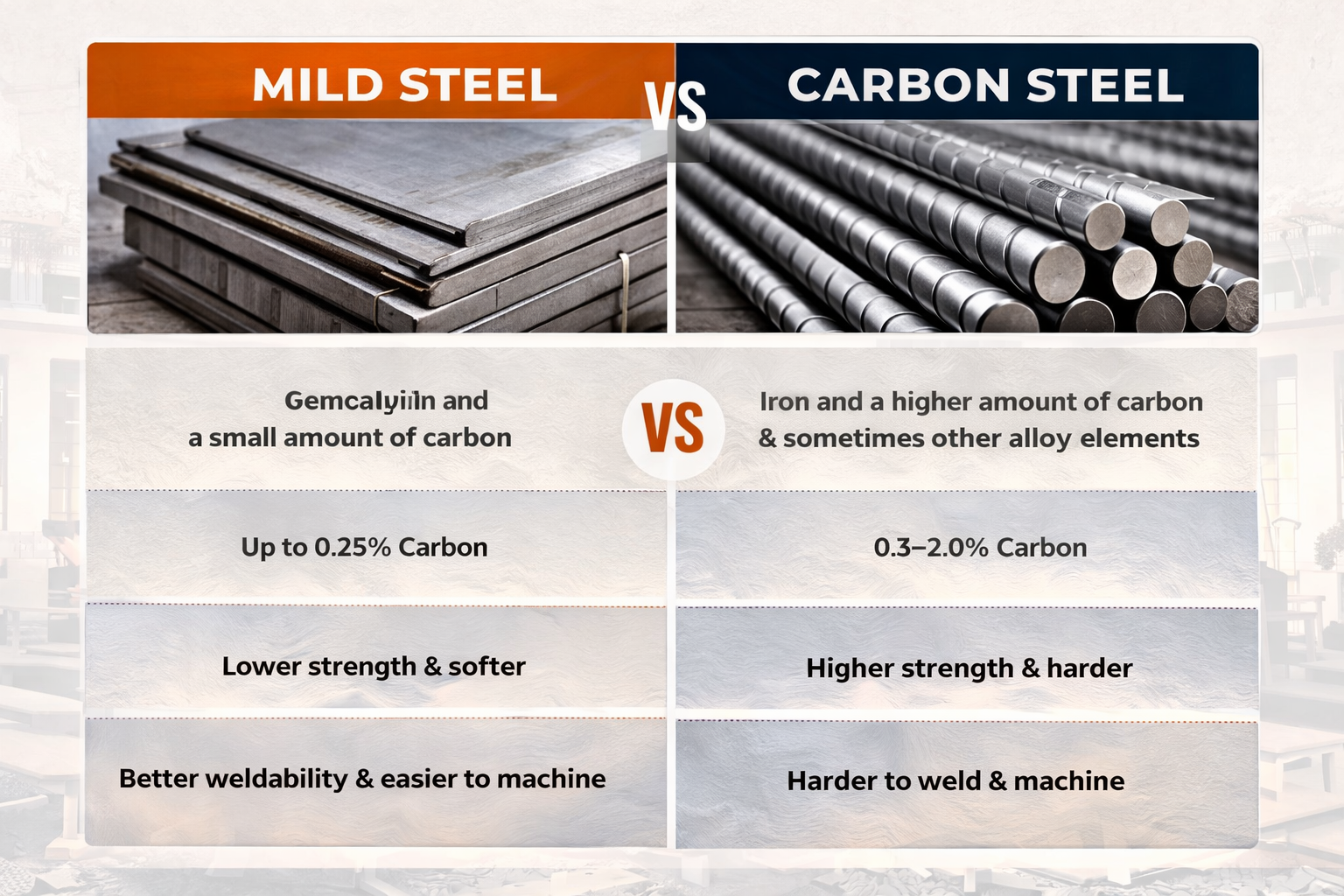
Feature Mild Steel Carbon Steel (General)
Carbon Content Low Varies from low to high
Strength Moderate Can range from moderate to very high
Ductility High Decreases as carbon content rises
Weldability Excellent Reduced in higher carbon steels
Hardness Low to moderate Can be very hard
Cost Low Varies by grade and application
Corrosion Resistance Low Low unless treated or coated

How Carbon Content Affects Performance

The amount of carbon in steel has a major influence on how it performs.

Mild Steel: Better for Fabrication and General Use

Because it has low carbon content, mild steel is:

  • easier to bend and form
  • easier to weld
  • less brittle
  • more suitable for general construction and fabrication

This makes it ideal for structural sections, brackets, frames, and fabricated components.

Higher Carbon Steel: Better for Strength and Wear Resistance

As carbon levels increase, steel becomes:

  • harder
  • stronger
  • more wear-resistant
  • less flexible
  • more difficult to machine and weld

This makes higher carbon steel more suitable for tools, blades, springs, mechanical components, and high-stress industrial parts.

Mild steel vs carbon steel comparison

Common Uses of Mild Steel

Mild steel is widely used because it is practical, economical, and easy to fabricate.

Typical Applications of Mild Steel Include:

  • structural beams and columns
  • general construction
  • fencing and gates
  • automotive body components
  • flat bars, angle steel, and channels
  • fabrication projects
  • pipes and general engineering parts

Its affordability and versatility make it one of the most commonly used materials in building and manufacturing.

Common Uses of Carbon Steel

Because carbon steel includes low, medium, and high carbon varieties, its applications are broader and depend on the specific grade.

Typical Applications of Carbon Steel Include:

  • structural steelwork
  • shafts and machine components
  • tools and cutting equipment
  • springs and wear parts
  • industrial components
  • construction materials
  • general engineering products

The exact use depends on whether the steel is low, medium, or high carbon.

Which Is Better: Mild Steel or Carbon Steel?

Neither material is universally “better.” The right choice depends on what your project needs.

Choose Mild Steel If You Need:

  • easy welding and fabrication
  • lower cost
  • general-purpose structural use
  • good ductility and formability
  • a practical material for construction or manufacturing

Choose Higher Carbon Steel If You Need:

  • greater hardness
  • improved wear resistance
  • higher strength
  • better performance in mechanical or tool applications

In most general building and fabrication work, mild steel is often the preferred choice because it is easier to work with and more cost-effective.

Corrosion Resistance: An Important Consideration

One thing mild steel and most carbon steels have in common is that they both have low natural corrosion resistance compared to stainless steel.

That means both materials may need additional protection depending on the environment, such as:

  • galvanising
  • painting
  • powder coating
  • zinc coating
  • regular maintenance in exposed conditions

If the steel will be used outdoors, in coastal areas, or in wet conditions, surface protection becomes especially important.

When to Use Mild Steel

Mild steel is one of the most commonly used materials in construction and fabrication because of its versatility, affordability, and ease of use. It is the go-to choice for projects where workability and cost efficiency are more important than maximum strength.

Choose Mild Steel When You Need:

  • Easy fabrication – ideal for cutting, welding, bending, and shaping
  • Cost-effective materials – suitable for budget-conscious projects
  • General structural applications – reliable for light to medium loads

Common Uses of Mild Steel

  • construction (beams, columns, frames)
  • automotive parts and body panels
  • pipes and tubes
  • fencing, gates, and general frameworks
  • fabrication and engineering components

Why it’s popular:
Mild steel offers a practical balance of strength, flexibility, and affordability, making it suitable for a wide range of everyday applications.

When to Use Higher Carbon Steel

Medium and high carbon steels are better suited for applications where strength, hardness, and wear resistance are critical. These steels are typically used in more demanding mechanical or industrial environments.

Choose Higher Carbon Steel When You Need:

  • higher strength and load capacity
  • improved wear resistance
  • durability under repeated stress or impact

Common Uses of Higher Carbon Steel

  • tools and cutting equipment
  • springs and high-strength wires
  • industrial machinery parts
  • blades, dies, and moulds
  • mechanical components exposed to heavy wear

Why it’s used:
Higher carbon content increases hardness and strength, making these steels ideal for high-performance applications.

Pros and Cons

Understanding the advantages and limitations of each type helps you choose the right material for your project.

Mild Steel

Pros:

  • easy to cut, weld, and shape
  • affordable and widely available
  • versatile for many applications

Cons:

  • lower strength compared to higher carbon steels
  • more prone to rust without protective coating

Carbon Steel (Medium/High)

Pros:

  • higher strength and hardness
  • better wear and impact resistance
  • suitable for demanding industrial use

Cons:

  • less ductile (more brittle)
  • harder to weld and machine
  • can be more expensive depending on grade

How to Choose Between Mild Steel and Carbon Steel

Choosing the right material comes down to understanding your project requirements. Asking a few key questions can help guide your decision.

Ask Yourself:

Do you need strength or flexibility?
→ Choose higher carbon steel for strength
→ Choose mild steel for flexibility and ease of use

Will you need welding or shaping?
Mild steel is much easier to weld, cut, and form

Is cost a concern?
Mild steel is generally more budget-friendly

Is the environment harsh or exposed?
→ Consider protective coatings (e.g., galvanised, Supergal)
→ Or use stainless steel for maximum corrosion resistance

Quick Decision Guide

  • General construction or fabrication → Mild steel
  • High-strength or wear-resistant parts → Higher carbon steel
  • Outdoor or corrosive environments → Coated or stainless steel

Final Thoughts

Mild steel and carbon steel are not competing materials—they are part of the same family. The key difference lies in carbon content, which affects strength, flexibility, and workability.

If your project prioritises ease of fabrication, affordability, and versatility, mild steel is often the best choice. If you need greater strength, hardness, and wear resistance, stepping up to medium or high carbon steel may be the better option.

Ultimately, choosing the right material comes down to balancing performance, workability, environment, and cost. Making the right decision early can improve efficiency, reduce maintenance, and ensure long-term reliability.

Find the Right Steel for Your Project

Looking for high-quality mild steel or carbon steel products for your next project? Choosing the right supplier ensures you get reliable materials that meet industry standards and performance requirements.

Visit https://supersteelaust.com.au/ to explore a wide range of steel products and get expert support for your construction, fabrication, or industrial needs.

Facebook
Twitter
LinkedIn
Secret Link