
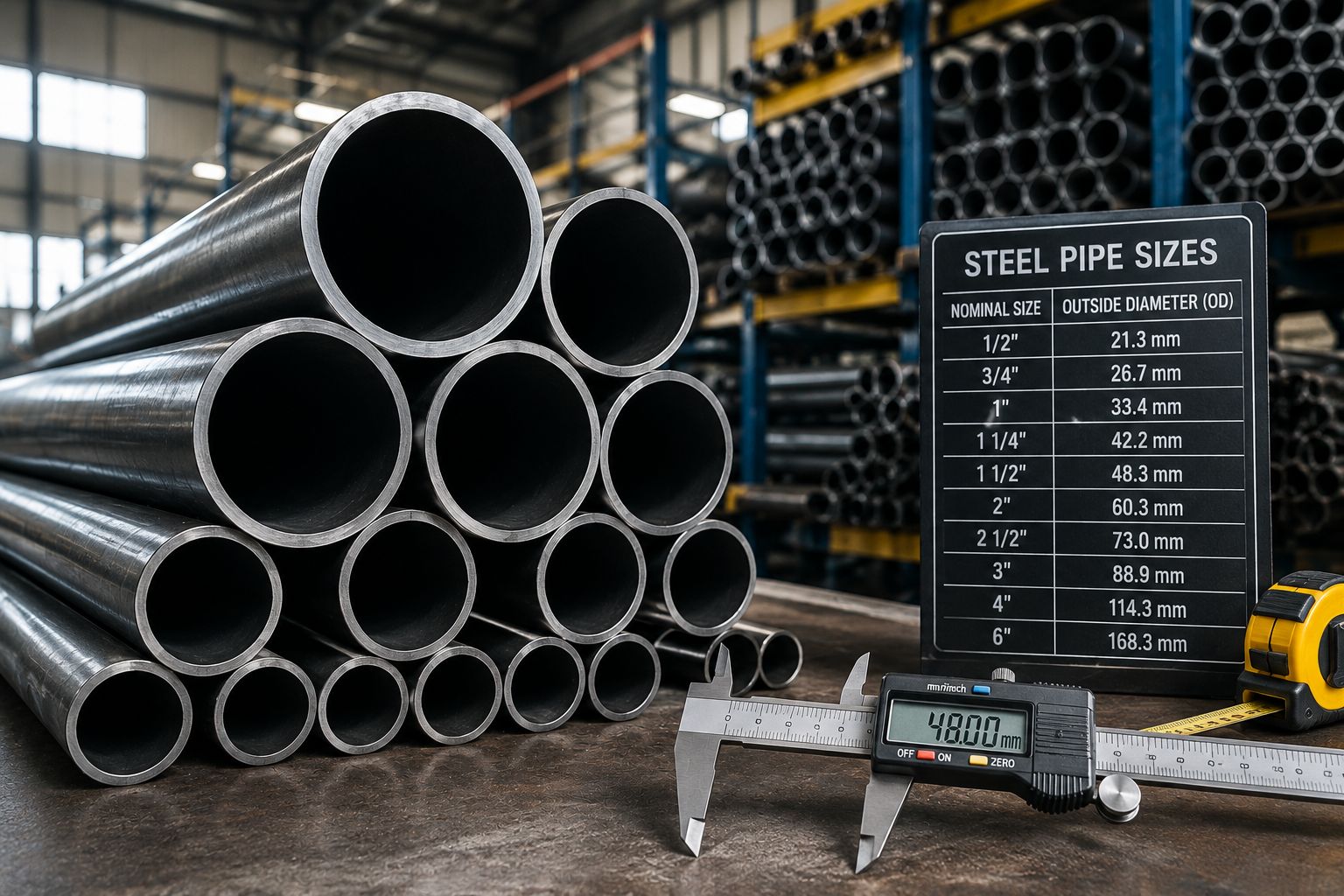
Selecting the correct steel pipe size is essential for ensuring the safety, efficiency, and durability of any piping system. Whether you’re working on a plumbing project, industrial installation, construction site, or manufacturing application, understanding steel pipe sizing can help you avoid costly mistakes and ensure compatibility with fittings, valves, and equipment.
This guide explains how steel pipe sizes are measured, the difference between nominal and actual dimensions, common pipe schedules, and how to choose the right size for your application.
Why Steel Pipe Size Matters
Choosing the correct pipe size affects several aspects of a piping system, including:
- Flow capacity
- Pressure handling
- Structural strength
- Installation compatibility
- Material costs
- Long-term system performance
Using an incorrectly sized pipe can lead to pressure loss, restricted flow, increased maintenance, or even system failure. Choosing the right steel pipe supplier helps ensure you’re purchasing products manufactured to the correct specifications and suitable for your intended application.
Understanding Steel Pipe Sizing
Unlike many other materials, steel pipes are not always identified by their actual outside or inside diameter.
Instead, most steel pipes are classified using:
- Nominal Pipe Size (NPS) – A standardized sizing system used primarily in North America.
- Outside Diameter (OD) – The actual external diameter of the pipe.
- Wall Thickness – The thickness of the pipe wall.
- Pipe Schedule (SCH) – A standardized designation that indicates wall thickness.
These measurements work together to determine a pipe’s strength, weight, and internal diameter. When purchasing structural steel pipe, understanding these dimensions helps ensure the material is suitable for your project’s pressure, structural, and fabrication requirements.
What Is Nominal Pipe Size (NPS)?
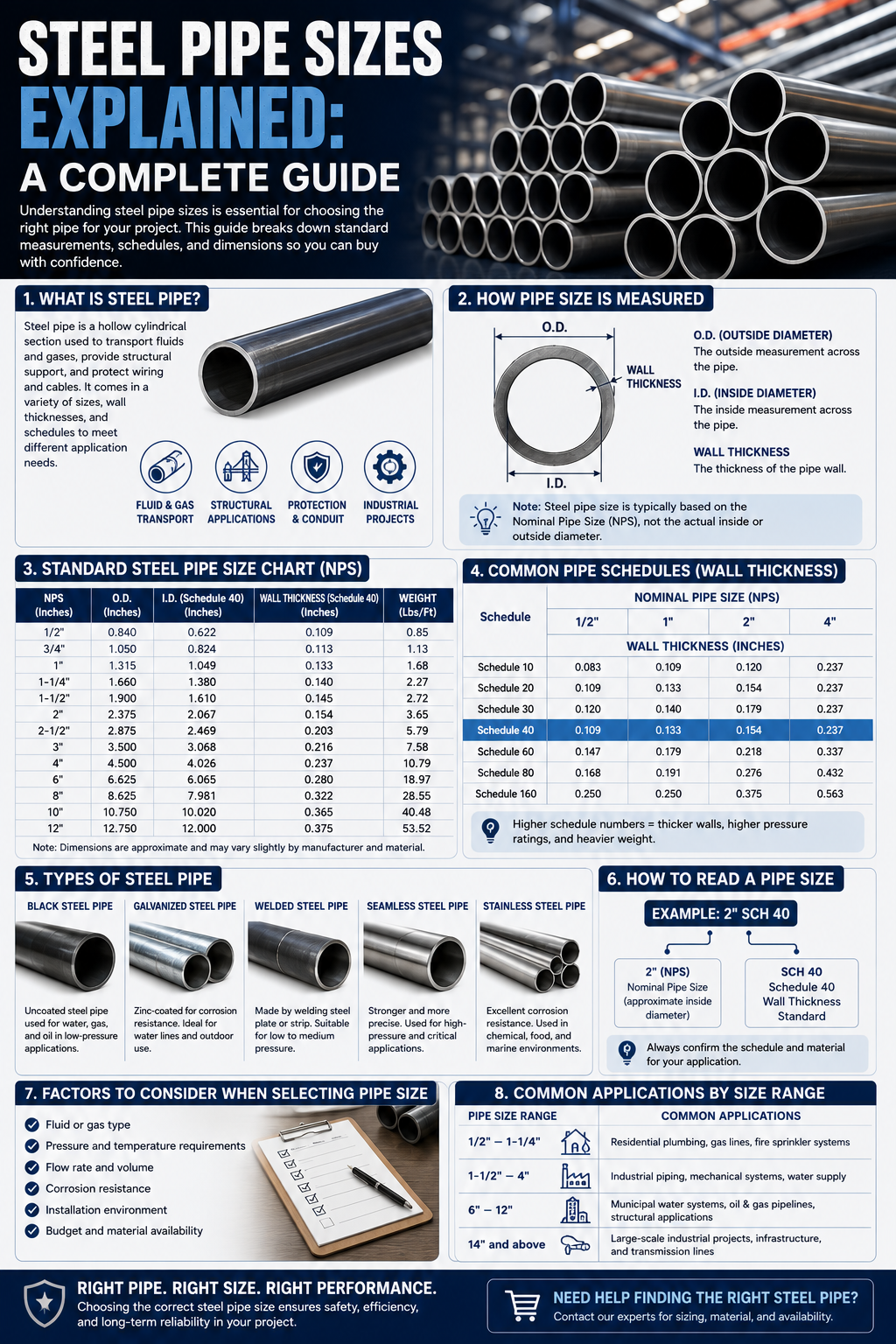
Nominal Pipe Size (NPS) is a standard designation used to identify pipe sizes. Despite its name, it does not always match the pipe’s actual dimensions.
For example:
| Nominal Pipe Size (NPS) | Actual Outside Diameter (OD) |
|---|---|
| 1/2 inch | 0.840 inches |
| 3/4 inch | 1.050 inches |
| 1 inch | 1.315 inches |
| 2 inches | 2.375 inches |
| 4 inches | 4.500 inches |
For pipe sizes NPS 14 and larger, the nominal size generally matches the outside diameter in inches.
What Is Pipe Schedule?
Pipe schedule refers to the wall thickness of a pipe.
A higher schedule number means:
- Thicker walls
- Greater pressure capacity
- Smaller inside diameter (for the same outside diameter)
- Increased weight
Common schedules include:
- Schedule 10
- Schedule 20
- Schedule 40
- Schedule 80
- Schedule 160
For a given NPS, the outside diameter remains the same while the wall thickness changes with the schedule. Different steel pipe products are manufactured in multiple schedules to suit varying pressure, structural, and industrial applications.
Outside Diameter (OD) vs. Inside Diameter (ID)
Understanding the difference between OD and ID is important when selecting pipes.
Outside Diameter (OD)
The outside diameter is fixed for a given nominal pipe size.
It is used when selecting:
- Pipe fittings
- Clamps
- Flanges
- Couplings
Inside Diameter (ID)
The inside diameter depends on the wall thickness.
As the pipe schedule increases:
- Wall thickness increases.
- Inside diameter decreases.
- Flow capacity may decrease slightly.
Common Steel Pipe Size Standards
Several international standards govern steel pipe dimensions.
Some of the most widely used include:
- ASME B36.10M – Welded and seamless carbon steel pipe dimensions.
- ASME B36.19M – Stainless steel pipe dimensions.
- ASTM standards for manufacturing and testing various steel pipe types.
- API standards for oil and gas industry piping.
Always verify which standard applies to your project or local regulations.
If you’re unsure which specification is suitable for your application, consult an experienced steel supplier before ordering materials.
Metric vs. Imperial Pipe Sizes
Steel pipes may be specified using either imperial or metric measurements.
Imperial System
Commonly used in the United States and some other regions.
Examples include:
- NPS
- Inches
- Schedule numbers
Metric System
Many countries specify pipes using:
- Outside diameter (millimeters)
- Wall thickness (millimeters)
For example:
- 60.3 mm × 3.9 mm
- 114.3 mm × 6.0 mm
When sourcing internationally, ensure the sizing system matches your project requirements.
Common Steel Pipe Sizes and Applications
| Pipe Size | Typical Applications |
|---|---|
| 1/2 inch | Residential plumbing, compressed air lines |
| 3/4 inch | Water supply systems |
| 1 inch | Irrigation, light industrial piping |
| 2 inches | Commercial plumbing, fire protection |
| 4 inches | Industrial processing, drainage systems |
| 6 inches and above | Municipal water systems, oil and gas, infrastructure |
The appropriate size depends on flow requirements, pressure ratings, and applicable codes.
Super Steel Australia supplies steel pipe for structural steelwork, fabrication, engineering, construction, mining, agriculture, and industrial projects throughout Australia.
How to Choose the Right Steel Pipe Size
Consider the following factors before selecting a pipe.
If your project requires custom lengths, using a supplier that offers steel saw cutting services can reduce fabrication time, improve accuracy, and minimise onsite waste.
1. Flow Requirements
Determine the amount of liquid or gas the system needs to transport.
Higher flow rates generally require larger inside diameters.
2. Operating Pressure
High-pressure systems often require thicker pipe walls, resulting in higher schedule numbers.
3. Temperature
Extreme temperatures may affect material performance and pressure ratings.
Choose a pipe that is suitable for your operating conditions.
4. Material Type
Steel pipes are available in several materials, including:
- Carbon steel
- Stainless steel
- Alloy steel
- Galvanized steel
Material selection depends on corrosion resistance, strength, and the intended application.
5. Applicable Standards
Ensure the selected pipe complies with industry standards and local building or engineering codes.
Quality steel pipe products should comply with relevant Australian and international manufacturing standards where applicable.
Common Mistakes When Choosing Steel Pipe Sizes
Avoid these common errors:
- Assuming nominal size equals the actual diameter.
- Ignoring wall thickness when calculating flow capacity.
- Selecting a schedule without considering pressure requirements.
- Mixing incompatible sizing standards.
- Overlooking applicable industry codes and specifications.
Working with an experienced steel supplier can help avoid sizing, specification, and compatibility issues before fabrication begins.
Consult engineering references or manufacturer documentation for critical applications.
Frequently Asked Questions
Is Nominal Pipe Size the actual diameter?
No. Nominal Pipe Size (NPS) is a standardized designation and does not always correspond to the pipe’s actual outside or inside diameter.
Does a higher schedule mean a larger pipe?
No. A higher schedule indicates a thicker wall. The outside diameter remains the same for a given nominal pipe size, while the inside diameter becomes smaller.
Which is stronger: Schedule 40 or Schedule 80?
For the same pipe size and material, Schedule 80 has thicker walls and generally provides a higher pressure rating than Schedule 40.
Can steel pipes use metric and imperial sizes?
Yes. Depending on the country, manufacturer, and project specifications, steel pipes may be supplied using either metric or imperial dimensions. Verify compatibility before purchasing components.
Final Thoughts
Understanding steel pipe sizes is essential for designing safe, efficient, and reliable piping systems. By learning how Nominal Pipe Size (NPS), outside diameter, inside diameter, and pipe schedule work together, you can confidently select the right pipe for your application.
Whether you’re installing residential plumbing, building an industrial process line, or specifying materials for a construction project, choosing the correct steel pipe helps ensure proper performance, compatibility, and long-term durability. If you need assistance selecting the right pipe size or specification, Super Steel Australia supplies quality steel pipe along with professional advice and steel saw cutting services to help keep your project on schedule.