
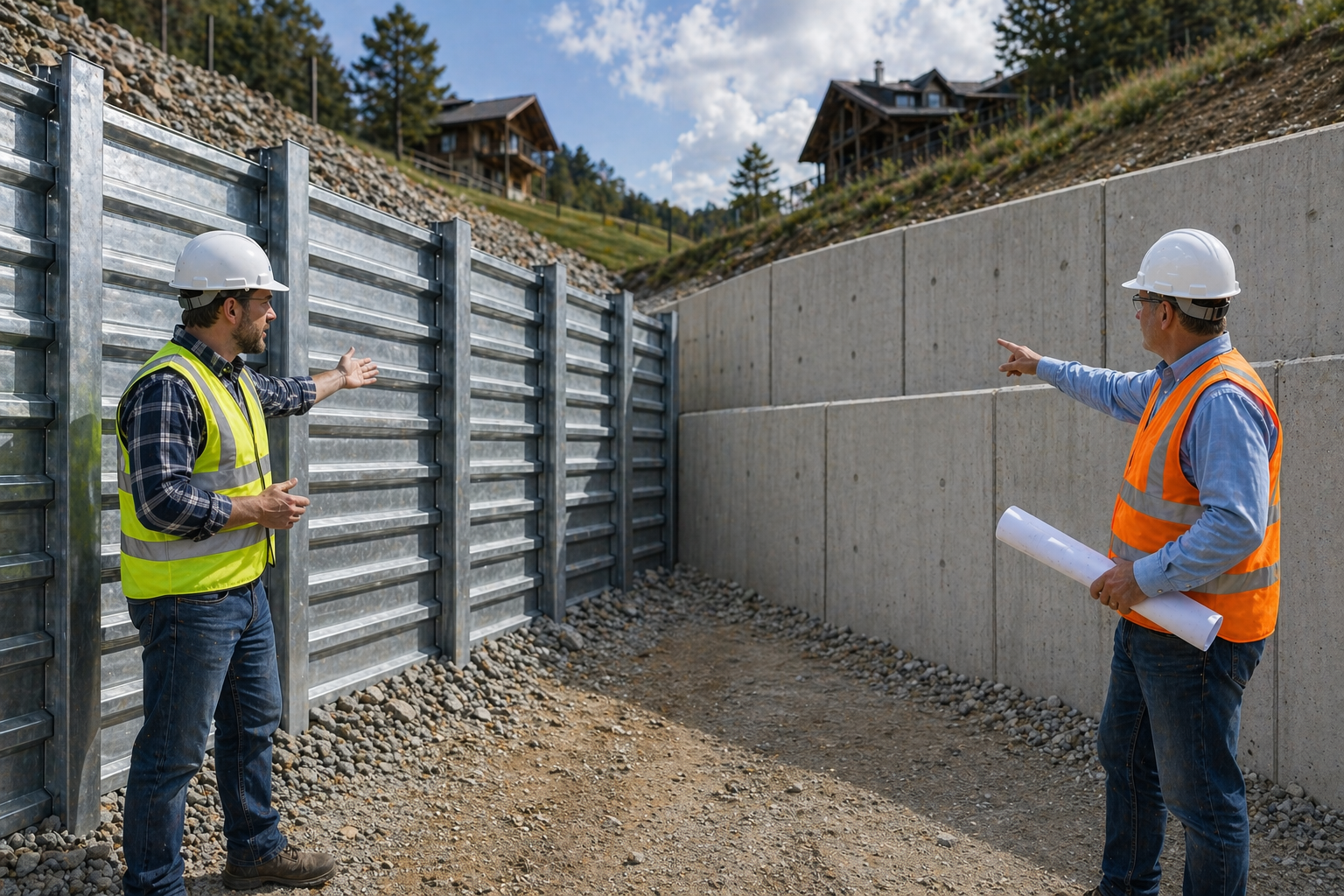
When it comes to building a retaining wall, one of the most important decisions is choosing the right material. Two of the most common options are steel and concrete—both known for their strength and durability, but each with its own advantages and trade-offs.
So, which one is better? The answer depends on your project’s requirements, including budget, soil conditions, installation timeline, design preferences, and long-term maintenance expectations.
This guide breaks down the key differences to help you make the right choice.
What Is a Retaining Wall?
A retaining wall is a structure designed to hold back soil and prevent erosion, especially in areas with uneven or sloped terrain. It plays both a functional and structural role, helping stabilize land and create usable space.
Retaining walls are commonly used in:
- Sloped landscapes and terraced gardens
- Farmland and rural properties
- Roadways and infrastructure projects
- Residential landscaping and outdoor design
A well-built retaining wall not only improves stability but can also enhance the overall appearance and usability of a property.
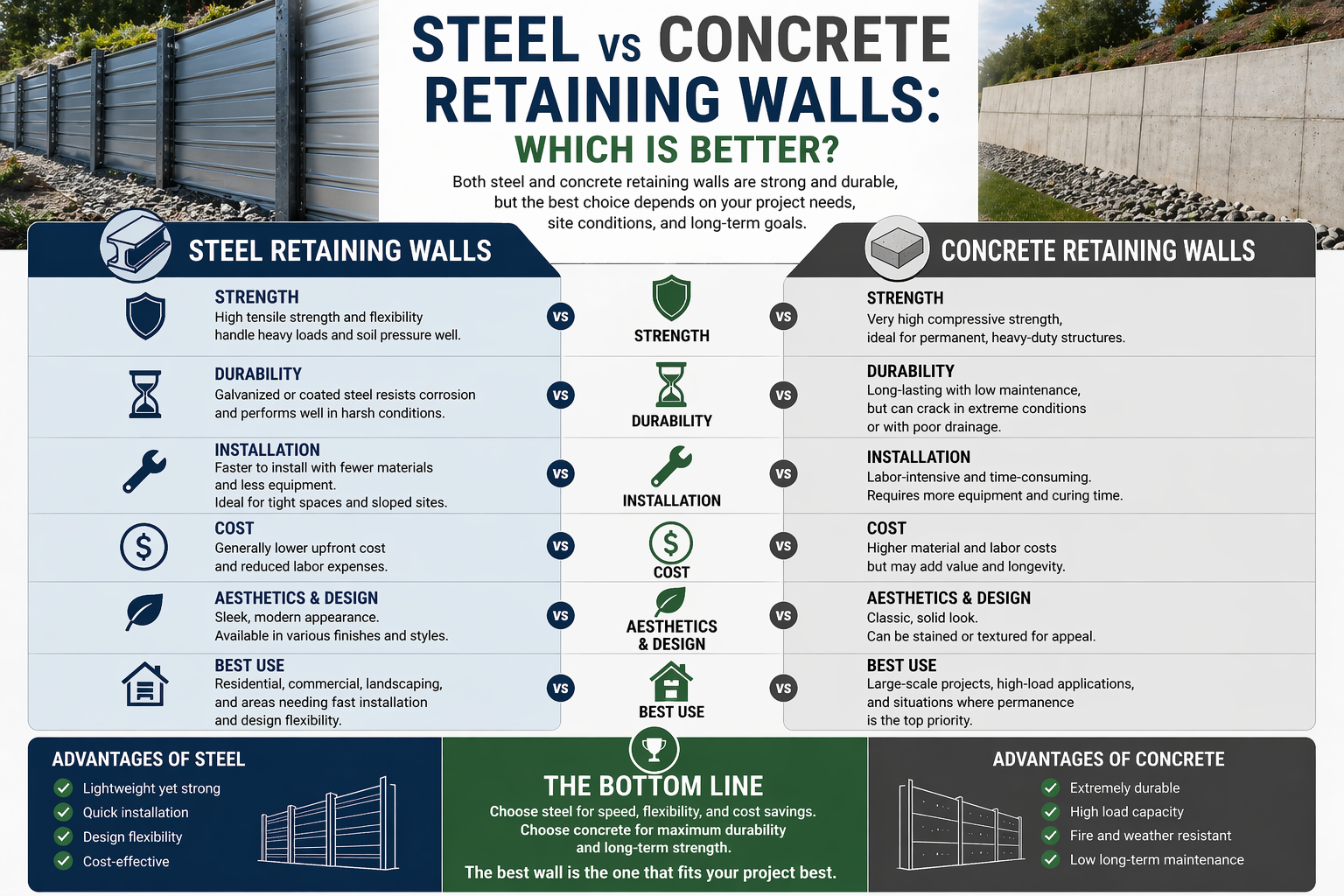
Steel vs Concrete Retaining Walls: Quick Comparison
| Feature | Steel Retaining Walls | Concrete Retaining Walls |
|---|---|---|
| Durability | 30–70+ years | 50–100+ years |
| Installation | Faster, easier | Slower, labor-intensive |
| Cost | Lower upfront | Higher upfront |
| Flexibility | More flexible | Rigid |
| Maintenance | Moderate (rust protection) | Low to moderate |
| Aesthetics | Modern / industrial | Highly customizable |
Steel Retaining Walls
Steel retaining walls are typically made from galvanized steel, Corten (weathering steel), or coated steel panels. They are widely used in rural, agricultural, and commercial settings due to their practicality and efficiency.
✅ Advantages
- Faster installation
Steel systems are often prefabricated, making them quicker to install—especially useful in remote or large-scale projects. - Lower upfront cost
Compared to concrete, steel retaining walls generally require less material and labor, reducing initial expenses. - Flexibility under pressure
Steel can flex slightly under soil movement, reducing the likelihood of cracking compared to rigid materials. - Lightweight and easier to transport
This makes steel ideal for sites with limited access or difficult terrain.
❌ Disadvantages
- Prone to corrosion
Without proper coatings or galvanization, steel can rust over time—especially in wet or coastal environments. - Ongoing maintenance
Protective coatings may need to be reapplied periodically to extend lifespan. - Limited aesthetic appeal for some projects
The industrial look may not suit all residential or decorative landscapes.
👉 Best For:
- Rural and agricultural properties
- Temporary or semi-permanent retaining structures
- Projects requiring fast installation
- Sites with access or transport challenges
Concrete Retaining Walls
Concrete is one of the most widely used materials for retaining walls due to its strength, stability, and long-term durability. It can be poured in place or installed using precast blocks or panels.
✅ Advantages
- Exceptional durability
Concrete retaining walls can last decades with minimal structural issues when properly built. - Low maintenance
Once installed, concrete generally requires little upkeep compared to steel. - Resistant to weather, pests, and fire
It performs well in a wide range of environmental conditions. - Highly customizable appearance
Concrete can be textured, colored, or patterned to match different design styles—from modern to natural stone finishes.
❌ Disadvantages
- Higher upfront cost
Materials, labor, and foundation work can make concrete more expensive initially. - Longer installation time
Construction is more labor-intensive and may require curing time. - Risk of cracking
Poor drainage or shifting soil can lead to cracks over time if not properly engineered. - Requires skilled labor
Proper design and installation are critical to avoid structural issues.
👉 Best For:
- Permanent retaining structures
- Residential landscaping and decorative walls
- Heavy-load or high-pressure applications
- Projects where appearance is a priority
Key Factors to Consider
Choosing between steel and concrete retaining walls comes down to how each material performs under your specific site conditions and project goals. Here are the key factors to keep in mind:
1. Soil and Drainage Conditions
Soil stability and water management play a critical role in retaining wall performance.
- Poor drainage increases pressure behind the wall
- Concrete walls can crack if water pressure builds up without proper drainage
- Steel walls can flex slightly, making them better at handling minor ground movement
Proper drainage systems are essential regardless of material, but steel may offer an advantage in more dynamic soil conditions.
2. Budget
Cost is often a deciding factor, especially for large-scale projects.
- Steel: lower initial cost and faster installation
- Concrete: higher upfront cost, but strong long-term durability
👉 If you’re working within a tighter budget, steel is often the more accessible starting point.
3. Lifespan and Durability
Both materials are durable, but they perform differently over time.
- Concrete generally lasts longer with minimal maintenance when properly built
- Steel can last for decades but requires corrosion protection to maintain performance
Choosing the right coatings and materials is key to maximizing lifespan.
4. Installation Time
Project timelines can vary significantly depending on the material.
- Steel walls can be installed quickly, often using prefabricated components
- Concrete walls require more labor, formwork, and curing time
If speed is a priority, steel is usually the better option.
5. Aesthetic Preferences
Visual appeal may be important, especially in residential or landscaped areas.
- Concrete offers more design flexibility, including textures, colors, and finishes
- Steel provides a clean, modern, industrial look
Your choice may depend on whether the wall is purely functional or part of a visible design feature.
Which Is Better?
There’s no one-size-fits-all answer—the best material depends on your priorities.
Choose Steel Retaining Walls if you want:
- Faster installation
- Lower upfront cost
- Flexibility in shifting or unstable soil
- A practical solution for rural or large-scale projects
Choose Concrete Retaining Walls if you want:
- Maximum durability and lifespan
- A long-term, low-maintenance solution
- Greater design flexibility and visual appeal
- Strong performance in heavy-load applications
FAQ
Are steel retaining walls cheaper than concrete?
Yes, steel retaining walls typically have a lower upfront cost. However, long-term maintenance—such as corrosion protection—can add to overall expenses.
Do steel retaining walls rust?
Yes, steel can rust over time, but galvanization and protective coatings can significantly slow down corrosion and extend its lifespan.
How long do concrete retaining walls last?
Concrete retaining walls can last 50 to 100+ years when properly designed, installed, and supported with good drainage.
Which retaining wall is best for sloped land?
Both materials can work well. Steel is often better for flexibility in shifting soil, while concrete is ideal for permanent, heavy-duty support.
Final Thoughts
Both steel and concrete retaining walls offer strong, reliable solutions—but the best choice ultimately depends on your project requirements.
- Steel excels in flexibility, affordability, and speed of installation
- Concrete stands out for durability, longevity, and design versatility
By understanding the strengths of each material and matching them to your site conditions, you can build a retaining wall that performs effectively for decades.
Build Strong, Long-Lasting Retaining Walls
Looking for high-quality steel solutions for retaining walls, rural projects, or infrastructure applications? Choosing the right materials—and the right supplier—makes all the difference in long-term performance.
Explore durable, reliable steel products built for Australian conditions at Super Steel Australia:
👉 https://supersteelaust.com.au/