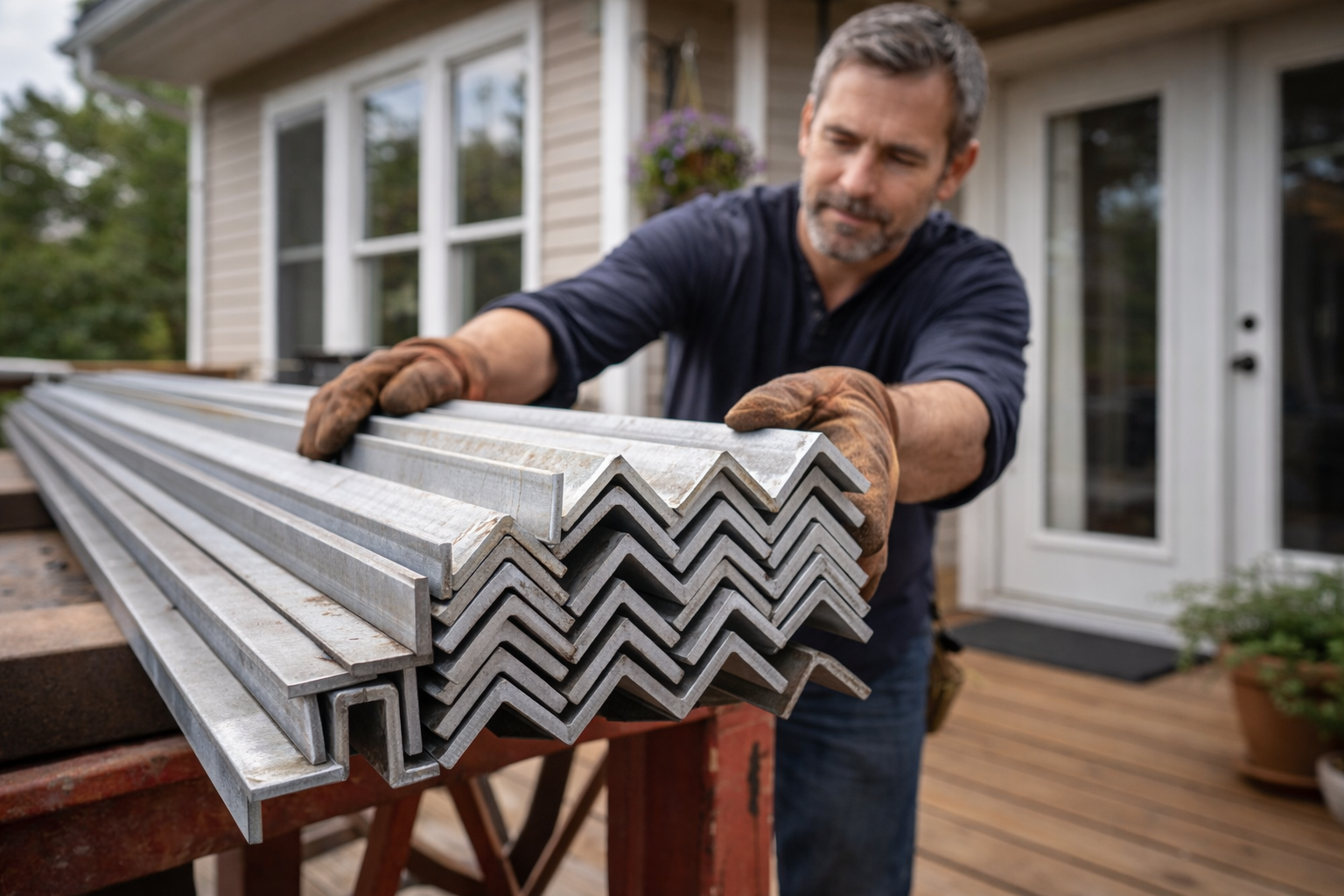
Unequal angle steel is a highly adaptable structural section used across construction, fabrication, and industrial projects. While equal angle steel offers balanced legs for symmetrical support, unequal angle steel features two legs of different lengths — making it better suited for specialized structural conditions.
So when is unequal angle steel the smarter choice? Understanding its geometry and load behavior helps you select the most efficient steel section for your application.
What Is Unequal Angle Steel?
Unequal angle steel (also known as an unequal L-angle) is a structural steel section with two perpendicular legs of different lengths, forming a 90-degree angle.
Examples include:
-
100 × 75 × 8 mm
-
150 × 90 × 10 mm
The first two numbers represent the leg lengths, and the third indicates the thickness.
Because the legs are unequal, this section distributes loads differently than equal angles — allowing it to perform better in asymmetrical structural scenarios.
Key Characteristics
Unequal angle steel offers several structural advantages:
-
Two legs of unequal length
-
Strong load-bearing performance
-
Efficient support for offset or uneven loads
-
Easy to weld, bolt, drill, and fabricate
-
Available in multiple thicknesses and steel grades
Its asymmetrical shape gives engineers and fabricators more flexibility in managing directional forces.
When to Use Unequal Angle Steel
1. When Asymmetrical Support Is Required
If your project involves uneven load distribution, unequal angle steel is often more efficient than equal angle sections.
It performs well in situations such as:
-
Offset beams
-
Uneven structural joints
-
One-sided loading conditions
-
Framing where one connection surface is larger than the other
The longer leg can provide additional surface area for attachment or load transfer, improving structural stability.
2. For Edge or Corner Reinforcement
Unequal angles are commonly used when reinforcing edges where one side requires more coverage or attachment area than the other.
Typical applications include:
-
Supporting one wide surface and one narrow section
-
Reinforcing slab or platform edges
-
Strengthening corners in steel frameworks
-
Structural bracing in confined spaces
The extended leg allows for stronger connections without overbuilding both sides.
3. In Steel Framing and Structural Fabrication
Unequal angle steel is widely used in larger structural systems where load paths vary across members.
Common applications include:
-
Industrial building frames
-
Roof trusses
-
Transmission towers
-
Bridge structures
-
Heavy-duty bracing systems
Its geometry enables engineers to manage complex load requirements while optimizing material use.
4. When Space Constraints Exist
In retrofit or compact construction environments, unequal angle steel provides targeted strength where it’s needed — without adding unnecessary bulk to both sides of the joint.
Ideal for:
-
Retrofit reinforcement projects
-
Machinery and equipment frames
-
Tight structural assemblies
-
Mechanical support brackets
This allows for efficient structural upgrades without redesigning surrounding components.
5. For Customized Fabrication Projects
Fabricators often select unequal angle steel when a design requires flexibility and precision fitting.
Common fabrication uses:
-
Mounting brackets
-
Equipment supports
-
Reinforcement plates
-
Base frames
-
Custom structural assemblies
The differing leg lengths allow one side to act as a primary support while the shorter side stabilizes or connects.
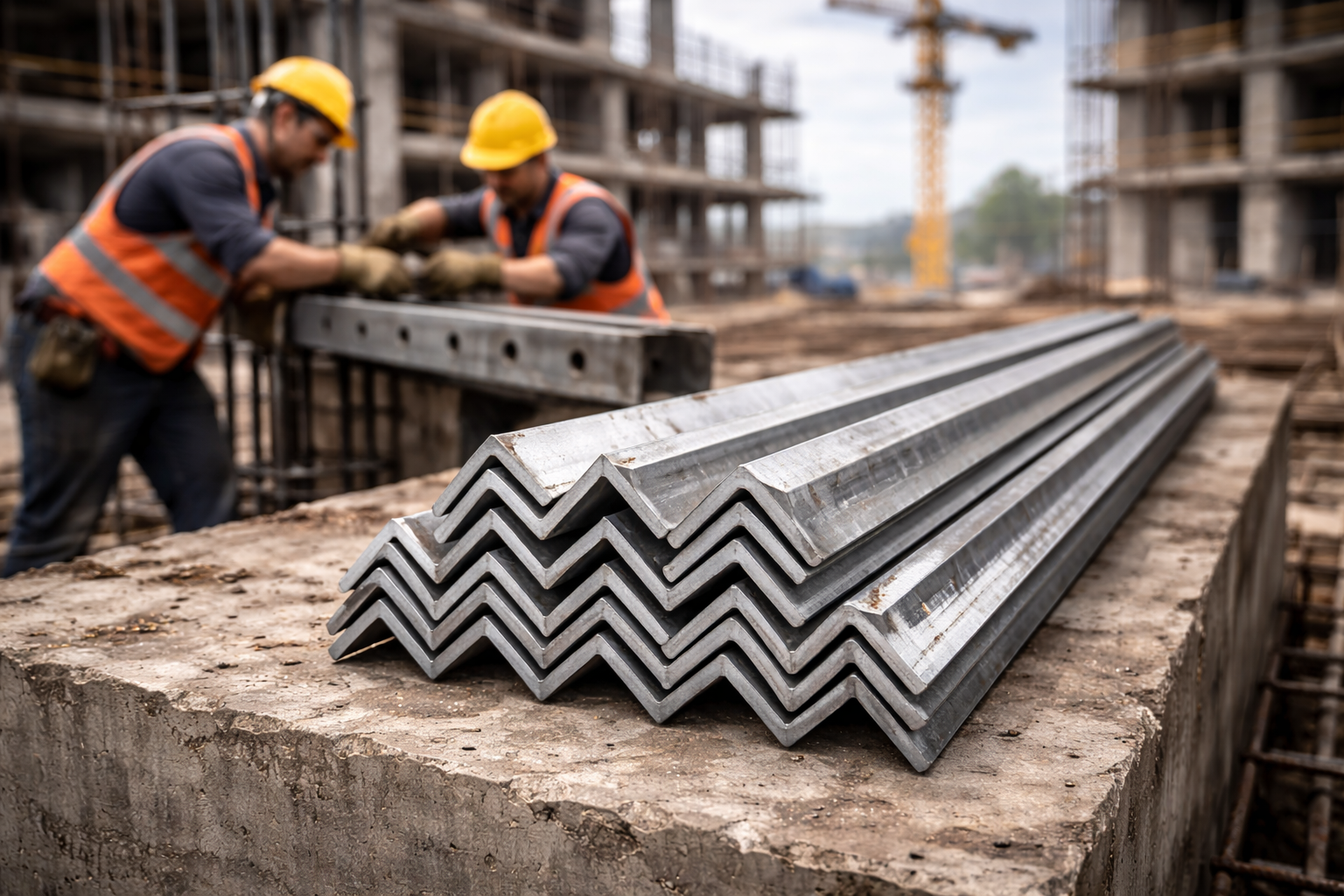
Unequal Angle vs Equal Angle Steel
While both sections form a 90-degree angle, their structural behavior differs because of leg dimensions. Choosing the right one depends on how loads are distributed within your design.
| Feature | Unequal Angle | Equal Angle |
|---|---|---|
| Leg Length | Different | Same |
| Load Distribution | Asymmetrical | Symmetrical |
| Best For | Specialized structural needs | General structural support |
| Flexibility | Higher for custom designs | Balanced and uniform |
If your project requires balanced strength and uniform support on both sides, equal angle steel is often sufficient. However, when dealing with offset loads, uneven connections, or constrained spaces, unequal angle steel provides greater design flexibility and targeted reinforcement.
Common Applications
Unequal angle steel is widely used in projects where structural demands are not evenly distributed.
Typical applications include:
-
Structural steel frameworks
-
Cross-bracing systems
-
Machinery supports
-
Construction reinforcements
-
Industrial platforms
-
Infrastructure projects
Because of its ability to handle asymmetrical forces efficiently, it is especially valuable in heavy-duty structural environments such as industrial plants and large-scale construction sites.
Choosing the Right Unequal Angle Steel
Selecting the correct section ensures safety, efficiency, and cost-effectiveness. Before making a decision, evaluate:
-
Load requirements – Understand expected stresses and structural roles
-
Span length – Longer spans may require thicker or larger sections
-
Environmental exposure – Coastal or humid conditions may require corrosion protection
-
Required thickness – Thicker sections increase load capacity
-
Steel grade – Ensure appropriate strength classification
-
Building code compliance – Confirm local structural regulations
For load-critical or engineered applications, consulting a structural engineer ensures accurate sizing and compliance.
Corrosion Protection Options
To enhance durability—particularly in outdoor or high-humidity environments—unequal angle steel can be protected through:
-
Hot-dip galvanizing for long-term zinc-based corrosion resistance
-
Anti-corrosion paint coatings for barrier protection
-
Powder coating for added durability and finish quality
-
Stainless steel manufacturing for maximum corrosion resistance
Selecting the proper treatment significantly extends service life and reduces maintenance costs.
Maintenance Tips
Regular maintenance helps preserve structural integrity and appearance.
To maximize lifespan:
-
Inspect periodically for signs of rust or coating damage
-
Reapply protective finishes when necessary
-
Keep surfaces clean and free from debris buildup
-
Address minor corrosion before it spreads
Preventive care reduces long-term repair expenses and structural risks.
Final Thoughts
Unequal angle steel is an ideal choice when your project requires asymmetrical support, flexible load distribution, or space-efficient structural solutions. Its unique geometry makes it especially valuable in industrial, infrastructure, and custom fabrication projects.
By understanding when and where to use unequal angle steel, you can improve structural performance, material efficiency, and long-term durability.
Choosing the right steel section isn’t just about strength — it’s about selecting the right shape for the job.
Find Quality Unequal Angle Steel for Your Project
If you’re sourcing reliable unequal angle steel in various grades, sizes, and finishes, Super Steel Australia offers dependable supply for construction, fabrication, and industrial applications.
Explore product options or request a quote today:
https://supersteelaust.com.au