
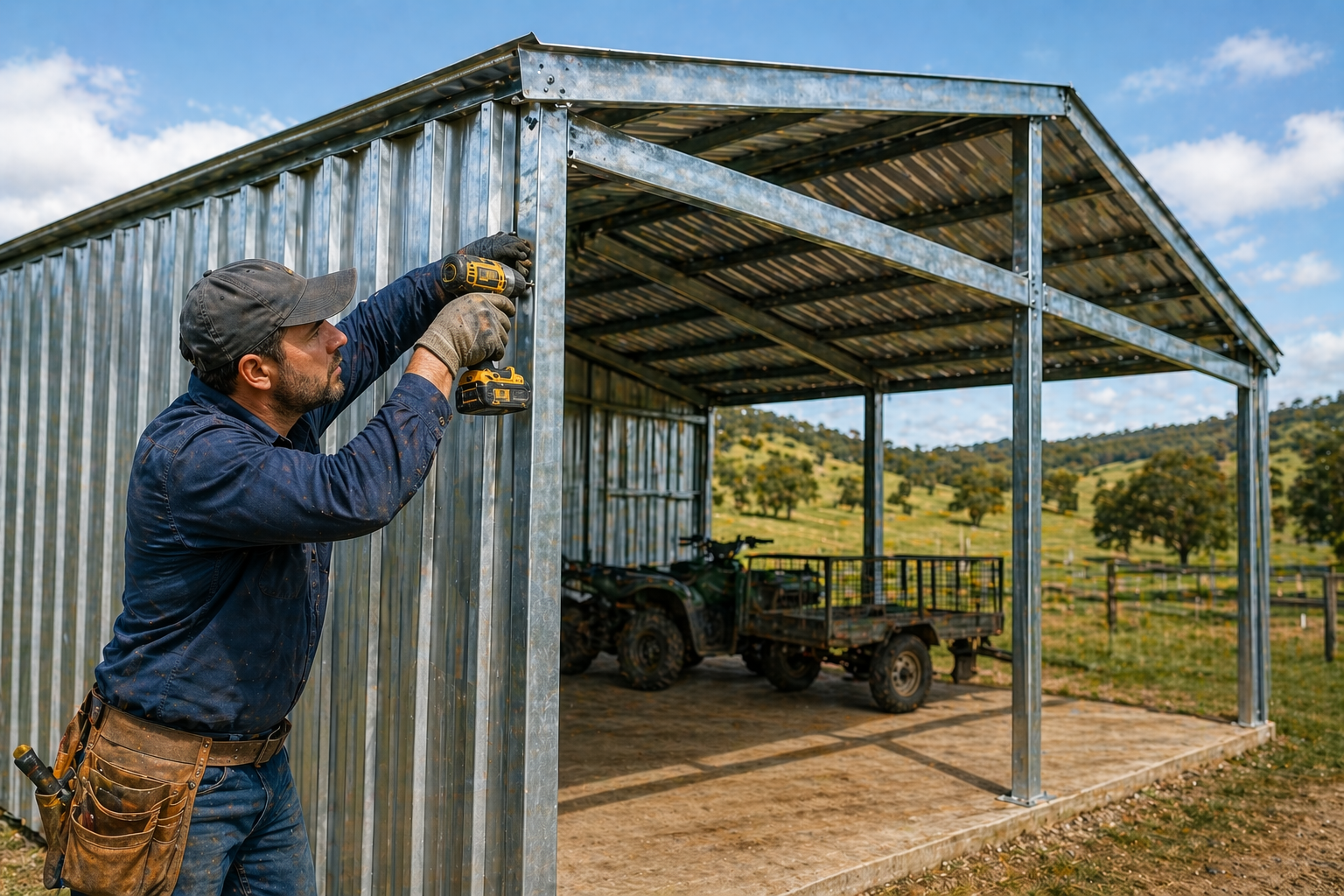
Building a rural shed is a major long-term investment, and the type of steel you choose will play a huge role in how well that shed performs over time. The right steel can improve durability, reduce maintenance, withstand harsh weather, and help protect everything stored inside. The wrong choice, on the other hand, can lead to corrosion, structural problems, and unnecessary repair costs down the line.
So, what is the best steel for rural sheds? The answer depends on several factors, including your environment, budget, and the intended use of the shed. A machinery shed in a dry inland region may not need the same level of corrosion resistance as a storage shed near the coast. Likewise, a residential barn or workshop may benefit from a different finish than a large agricultural structure built purely for function.
The good news is that several steel options consistently stand out for rural shed construction. Understanding the strengths of each one can help you choose the best material for your specific needs.
Why Steel Is Ideal for Rural Sheds
Steel has become the preferred material for rural sheds because it offers a combination of strength, longevity, and practicality that few other materials can match. Compared with timber and other traditional building materials, steel performs exceptionally well in demanding rural conditions.
Some of the biggest reasons steel is ideal for rural sheds include:
- High strength-to-weight ratio
Steel delivers excellent structural strength without excessive bulk, making it well suited for large-span rural sheds and open interior spaces. - Resistance to pests, rot, and fire
Unlike wood, steel will not be damaged by termites, decay, or fungal growth. It also offers strong fire resistance, which is especially valuable in rural and bushfire-prone areas. - Long service life
Depending on the type of steel and the environment, rural steel sheds can last 40 to 100+ years with proper design and maintenance. - Low maintenance requirements
Steel generally requires far less upkeep than timber, especially when coated or treated for corrosion resistance.
These benefits make steel an excellent choice for farm sheds, barns, workshops, machinery storage, and other agricultural structures. However, not all steel products offer the same performance. Choosing the right grade and coating is essential for getting the best long-term value.
Best Steel Options for Rural Sheds
1. Galvanized Steel
Best for: all-around performance, value, and general-purpose use
Galvanized steel is one of the most widely used materials in rural shed construction. It is coated with a layer of zinc, which protects the underlying steel from rust and corrosion. This makes it a practical and reliable choice for many rural environments.
One of the biggest advantages of galvanized steel is its balance of affordability and durability. It offers strong protection at a relatively accessible price, which is why it is commonly used for general farm sheds, storage buildings, and agricultural structures.
Key benefits:
- Zinc coating helps resist rust and corrosion
- Affordable and widely available
- Long lifespan, often 30 to 60+ years depending on conditions
- Suitable for a wide range of rural applications
Best for:
- General-purpose farm sheds
- Equipment and machinery storage
- Moderate to harsh weather conditions
For many rural property owners, galvanized steel is the best all-around option because it provides dependable performance without the premium cost of more specialized materials.
2. Galvalume Steel
Best for: enhanced corrosion resistance and exposed environments
Galvalume steel is another strong option for rural sheds, especially where corrosion resistance is a major priority. Instead of a standard zinc coating, Galvalume steel is coated with a mix of aluminum and zinc. This combination gives it excellent protection against corrosion and can outperform standard galvanized steel in certain environments.
It is also known for its heat-reflective properties, which can be particularly useful in hot climates where reducing heat absorption is important. Because of this, Galvalume steel is often used for roofing and wall cladding on rural sheds.
Advantages:
- Better corrosion resistance than standard galvanized steel in many conditions
- Reflects heat, helping improve thermal performance
- Long lifespan in exposed outdoor environments
- Well suited to roof and wall applications
Best for:
- Hot and humid climates
- Rural sheds in exposed locations
- Roof panels and wall cladding
- Areas where long-term weather resistance is a priority
Galvalume steel is a smart choice when you need greater resistance to the elements and better performance in demanding outdoor conditions.
3. Stainless Steel
Best for: premium durability and maximum corrosion resistance
Stainless steel offers the highest level of corrosion resistance among the common steel options used in rural construction. Because it contains chromium, it forms a protective layer that helps resist rust, moisture, salt, and chemical exposure.
This makes stainless steel an excellent choice for rural sheds built in coastal areas, high-rainfall regions, or other locations where corrosion is a major concern. It is also a strong long-term option for structures that need to last for decades with minimal upkeep.
Pros:
- Extremely long lifespan, often 50 to 100+ years
- Highly resistant to moisture, salt, and chemical exposure
- Minimal maintenance required
- Ideal for harsh or corrosive environments
Cons:
- Much higher upfront cost than galvanized or Galvalume steel
Best for:
- Coastal or marine environments
- High-moisture rural areas
- Premium, long-term shed investments
- High-value storage or agricultural structures
While stainless steel is not always the most budget-friendly option, it can be worth the investment when maximum lifespan and minimal maintenance are the top priorities.
4. Pre-Painted or Color-Coated Steel
Best for: weather protection, reduced upkeep, and improved appearance
Pre-painted or color-coated steel is steel that comes with a factory-applied finish designed to improve both protection and visual appeal. This coating acts as an additional barrier against the weather while also giving the shed a cleaner, more finished appearance.
This type of steel is often used for sheds that are more visible, such as residential farm sheds, workshops, barns, and lifestyle property buildings. It combines functionality with design flexibility, making it a practical option when appearance matters alongside performance.
Benefits:
- Added protection against weather and surface corrosion
- Attractive finish available in different colours and styles
- Reduced maintenance compared with untreated steel
- Ideal for visible or multi-purpose structures
Best for:
- Residential or lifestyle farm sheds
- Barns and workshops
- Sheds where aesthetics matter
- Properties wanting a polished, modern appearance
Pre-painted steel is especially useful when you want a shed that not only performs well, but also looks good on the property.
5. High-Tensile Structural Steel
Best for: framing strength, large spans, and heavy-duty shed structures
While cladding materials often get the most attention, the structural frame of a rural shed is just as important. High-tensile structural steel is commonly used for the framework because it provides superior strength while using less material.
This makes it ideal for large rural sheds that need to withstand wind loads, roof weight, stored equipment, and other structural demands. Properly treated high-tensile steel framing can deliver long-term reliability even in challenging conditions.
Why it matters:
- Higher strength with less material
- Excellent for handling heavy loads and wind stress
- Supports larger shed spans and open interiors
- Durable when properly coated and installed
Best for:
- Large machinery sheds
- Industrial or agricultural storage buildings
- High-wind areas
- Rural structures requiring strong, long-lasting frames
For many rural sheds, high-tensile structural steel forms the backbone of the building, even if other coated steel products are used for the walls and roof.
Key Factors to Consider When Choosing Steel
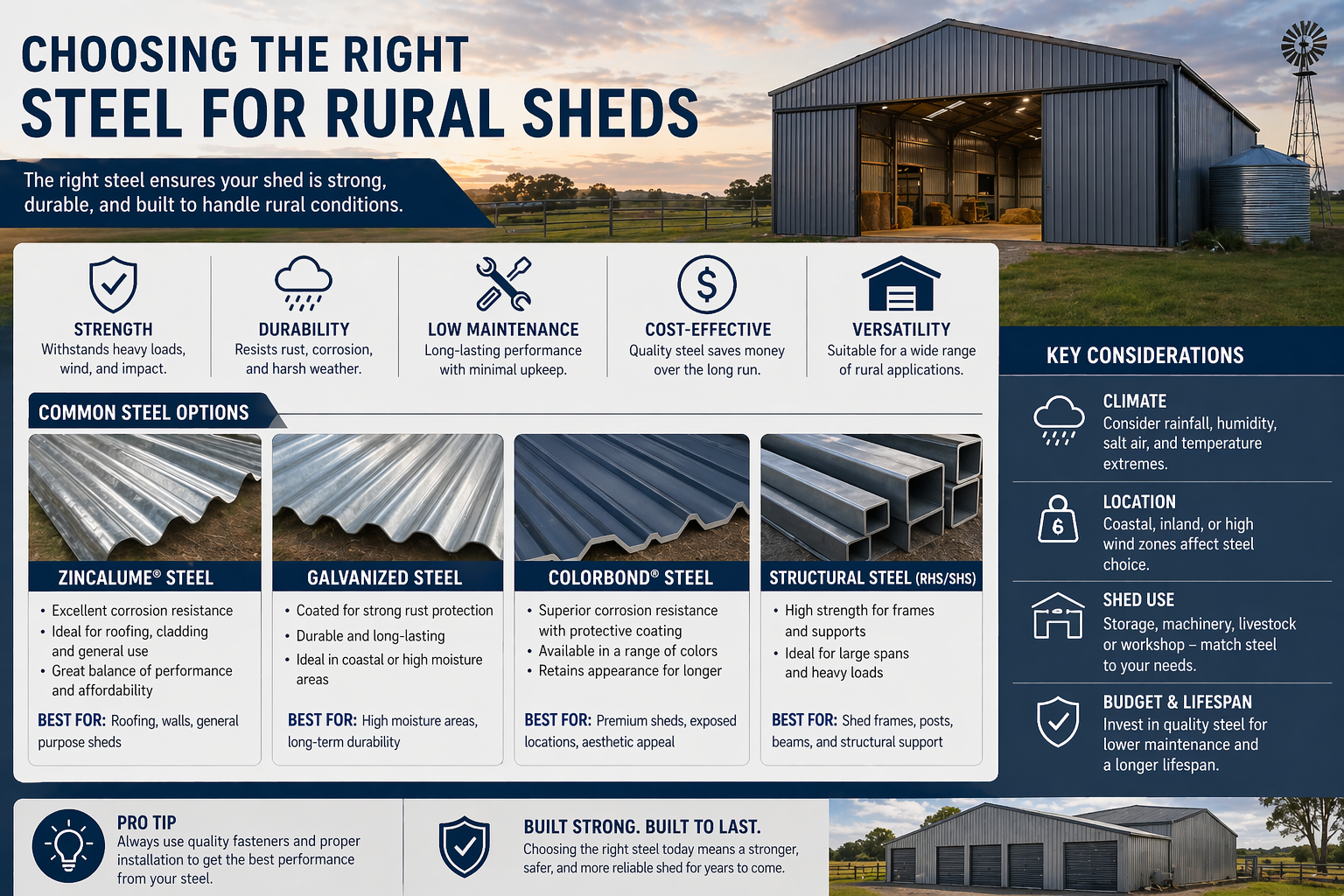
Selecting the right steel for a rural shed involves more than comparing prices. The best choice depends on where the shed will be built, how it will be used, how much maintenance you are prepared to do, and how long you want the structure to last. Taking these factors into account from the start can help you avoid costly repairs, premature corrosion, and performance issues later on.
1. Climate and Environment
Your location has a major influence on how well steel will perform over time. Different environments expose steel to different levels of moisture, salt, heat, and weather extremes.
- Coastal areas: Stainless steel or Galvalume steel is often the better option because both offer strong resistance to corrosion caused by salt air and moisture.
- Wet or humid climates: Corrosion-resistant coatings should be a priority, since frequent moisture exposure increases the risk of rust.
- Dry inland areas: Standard galvanized steel is usually a reliable and cost-effective choice, as the lower moisture levels reduce corrosion risk.
Choosing steel that matches your local environment is one of the most effective ways to improve shed durability and reduce maintenance over the long term.
2. Purpose of the Shed
How you plan to use the shed should also guide your steel selection. Different applications place different demands on the building materials.
- Storage sheds: Basic galvanized steel is often sufficient for general equipment, tools, or hay storage.
- Livestock sheds: These need good ventilation and stronger corrosion resistance due to moisture, waste, and changing temperatures inside the structure.
- Workshops: Insulation, coated panels, and more finished materials may be worth considering for comfort, protection, and appearance.
A machinery shed, animal shelter, and workshop may all look similar from the outside, but they often require different steel products to perform at their best.
3. Budget vs Lifespan
Balancing upfront cost with long-term value is essential when planning a rural shed.
- Lower upfront cost: Galvanized steel is often the most affordable practical option.
- Mid-range investment: Galvalume or coated steel can provide better corrosion resistance and potentially lower upkeep.
- Premium option: Stainless steel delivers the highest corrosion resistance and longest potential lifespan, but at a much higher initial cost.
👉 Spending more upfront can often reduce long-term maintenance, repair, and replacement costs, especially in demanding environments.
4. Maintenance Requirements
Different steel types come with different upkeep expectations. Some are designed to be low maintenance, while others require more frequent inspections and protective treatment.
- Low maintenance: Stainless steel and coated steel products
- Moderate maintenance: Galvanized steel
- High maintenance: Untreated steel, which is generally not recommended for rural sheds
If your goal is to minimize ongoing work, investing in better coatings or more corrosion-resistant materials can make a noticeable difference over the life of the structure.
5. Structural Design and Installation
Even the highest-quality steel can underperform if the shed is poorly designed or installed. Good installation practices are just as important as choosing the right material.
Key considerations include:
- Ensuring proper drainage so water does not pool around the structure or on roof surfaces
- Using quality fasteners, brackets, and joints that match the durability of the steel
- Allowing for expansion and contraction as temperatures change
- Avoiding design details that trap moisture or create weak points
A well-designed and properly installed steel shed will last significantly longer than one built with shortcuts, even if both use similar materials.
🔧 Tips to Maximize Steel Shed Lifespan
Once your shed is built, a few simple maintenance habits can help it last much longer and stay in better condition.
- Apply protective coatings in areas that need extra corrosion resistance
- Inspect the shed regularly for scratches, rust spots, or coating damage
- Keep the structure clean and dry, especially around rooflines, gutters, and base areas
- Repair small issues early before they spread into larger and more expensive problems
👉 These practices can extend your shed’s life by decades, helping you get more value from your investment.
❓ FAQ: Steel for Rural Sheds
What is the best steel for shed construction?
Galvanized steel and Galvalume steel generally offer the best balance of durability, affordability, and long-term performance for most rural shed applications.
How long do steel sheds last?
A well-built steel shed can last 40 to 100+ years, depending on the type of steel, the environment, and how well it is maintained.
Is Galvalume better than galvanized steel?
In many cases, yes. Galvalume often offers better corrosion resistance, especially in humid or coastal environments, making it a strong choice for roofing and cladding.
Do steel sheds rust over time?
Yes, steel can rust over time, but proper coatings, good design, and regular maintenance can significantly slow down corrosion and extend the shed’s lifespan.
Final Thoughts
Choosing the right steel for your rural shed is not just about the initial purchase price. It is about selecting a material that can handle your local environment, suit the way the shed will be used, and deliver reliable long-term performance with manageable maintenance.
For most applications, galvanized steel or Galvalume steel offers the best overall value. These materials provide a strong balance of durability, corrosion resistance, and cost-effectiveness. In harsher conditions, such as coastal or high-moisture environments, investing in premium materials like stainless steel may cost more upfront but can save money over time through lower maintenance and a longer service life.
Build a Shed That Lasts
Looking for durable, high-quality steel solutions for rural sheds, workshops, barns, or farm storage? Choosing the right supplier is just as important as choosing the right material.
Explore strong, reliable steel products built for Australian conditions at Super Steel Australia:
👉 https://supersteelaust.com.au/