
Steel prices can vary widely depending on market conditions, material specifications, and project requirements. Whether you’re working on construction, fabrication, manufacturing, or infrastructure, understanding what drives steel costs can help you budget more accurately and avoid unexpected expenses.
Steel is a globally traded commodity, and its price is influenced by raw material costs, supply and demand, processing requirements, and broader economic factors. Here’s a clear breakdown of the key factors that affect steel pricing and how they may influence your next steel purchase.
1. Raw Material Costs
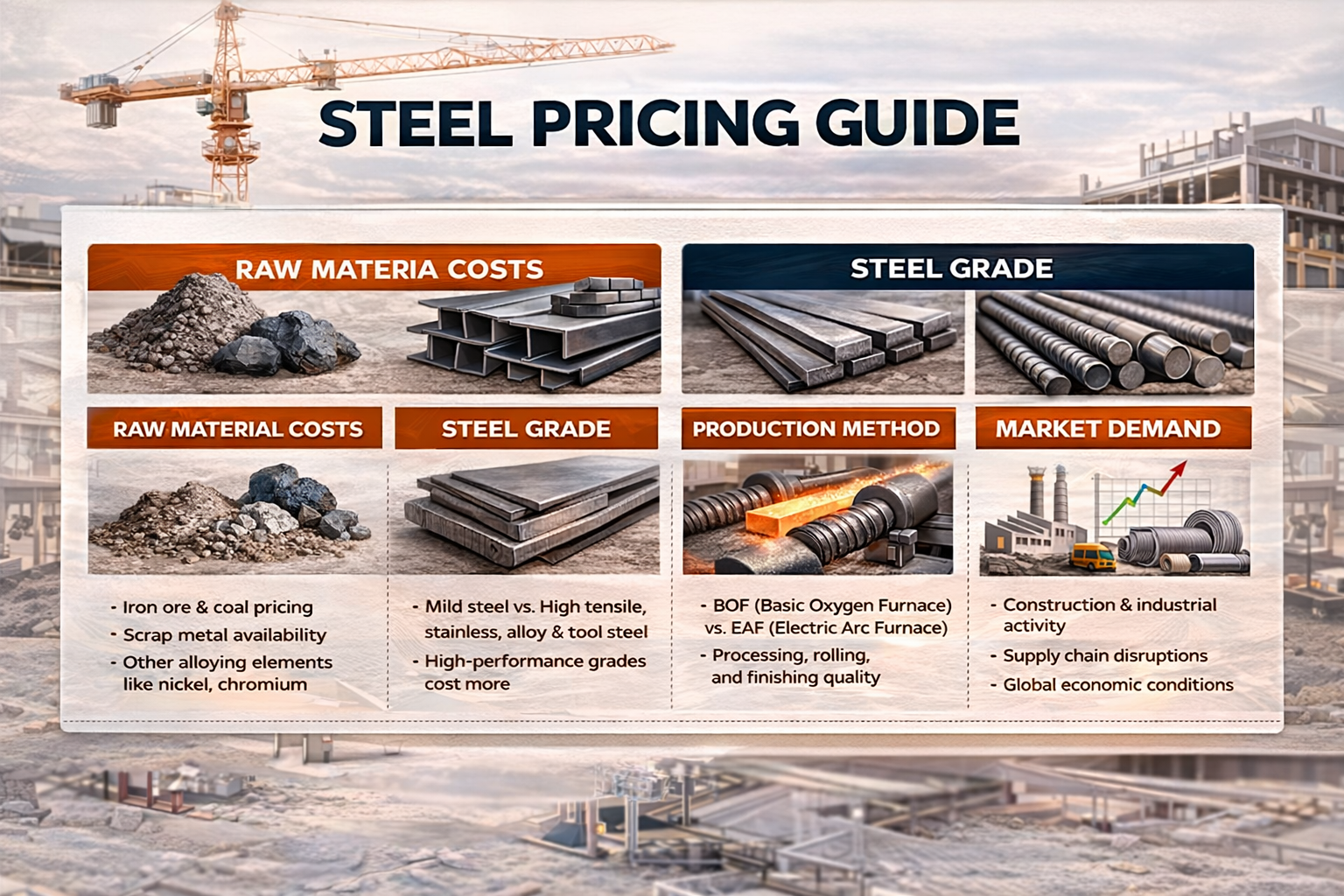
The cost of raw materials is one of the biggest drivers of steel pricing. Since steel is made primarily from iron and carbon-based inputs, any changes in these materials directly impact production costs.
Key Raw Materials
- Iron ore – the primary ingredient in steel production
- Coking coal – used in blast furnace steelmaking
- Scrap steel – used in electric arc furnace recycled steel production
Why it matters:
When the prices of these inputs rise, steel manufacturers face higher production costs, which are typically passed on to buyers.
2. Supply and Demand
Steel pricing follows basic economic principles. When demand increases, prices tend to rise, and when demand drops, prices often fall.
High Demand Can Be Driven By
- construction booms
- infrastructure development
- manufacturing growth
- government spending on public projects
Low Demand May Result From
- economic slowdowns
- reduced industrial activity
- lower construction output
Why it matters:
Timing your purchase during periods of lower demand can sometimes help reduce costs.
3. Global Market Conditions
Steel is traded internationally, so global events and policies can significantly influence local prices.
Key Influences Include
- trade policies and tariffs
- import and export restrictions
- currency exchange rates
- geopolitical events
Example:
Tariffs on imported steel can reduce supply and increase domestic prices.
Why it matters:
Even local projects are affected by global supply chains and international market trends.
4. Type and Grade of Steel
Not all steel is priced the same. The type and grade you choose will have a direct impact on cost.
Price Variations Depend On
- Grade – higher-strength or specialised grades generally cost more
- Type – stainless steel is typically more expensive than mild steel
- Coatings – galvanised, zincanneal, or Supergal steel can add to the price
Why it matters:
Higher-performance materials cost more upfront but may offer better long-term value. For more guidance, read our guide to steel grades.
5. Manufacturing and Processing Costs
The more processing steel undergoes, the higher the cost. Processing can improve strength, finish, corrosion resistance, or fabrication accuracy, but it also adds labour, equipment, and production expenses.
Common Processing Factors
- hot-rolled vs cold-rolled production
- heat treatment
- galvanising or protective coatings
- precision cutting, drilling, or fabrication
Why it matters:
Additional processing improves performance and finish but increases production costs. For fabrication-focused projects, see our guide to hot-rolled steel sheets for fabrication and welding.
6. Size, Shape, and Dimensions
Steel pricing is also influenced by the physical characteristics of the product.
Key Considerations
- thickness and weight
- length and size
- shape, such as beams, channels, sheets, flat bars, and angles
Why it matters:
Larger and heavier sections require more raw material, increasing overall cost. For example, structural sections such as universal beams, universal columns, and PFC channel steel are priced differently depending on size and specification.
7. Transportation and Logistics
Steel is heavy and bulky, making transport a significant part of the total cost.
Factors That Affect Delivery Costs
- distance from supplier
- fuel prices
- shipping method, such as local or imported supply
- handling and unloading requirements
Why it matters:
Projects in remote areas or requiring international shipping may face higher logistics costs.
8. Availability and Lead Times
Supply availability can influence both pricing and project timelines.
Pricing May Increase When
- specific sizes or grades are in short supply
- custom or uncommon products are required
- urgent orders require expedited processing
Why it matters:
Planning ahead and ordering standard sizes can help reduce costs and avoid delays.
9. Coatings and Finishes
Protective treatments improve durability but add to the initial price of steel.
Common Coatings Include
- galvanising or zinc coating
- powder coating
- painting or protective finishes
- specialised coatings such as Supergal
Why it matters:
While coatings increase upfront cost, they often reduce maintenance and extend the lifespan of the material. Explore hot-dip galvanised steel products or learn more about hot-dip galvanised steel for outdoor builds.
10. Economic and Industry Trends
Broader economic conditions also play a role in steel pricing.
Key Influences
- inflation
- energy costs, since steel production is energy-intensive
- labour costs
- government infrastructure spending
Why it matters:
Rising energy and production costs can increase steel prices across the market.
How to Manage Steel Costs Effectively
Understanding what drives steel pricing allows you to make smarter purchasing decisions.
Practical Tips
- plan purchases ahead of peak demand periods
- choose standard sizes and grades where possible
- balance upfront cost with long-term durability
- consider coated steel for reduced maintenance costs
- work with a reliable supplier for accurate pricing and availability
For outdoor, rural, or exposed applications, the cheapest steel may not always provide the best long-term value. Products such as Supergal steel or zincanneal sheet steel may help reduce future maintenance costs depending on the environment.
Final Thoughts
Steel pricing is not fixed. It is influenced by global market trends, raw material costs, manufacturing processes, and project-specific requirements. Understanding these variables allows you to make more informed purchasing decisions, avoid unexpected expenses, and better manage your overall project budget.
Whether you’re sourcing steel for a small residential build, a rural structure, or a large-scale commercial or industrial project, staying aware of pricing factors can help you secure the right materials at the right time and at the best possible value.
Planning ahead, choosing appropriate grades and finishes, and working with a reliable supplier can make a significant difference in both cost efficiency and long-term performance.
Get the Best Value Steel for Your Project
Looking for competitive steel pricing without compromising on quality? Partnering with a trusted supplier ensures you get the right materials, expert advice, and reliable service for your project.
Browse Super Steel Australia’s steel range or contact the team for tailored support to help you stay on budget and build with confidence.