

Universal Columns (UCs) are one of the most widely used structural steel sections in construction and engineering. Designed primarily for vertical load-bearing applications, they are valued for their strength, stability, and ability to support heavy structural loads over multiple levels.
From commercial buildings and warehouses to industrial facilities and infrastructure projects, universal columns play a central role in creating safe and reliable structural steel frameworks. Their shape and strength make them especially suitable for columns, posts, and other vertical supports where compression resistance is critical.
What Are Universal Columns?
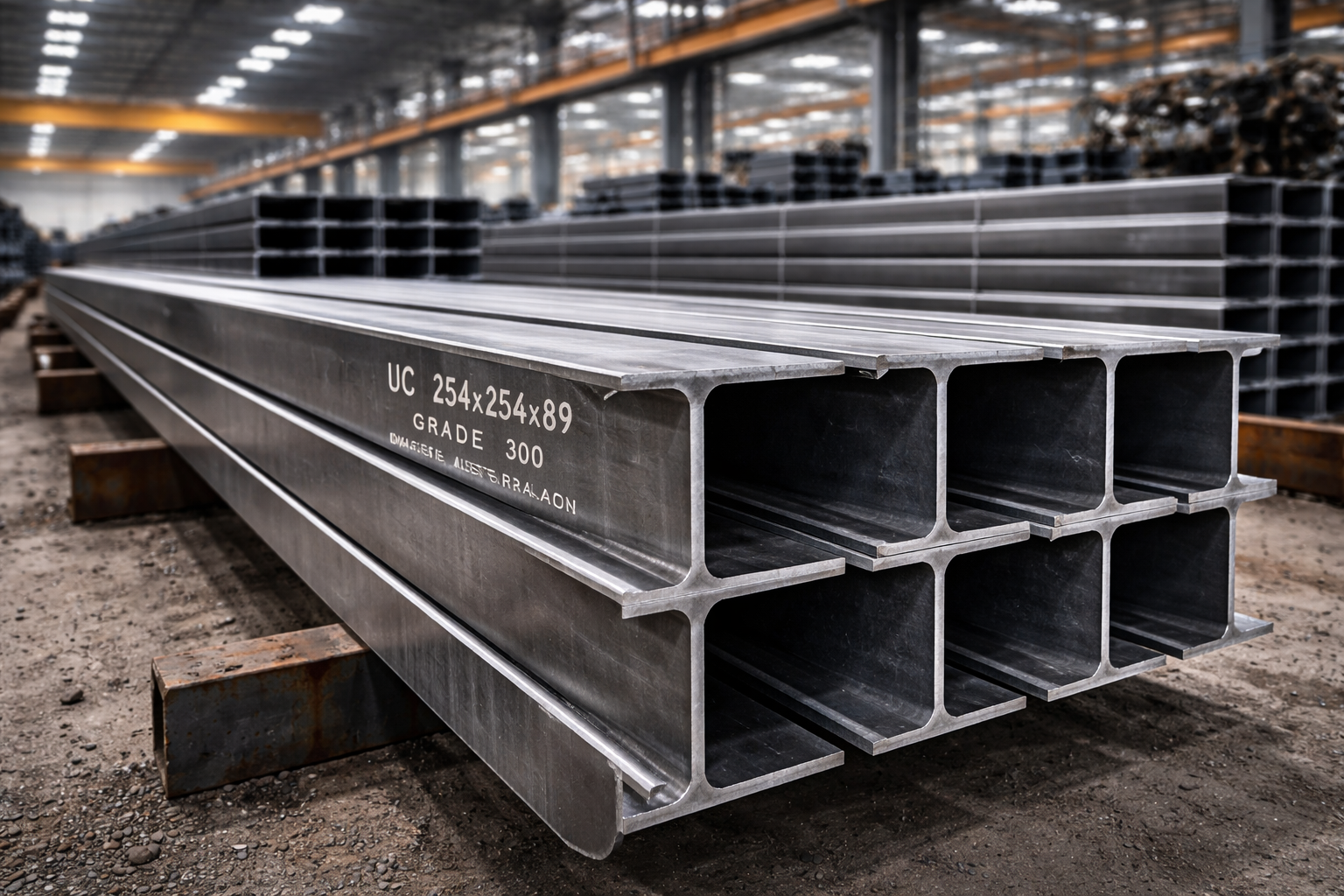
Universal columns are H-shaped structural steel sections designed mainly to carry axial loads, which are vertical loads transferred downward through a structure. They are often used as upright members that support beams, floors, roofs, and other structural elements above them.
A universal column typically features:
- A vertical web in the centre
- Two wide, parallel flanges on either side
- A profile with similar depth and flange width, giving it a more square or balanced shape compared to a universal beam
This geometry helps universal columns distribute loads efficiently and remain stable under compression, which is why they are commonly selected for structural support roles. For a broader overview of steel sections, read our beginner guide to structural steel.
Why Universal Columns Matter in Construction
In any steel-framed structure, vertical support is just as important as horizontal load distribution. Universal columns provide the compressive strength needed to transfer loads from the upper parts of a building down to the foundation.
They are commonly used where structures need to:
- Support multiple storeys
- Carry heavy roof or floor loads
- Maintain stability under compression
- Provide strong vertical framing elements
- Perform reliably in commercial and industrial environments
Because of their robust profile, universal columns are a preferred choice for projects where strength, safety, and long-term structural performance are essential.
Key Characteristics of Universal Columns
High Load-Bearing Capacity
One of the main advantages of universal columns is their ability to support substantial vertical loads. Their shape is designed to resist compression effectively, making them suitable for heavy-duty structural applications.
Symmetrical Shape for Uniform Strength
Unlike some other steel sections, universal columns have a more balanced profile, with flange width and depth that are closer in proportion. This symmetry helps provide more even structural behaviour and improves their performance as vertical supports.
Excellent Stability Under Compression
Since universal columns are designed primarily for compression loads, they offer strong resistance to buckling when properly selected and installed. This makes them highly reliable in multi-level and load-intensive structures.
Suitable for Multi-Storey Structures
Because they can carry large loads over height, universal columns are commonly used in multi-storey buildings, warehouses, commercial developments, and industrial projects.
Available in a Wide Range of Sizes and Weights
Universal columns are manufactured in many different sizes and mass options, allowing engineers and builders to choose a section that matches the structural demands of the project.
How Universal Columns Differ from Universal Beams
Although universal columns and universal beams may look similar at first glance, they are designed for different structural purposes.
Universal Columns
- Primarily used for vertical load-bearing
- Have a more square or balanced profile
- Better suited to compression applications
Universal Beams
- Primarily used for horizontal load-bearing
- Usually have a deeper profile than width
- Better suited to bending and spanning loads
In simple terms, universal columns are typically chosen for upright support members, while universal beams are more commonly used for floors, roofs, and horizontal structural spans. Learn more about how to choose universal beams for construction projects.
Common Uses of Universal Columns
Universal columns are used across a wide range of construction, industrial, and infrastructure projects because of their ability to carry heavy vertical loads with excellent stability. Their strong, balanced shape makes them one of the most reliable structural steel sections for upright support applications.
Building Construction
In residential, commercial, and multi-storey projects, universal columns are commonly used as the main vertical support members within the structural frame.
Typical building applications include:
- Vertical supports in residential and commercial buildings
- Structural frameworks using universal beams and universal columns
- Load-bearing columns in basements and foundations
- Support members for mezzanine floors
- Internal and external steel framing systems
Because they are designed to carry axial loads efficiently, universal columns are essential in projects where structural integrity and long-term stability are critical.
Industrial Structures
Universal columns are also widely used in industrial environments where structures need to support heavy loads, large spans, and demanding operating conditions.
Common industrial uses include:
- Factory frameworks
- Warehouse supports
- Heavy equipment structures
- Machinery support frames
- Industrial sheds and processing plants
Their strength and compression resistance make them ideal for facilities that require durable structural members capable of handling significant weight and operational stress. Choosing the correct material is also important, so read our guide to steel grades when comparing options.
Infrastructure Projects
In infrastructure and civil engineering, universal columns are used in projects that require dependable support under high loads and challenging conditions.
Typical infrastructure uses include:
- Bridge supports
- Elevated platforms
- Transport structures
- Access towers and service platforms
- Public and industrial support systems
Their high load-bearing capacity and structural reliability make them well suited to major projects where safety and performance are non-negotiable.
Residential Applications
Although universal columns are often associated with large-scale construction, they are also highly useful in residential projects where strong vertical support is needed.
Common residential applications include:
- House extensions
- Carports, garages, and rural structures
- Load-bearing posts in renovations
- Steel supports for open-plan spaces
- Veranda and patio structures
For residential builders and renovators, universal columns can provide strong support while allowing for more open and flexible design layouts.
Standard Sizes of Universal Columns
Universal columns are typically designated by their depth and weight per metre, which helps identify their approximate dimensions and structural capacity.
Example: 200UC46
A section labelled 200UC46 generally means:
- 200 mm depth
- UC = universal column
- 46 kg per metre
This naming system makes it easier for engineers, fabricators, and builders to compare sections and select the right one for a project.
Key Size Considerations
Choosing the correct universal column size is essential for structural safety, stability, and cost efficiency. Several factors influence which size is most appropriate.
Depth and Width
The depth and flange width affect the column’s ability to carry loads and remain stable under compression. A more substantial section may be needed for taller structures or heavier vertical loads.
Weight Per Metre
The mass of the column per metre is a useful indicator of how much material the section contains. In general, heavier sections offer greater strength, but they also increase handling, transport, and installation costs.
Thickness of the Web and Flanges
The thickness of the web and flanges contributes to the column’s durability, load capacity, and resistance to buckling. Thicker sections are often required in more demanding structural applications.
Matching Size to the Project
Universal columns are available in a wide range of sizes to suit everything from light residential loads to large commercial, industrial, and infrastructure projects. The right choice depends on load requirements, building height, connection details, buckling risk, environmental exposure, and engineering specifications.
Because universal columns are critical structural members, size selection should always be confirmed through proper engineering design.
Benefits of Universal Columns
Universal columns offer several important advantages that make them a preferred choice in steel construction.
1. Exceptional Load-Bearing Strength
Universal columns are specifically designed to support heavy vertical loads. Their shape and section properties make them highly effective at carrying compression forces, which is why they are essential for structural integrity in many buildings and frameworks.
2. High Stability
One of the main benefits of universal columns is their balanced profile. Their relatively equal depth and flange width help reduce the risk of buckling under compression, especially when compared with sections that are less suited to vertical load-bearing.
3. Versatility
Universal columns are used in a broad range of projects, from house extensions and garages to warehouses, high-rise buildings, bridges, and industrial structures. This makes them one of the most versatile structural steel sections available.
4. Ease of Fabrication and Installation
Universal columns can be cut, drilled, welded, and connected using a range of common fabrication methods. They are compatible with various connection systems, including base plates, beam connections, brackets, and bolted assemblies.
Why it matters: This makes them practical for workshop fabrication as well as on-site installation, helping improve efficiency across many types of construction projects.
5. Durability
When treated with hot-dip galvanising, protective coatings, or paint systems, universal columns can offer strong resistance to corrosion and environmental exposure. This makes them suitable for both indoor and outdoor use, depending on the project requirements.
For exposed steelwork, read more about hot-dip galvanised steel for outdoor builds.
6. Space Efficiency
Despite their strength, universal columns are relatively compact in profile. Their symmetrical shape allows them to provide substantial support without taking up excessive usable space, which can be particularly valuable in building design.
Universal Columns vs Universal Beams
Universal columns and universal beams are both important structural steel sections, but they are designed for different roles within a structure.
| Feature | Universal Columns (UC) | Universal Beams (UB) |
|---|---|---|
| Shape | More square, H-shaped | Taller and narrower, I-shaped |
| Primary Use | Vertical support | Horizontal load-bearing |
| Load Type | Axial loads, compression | Bending and spanning loads |
| Stability | Higher for vertical loads | Higher for spanning loads |
Key Difference
Universal columns are primarily designed to carry vertical compression loads, making them ideal for posts, columns, and structural supports. Universal beams, on the other hand, are designed for horizontal applications, where they need to resist bending across spans.
Why This Matters
Choosing between a UC and a UB depends on the function of the member within the structure. In many steel-framed buildings, both are used together, with universal columns for upright support and universal beams for floor, roof, or span-bearing elements.
Why Universal Columns Remain a Preferred Structural Choice
Universal columns continue to be a go-to material in modern construction because they offer a strong combination of compression strength, stability, fabrication flexibility, and space efficiency. Whether used in residential projects or large-scale infrastructure, they provide dependable support where it matters most.
Their ability to suit a wide range of project sizes and load conditions makes them an essential part of structural steel design.
How to Choose the Right Universal Column
Selecting the right universal column (UC) is critical for ensuring structural safety, performance, and long-term durability. Because UCs are responsible for carrying vertical loads, choosing the correct size and specification should always be based on careful planning and professional guidance.
Key Factors to Consider
Load Requirements
Start by determining the total load the column will need to support. This includes:
- Dead loads such as permanent structural weight
- Live loads such as people, equipment, and movable items
- Additional forces such as wind or seismic loads
Choosing a UC that can safely handle these loads is essential to prevent structural failure.
Height of the Structure
The height of the column directly affects its stability. Taller columns are more prone to buckling and may require larger or heavier UC sections, additional bracing, or stricter engineering considerations.
Environmental Conditions
The environment where the column will be installed plays a major role in material selection and protection. Consider exposure to moisture, rain, coastal air, salt, chemicals, or industrial conditions.
Recommended Solutions
- Galvanised universal columns for corrosion resistance
- Protective coatings or paint systems for outdoor use
- Regular maintenance plans for long-term durability
Selecting the correct material also starts with understanding the options available. Read our guide to different steel types before choosing a product.
Compliance with Standards
Universal columns must meet relevant building codes and engineering standards. This helps ensure structural safety, construction approval, and reduced risk of future structural issues.
Always verify that the selected UC complies with local regulations and project specifications.
Tip: Consult a Structural Engineer
Even with a basic understanding of universal columns, professional input is essential. A structural engineer can perform accurate load and stability calculations, recommend the correct UC size and grade, ensure compliance with safety standards, and optimise the design for both performance and cost.
Important: Never rely on guesswork when selecting structural steel components.
Final Thoughts
Universal columns are a fundamental part of modern construction, providing the vertical strength needed to support buildings, infrastructure, and industrial structures. Their combination of load-bearing capacity, stability, and versatility makes them indispensable across a wide range of projects.
Whether you’re working on a small residential build, a renovation, or a large commercial development, choosing the right universal column and appropriate steel specification is key to ensuring safety, durability, and long-term structural performance.
Taking the time to assess load requirements, environmental factors, and compliance standards, while working with qualified professionals, will help you make the right decision for your project.
Get the Right Universal Columns for Your Project
Whether you’re constructing a commercial building, industrial facility, warehouse, or residential extension, choosing the correct structural steel section is essential for long-term performance. Super Steel Australia supplies quality structural steel products backed by expert advice to help you select the right solution for your project.
Browse our steel range or contact the Super Steel Australia team to request a quote today.