
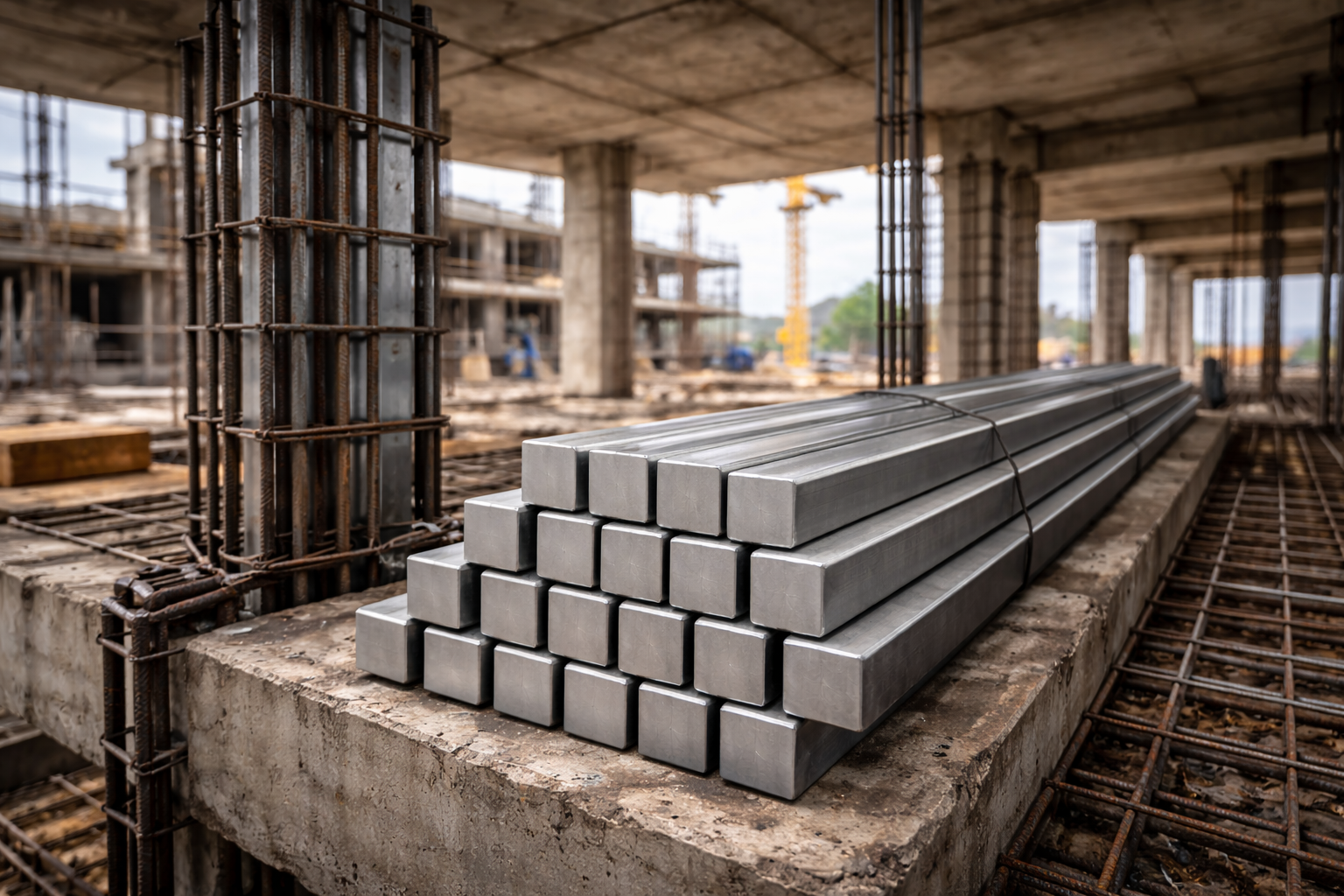
Square bars are a core material in metal fabrication, engineering, and construction. Their uniform shape, strength, and adaptability make them a reliable option for structural supports, machined parts, and custom assemblies.
From workshop fabrication to heavy-duty industrial builds, square bars deliver consistency, durability, and ease of handling. If you’re comparing available steel products, explore Super Steel Australia’s range of steel products for structural and fabrication applications.
What Are Square Bars?
Square bars are solid metal rods with a square cross-section. They are manufactured using processes such as hot rolling, cold drawing, or forging, depending on the required strength, finish, and tolerance.
Understanding the differences between materials can help you choose the right product. Read our guide on different steel types for your projects to compare common structural steel options.
Common Specifications
Square bars are available in a broad range of dimensions and finishes:
- Sizes: typically from 6 mm × 6 mm up to 100 mm × 100 mm or larger
- Lengths: commonly supplied in 6-metre stock lengths, with custom cut options available
- Finishes: black, bright, coated, or treated for corrosion resistance
Their straight edges and flat sides make them easy to clamp, align, weld, and machine, which is a major advantage in fabrication work.
Why Square Bars Are Preferred in Fabrication
The square profile offers practical benefits that simplify fabrication and structural assembly. Square bars provide consistent alignment, better resistance to twisting in certain applications, easy joining with flat plates and angle sections, and reliable load performance in structural and mechanical settings.
Because of these qualities, square bars are often chosen when stability, precision, and secure fitting matter.
Types of Square Bars
Different projects require different material grades. Selecting the right square bar depends on strength requirements, environmental exposure, and fabrication needs.
1. Mild Steel Square Bars
Mild steel square bars are affordable, widely available, and easy to cut, weld, and drill. They are commonly used for general fabrication, frames, brackets, and non-critical structural components.
If you’re selecting between material grades, see our guide on mild steel vs carbon steel.
2. Stainless Steel Square Bars
Stainless steel square bars are used where corrosion resistance is important, such as humid, marine, washdown, or food-related environments. They offer long service life with minimal maintenance when correctly specified for the application.
3. Alloy Steel Square Bars
Alloy steel square bars provide higher strength, toughness, and wear resistance than standard mild steel. They are commonly selected for machinery components, industrial parts, and applications exposed to higher loads.
4. Bright Square Bars
Bright square bars are cold-finished with a smooth surface and tighter dimensional tolerances. They are often used when appearance, accuracy, or fit is critical in precision machining and engineered assemblies.
Common Fabrication Applications
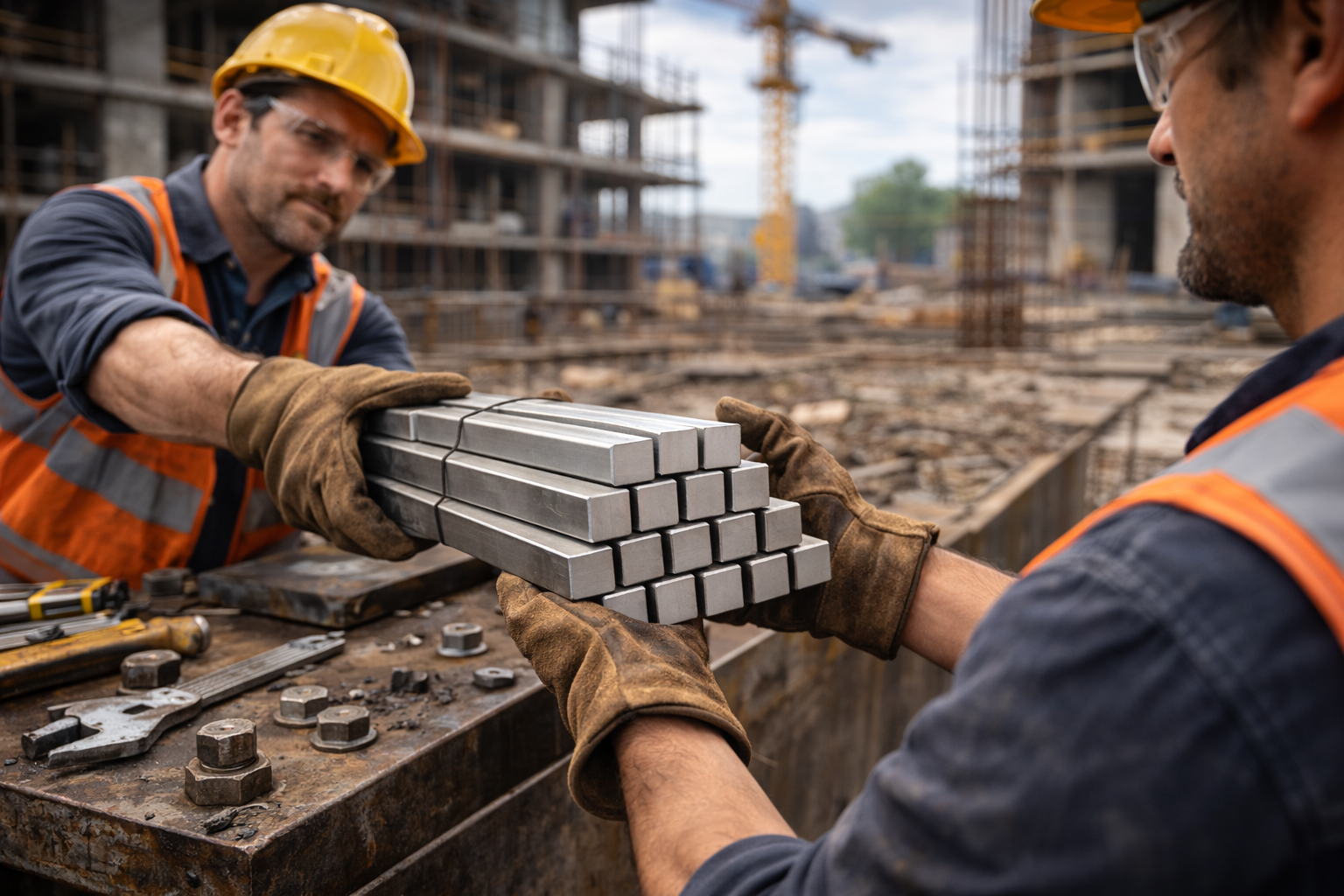
Square bars are used across numerous fabrication and structural projects due to their strength and geometric simplicity. They are frequently used alongside other merchant bar products, including flat bars, round bars, equal angles, and reinforcing bars depending on the fabrication requirements.
Structural Framework
In structural framework, square bars are commonly used for frames, subframes, support members, reinforcements, and bracing elements. Their flat surfaces make it easier to weld or bolt them to other structural components.
For projects requiring angle sections, equal angle steel may also be suitable for framing, supports, and structural bracing.
Machinery Components
Square bars are often machined into functional components where shape and strength are important. Common uses include tool parts, fasteners, pins, mechanical linkages, and application-dependent shaft components.
Where rotational components are required, compare square bars with round bars, which are commonly used for shafts, pins, and machined components.
Architectural Fabrication
Square bars are often used for gates, railings, grills, and decorative metal elements. Their clean lines and straight edges make them visually appealing for architectural applications.
Industrial Manufacturing
In industrial settings, square bars provide dependable strength and ease of assembly. They are used for equipment frames, mounting brackets, heavy-duty supports, and structural bases.
Why Geometry Matters
Unlike round bars, which are ideal for rotational applications, square bars provide flat surfaces that simplify alignment, clamping, welding to flat plates, and structural bracing. This makes them useful in projects requiring precision assembly and rigid connections.
Advantages of Square Bars in Fabrication
Square bars are valued in fabrication because their geometry naturally supports stability, alignment, and strength. Their straight edges and equal sides make them practical for both structural and mechanical applications.
1. Excellent Strength and Stability
The square cross-section provides balanced strength in multiple directions, making square bars suitable for structural frameworks and support members that experience different load orientations.
2. Easy to Machine
Flat sides simplify cutting, drilling, welding, and clamping during fabrication. The uniform surfaces allow for more precise alignment compared to cylindrical bars in certain assembly setups.
3. Secure Fitting
One of the biggest advantages of square bars is their resistance to rotation. When inserted into square slots or fixed within frames, they naturally help prevent twisting, making them useful for keyed components and rigid structural joints.
4. Versatile Applications
Square bars are used across structural, mechanical, and decorative projects. From industrial frames to architectural metalwork, their adaptability makes them a staple material.
5. Wide Availability
They are produced in numerous grades, sizes, and finishes, making sourcing straightforward for small fabrication shops and large-scale industrial operations.
Square Bars vs Other Steel Bars
Different steel sections serve different purposes. Understanding the distinctions helps ensure proper material selection.
| Feature | Square Bars | Round Bars | Flat Bars |
|---|---|---|---|
| Shape | Square | Cylindrical | Rectangular |
| Best For | Frames and supports | Shafts and rotation | Bracing and plates |
| Anti-Rotation | Excellent | Limited | Moderate |
Each steel section has its own strengths. Learn more about square bars for fabrication, round bars, and flat bars to determine the best option for your project.
Factors to Consider When Choosing Square Bars
Before selecting square bars for a project, evaluate load-bearing requirements, material grade, surface finish, corrosion resistance needs, dimensional tolerance, and any relevant structural standards.
For load-critical or structural applications, consulting an engineer helps ensure safe and efficient material selection.
Corrosion Protection Options
To improve durability, especially outdoors or in corrosive environments, square bars can be protected using galvanising, powder coating, painting, or corrosion-resistant steel grades. Hot dip galvanised steel is a popular choice for long-term outdoor performance.
Learn more about the benefits of hot dip galvanised steel for outdoor builds and how protective coatings extend service life.
Maintenance Tips
Routine maintenance helps preserve both structural integrity and appearance. To extend service life, inspect periodically for rust or surface damage, clean surfaces to remove dirt and moisture buildup, reapply protective coatings when necessary, and repair scratches or exposed metal promptly.
Routine inspections and protective coatings can significantly extend steel lifespan. For more advice, read how long steel lasts and the factors that affect durability.
Final Thoughts
Square bars remain an essential material in fabrication and structural projects because of their strength, precision, and versatility. Their uniform geometry allows for secure fitting, efficient machining, and dependable load support across a wide range of industries.
By selecting the appropriate size, grade, and protective finish, fabricators and engineers can ensure durability, structural reliability, and long-term performance.
Simple yet powerful, square bars continue to be a cornerstone of modern fabrication and construction work.
Source Quality Square Bars for Your Next Project
Super Steel Australia supplies quality steel products for fabrication, engineering, construction, and rural projects. Along with square bars, we stock a wide range of merchant bars, round bars, equal angles, and reinforcing bars to suit a variety of structural and fabrication applications.