
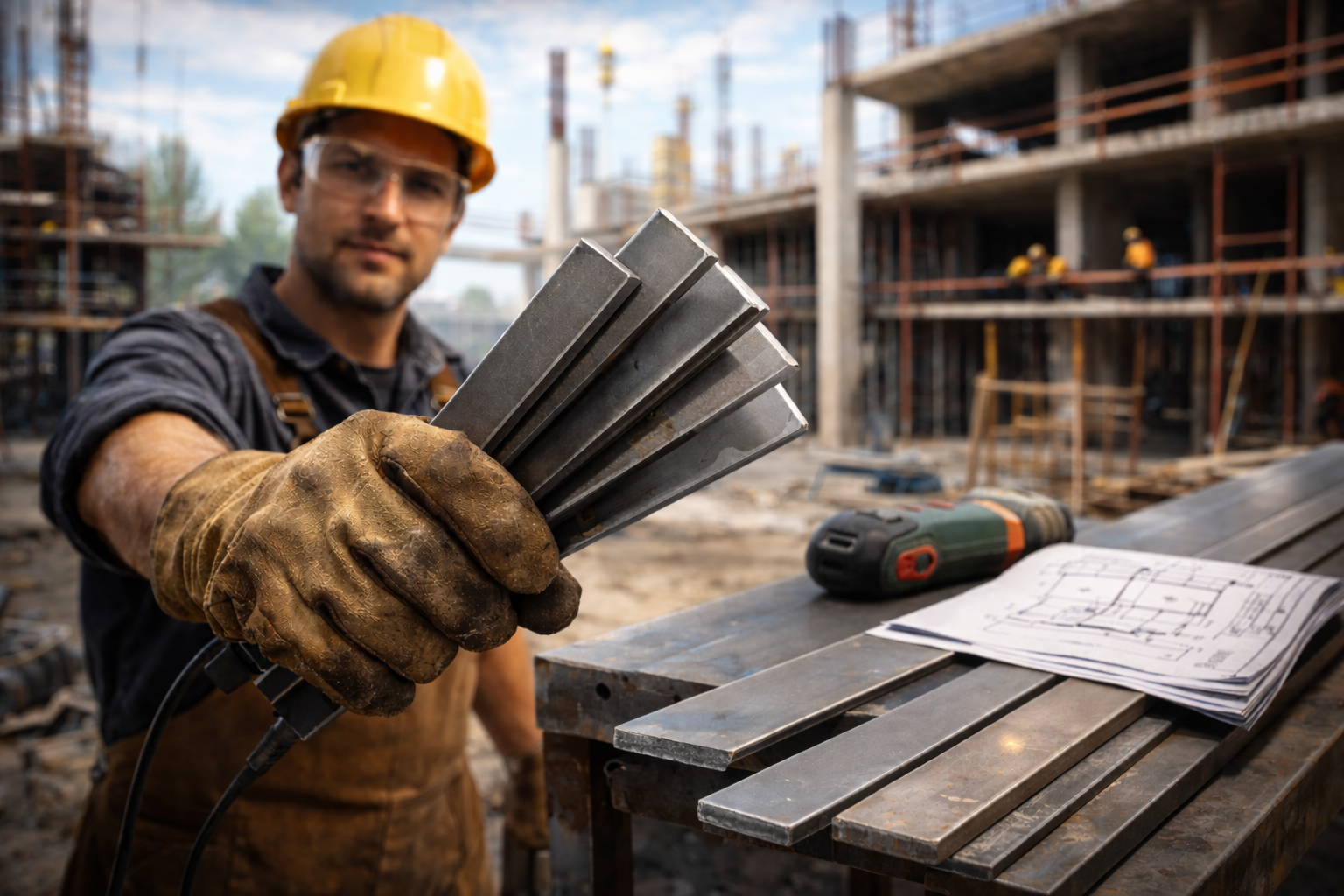
Flat bars are one of the most widely used steel products in construction and fabrication. Simple in shape yet highly versatile, flat bars deliver the combination builders and fabricators want most: strength, durability, and easy workability. Because they’re straightforward to cut, drill, weld, and form, flat bars show up everywhere—from structural reinforcement in building frames to brackets and supports in custom metalwork.
Whether you’re working on a residential build, an industrial framework, or a fabrication job that needs clean, reliable steel stock, understanding flat bars helps you choose the right material—and avoid overspending on features you don’t need.
What Are Flat Bars?
Flat bars are long, rectangular sections of steel with flat faces and either sharp or slightly rounded edges. They’re typically manufactured through:
- Hot rolling (common for general construction): produces durable, cost-effective bars with standard tolerances
- Cold drawing (often used for precision fabrication): creates a smoother finish and tighter dimensional accuracy
Because of their simple profile, flat bars are often used as reinforcement, mounting stock, connection plates, or custom-fabricated components.
Common Dimensions
Flat bars are available in a wide range of sizes to suit everything from light fabrication to heavy structural support.
- Width: 10 mm to 300 mm
- Thickness: 3 mm to 25 mm
- Standard length: commonly 6 meters (custom cut lengths are often available)
Choosing the right size depends on load demands, span length, connection method, and how the flat bar integrates into the larger structure.
Why Flat Bars Are So Popular in Construction
Flat bars are a “go-to” material because they’re:
- Strong for their size and can reinforce frames without adding bulky members
- Easy to fabricate, making them ideal for onsite modifications
- Versatile, useful in both structural and decorative builds
- Cost-effective, especially in mild steel grades
- Compatible with common connection methods (welding, bolting, riveting)
In many applications, flat bars function like the “link” between larger structural members—providing support at joints, distributing loads, or strengthening corners and edges.
Types of Flat Bars Used in Construction
Not all flat bars perform the same. The best choice depends on your environment, corrosion exposure, and structural requirements.
1. Mild Steel Flat Bars
Mild steel is the most common option because it’s affordable, weldable, and widely stocked.
Best for:
- General construction
- Indoor frameworks and supports
- Fabrication projects where corrosion exposure is limited (or where coating is applied)
Why it’s popular:
- Easy to cut and weld
- Budget-friendly
- Suitable for a wide range of applications
2. Stainless Steel Flat Bars
Stainless flat bars are used when corrosion resistance is critical—especially where steel will be exposed to water, humidity, chemicals, or frequent cleaning.
Best for:
- Coastal builds
- Wet or humid environments
- Food-related or chemical-contact areas (application-dependent)
Benefits:
- Strong corrosion resistance
- Cleaner, low-maintenance finish
- Long-term durability with fewer coatings needed
3. Galvanized Flat Bars
Galvanized flat bars are coated with zinc to protect against rust. This is a common choice for outdoor structures where painted steel may wear down over time.
Best for:
- Outdoor frames
- Fencing, gates, supports
- Humid environments and exposed structural elements
Advantages:
- Improved rust resistance
- Suitable for long-term outdoor use
- Less maintenance than untreated steel in wet conditions
4. High-Strength Structural Steel Flat Bars
High-strength flat bars are designed for heavy-duty structural applications where greater load capacity is required.
Best for:
- Industrial projects
- Heavy supports and reinforcement
- Engineered frameworks where higher yield strength is required
Benefits:
- Greater load-bearing capacity
- Better performance in demanding structural designs
- Often specified for compliance with structural engineering requirements
Common Applications in Construction
Flat bars appear in countless construction scenarios because they can serve as both a primary component and a support element.
Structural Support
Used to reinforce and stabilize larger structures:
- Bracing members
- Frame reinforcement and stiffening
- Base plates and mounting plates
- Strengthening corners and joints
Flat bars can help distribute stress across a connection point, reducing weak spots and improving overall stability.
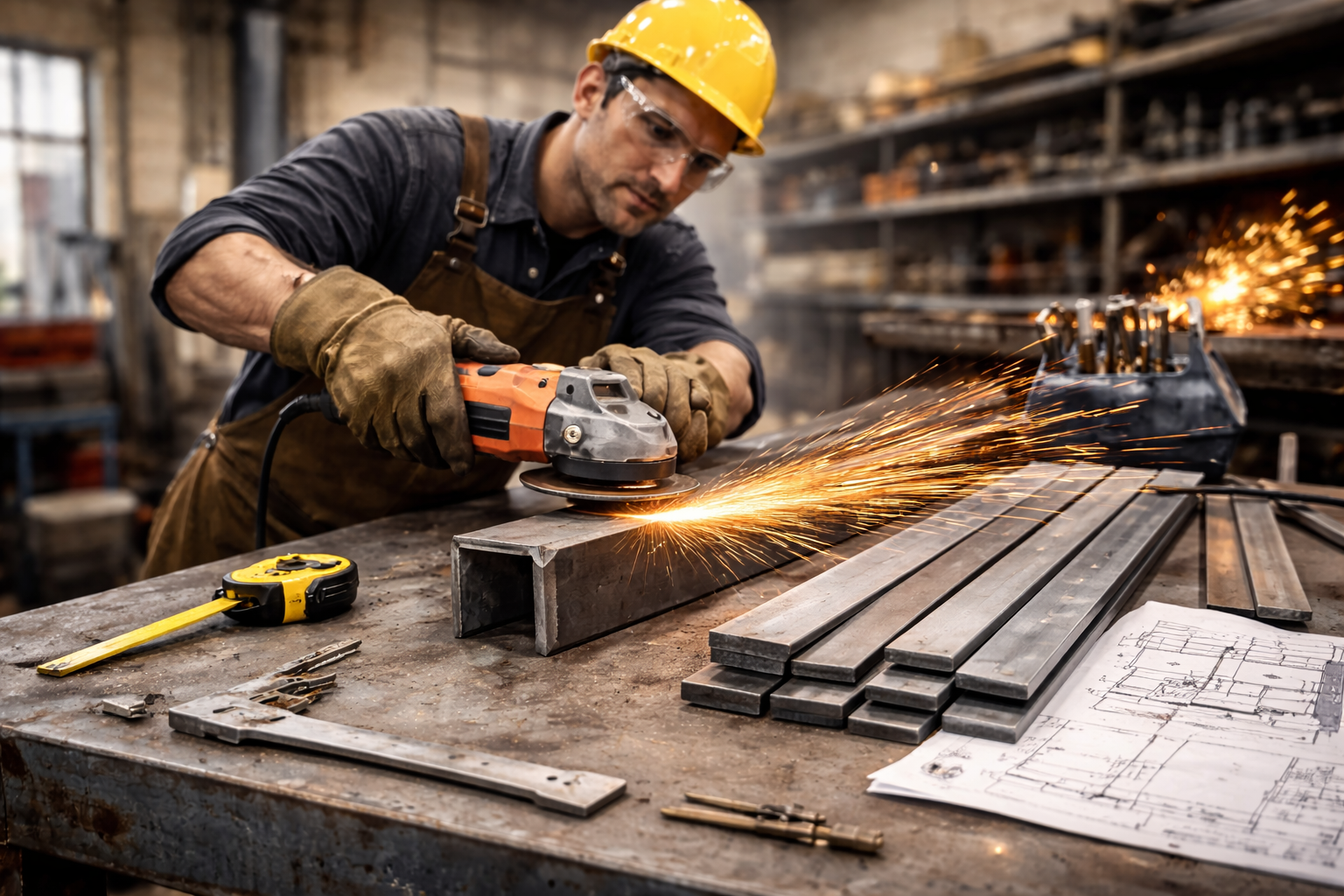
Fabrication and Metalwork
Flat bars are ideal for fabricated components that need clean, straight stock:
- Brackets and gussets
- Clamps and mounting straps
- Support beams and connectors
- Custom plates, frames, and reinforcements
Because they’re easy to drill and weld, flat bars are often the fastest path from design to finished part.
Architectural and Finishing Features
Flat bars are also popular for visible, functional elements:
- Railings and balustrades
- Gates and fencing
- Stair components and supports
- Decorative trims and frames
They offer a clean, minimalist look—especially when powder-coated, painted, or paired with timber or glass.
Infrastructure and Industrial Builds
Flat bars support large-scale projects where strength and reliability matter:
- Bridges (as part of assemblies, brackets, and reinforcing elements)
- Industrial sheds and structural frames
- Machinery foundations and mounts
- Equipment platforms and supports
In industrial settings, flat bars are often used for reinforcement and mounting because they can be sized precisely to the application.
Advantages of Using Flat Bars
Flat bars remain a staple in construction and fabrication because they offer performance without complexity. Their straightforward shape makes them adaptable to countless applications while maintaining strength and reliability.
1. Versatility
Flat bars can be used across structural, mechanical, and decorative applications. Whether reinforcing a frame, fabricating a bracket, or finishing an architectural feature, they integrate easily into different project types.
2. Easy Fabrication
One of the biggest advantages of flat bars is how simple they are to work with. They are easy to:
- Cut
- Drill
- Weld
- Bend
This reduces fabrication time and allows for quick modifications on-site or in the workshop.
3. High Strength-to-Weight Ratio
Flat bars provide dependable structural support without adding excessive bulk. Their slim rectangular profile allows for reinforcement in tight spaces while still offering solid load-bearing capacity when properly sized.
4. Cost-Effective
Compared to more complex steel sections, flat bars are generally more affordable. Their standardized production and broad availability help keep costs manageable for both small and large projects.
5. Wide Availability
Flat bars are stocked in a wide range of:
- Grades
- Thicknesses
- Widths
- Finishes
This availability makes sourcing easier and helps keep projects on schedule.
Flat Bars vs Other Steel Sections
Each steel section has its own purpose. Flat bars are often selected when a flat mounting or reinforcing surface is required.
| Feature | Flat Bars | Angle Steel | Square Bars |
|---|---|---|---|
| Shape | Rectangular | L-shaped | Square |
| Primary Use | General support & fabrication | Structural framing & bracing | Shafts & machining |
| Ease of Welding | High | High | Moderate |
Flat bars are particularly useful when you need a clean, flat surface for mounting plates, reinforcement strips, connectors, or brackets.
Factors to Consider Before Buying
Choosing the right flat bar ensures structural performance and long-term durability. Before purchasing, evaluate:
- Load-bearing requirements – Determine expected stress and structural role
- Environmental conditions – Indoor, outdoor, coastal, or industrial exposure
- Steel grade certification – Confirm compliance with project specifications
- Thickness and width – Ensure adequate strength and stiffness
- Surface finish – Raw, galvanized, painted, or stainless
- Compliance with local building codes – Especially for structural applications
For load-critical or engineered projects, consulting a structural engineer is strongly recommended to confirm appropriate sizing and grade selection.
Corrosion Protection Options
Like most steel products, flat bars benefit from proper corrosion protection—especially in outdoor or high-moisture environments.
Common protection methods include:
- Hot-dip galvanizing – Zinc coating for strong, long-term rust resistance
- Anti-rust paint coatings – Cost-effective barrier protection
- Powder coating – Durable, decorative finish with added protection
- Stainless steel manufacturing – Built-in corrosion resistance
Selecting the appropriate protection method significantly extends service life and reduces maintenance costs.
Maintenance Tips
Routine care helps preserve structural integrity and appearance.
To ensure long-term durability:
- Inspect periodically for rust or coating damage
- Reapply protective coatings when necessary
- Keep surfaces clean and free from debris buildup
- Address scratches or exposed metal promptly
Preventive maintenance is far more cost-effective than major structural repairs.
Pricing Factors
The cost of flat bars depends on several variables:
- Steel grade (mild, structural, stainless)
- Thickness and width
- Surface treatment or coating
- Current steel market prices
- Order quantity
Bulk orders often reduce the per-unit cost, particularly for larger construction or industrial projects.
Final Thoughts
Flat bars are a fundamental component in construction because of their strength, simplicity, and adaptability. From structural reinforcement and bracing to architectural and fabrication uses, they play a vital role across industries.
Selecting the correct size, grade, and protective finish ensures durability, cost efficiency, and structural reliability.
Flat bars may be simple in design — but their impact on construction is significant.
Source Quality Flat Bars for Your Next Project
If you’re looking for reliable steel supply for construction or fabrication, Super Steel Australia offers a wide range of flat bars in various grades, sizes, and finishes to suit your project needs.
Explore available options or request a quote today!