
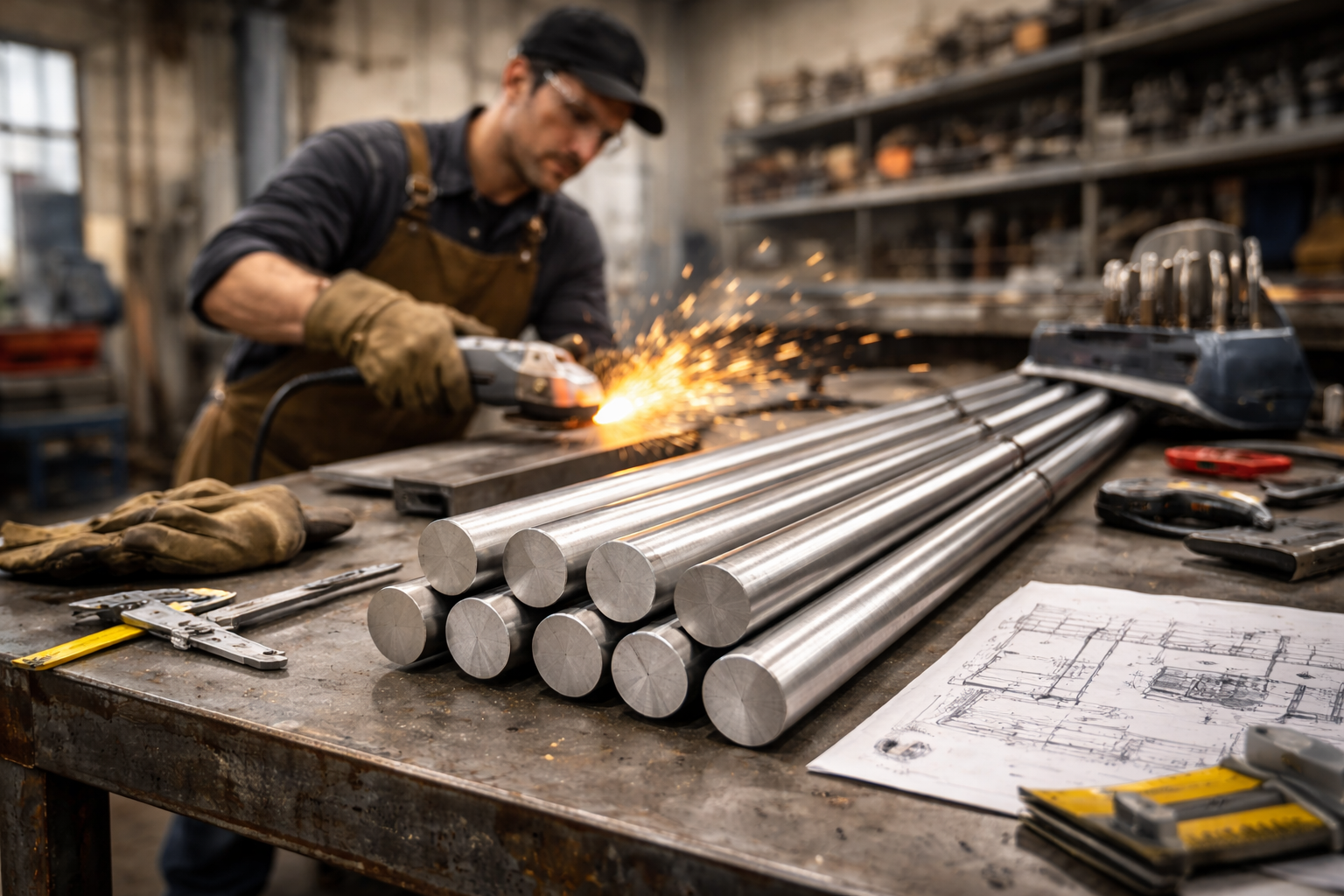
Round bars are among the most versatile steel products used in construction, engineering, fabrication, and manufacturing. Their solid cylindrical shape provides consistent strength, making them a reliable choice for welded assemblies, machined parts, support rods, shafts, pins, and structural components.
Whether you’re building frameworks, machining components, or reinforcing assemblies, choosing the right round bar helps ensure your project performs properly without unnecessary cost.
What Are Round Bars?
Round bars are solid cylindrical metal rods produced through processes such as hot rolling, cold rolling, or forging. They are available in different diameters, grades, and finishes to suit general fabrication, structural support, and machining applications.
For a broader overview of steel options, see this guide to different steel types for your projects.
Typical Specifications
- Diameter: commonly 6 mm to 300 mm+, depending on application
- Standard length: often 6 metres or 12 metres, with cut-to-length options available
- Surface finish: black, bright, polished, coated, or galvanised
Round bars may be made from mild steel, carbon steel, stainless steel, alloy steel, or galvanised steel depending on strength, machining, and corrosion-resistance requirements.
Why Round Bars Are Used So Often
The cylindrical shape of round bar is simple but highly practical. It provides uniform strength across the section, performs well under axial loading, and is easy to cut, weld, drill, turn, and thread depending on the grade.
Round bars are commonly used for shafts, pins, axles, fasteners, supports, bracing, and custom fabricated parts. For more fabrication guidance, read this round bar fabrication and structural applications guide.
Types of Round Bars
1. Mild Steel Round Bars
Mild steel round bars are a cost-effective option for general fabrication and construction. They are easy to cut, weld, and work with, making them suitable for frames, bracing, supports, and non-critical shafts.
If you’re comparing material types, this guide on mild steel vs carbon steel can help clarify the differences.
2. Hot Dip Galvanised Round Bars
Hot dip galvanised round bars are used where outdoor durability and corrosion protection are important. The zinc coating helps protect the steel from moisture exposure, making it suitable for outdoor structures, fencing, rural builds, and exposed support components.
For more detail, see this guide to hot dip round bars in construction.
3. Alloy Steel Round Bars
Alloy steel round bars are designed for higher strength, toughness, and wear resistance. They are often used in heavy-duty shafts, machinery parts, industrial components, and engineered assemblies where standard mild steel may not be enough.
4. Bright Bars
Bright bars are cold-finished round bars with tighter tolerances and smoother surfaces. They are often used for precision machining, threaded rods, turned components, bushings, pins, and tight-fit assemblies.
Common Applications
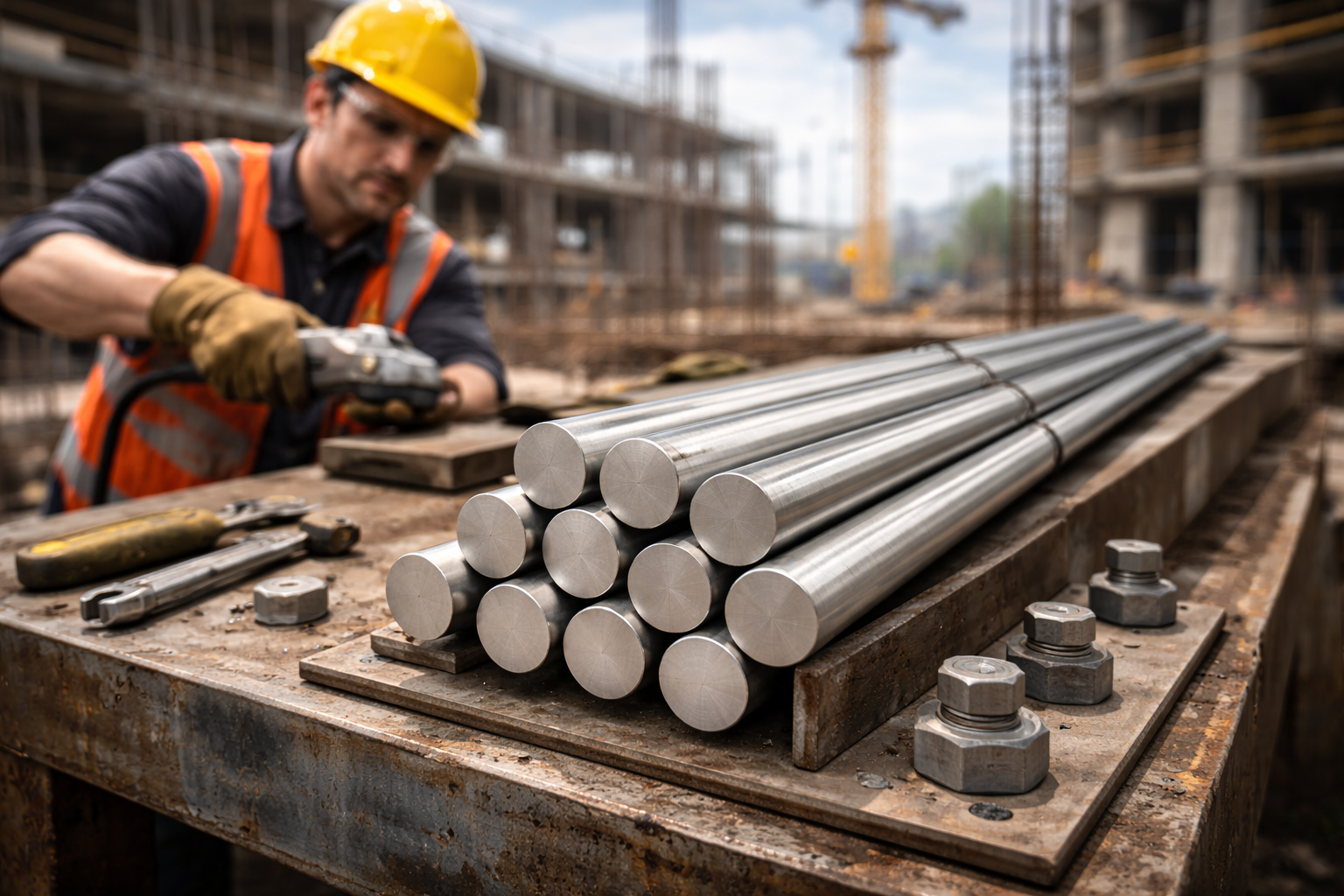
Round bars are used across many industries because they combine strength, workability, and versatility. In construction, they are often used for support rods, tie rods, bracing, anchoring, and reinforcement work. In fabrication, they are used for shafts, bolts, threaded rods, fasteners, grills, and railings.
They are also widely used in manufacturing for machine parts, automotive components, tools, pins, axles, and rotating parts. For concrete-related reinforcement, you may also want to compare round bar with reinforcing bar.
Round Bars vs Other Steel Bars
| Feature | Round Bars | Flat Bars | Equal Angle |
|---|---|---|---|
| Shape | Cylindrical | Rectangular | L-shaped |
| Best For | Shafts, pins, supports, machining | Bracing, frames, plates, brackets | Frames, corners, supports, edging |
| Machining | Excellent | Moderate | Limited |
If round bar is not the right fit, you may also consider hot dip flat bar, equal angle steel, or other merchant bar products depending on the project.
Choosing the Right Round Bar
Selecting the correct round bar depends on load requirements, environmental exposure, machining needs, corrosion protection, and finish. Outdoor and rural projects may benefit from galvanised steel, while indoor fabrication may only require standard mild steel.
For rural applications, see Super Steel’s rural steel supply options and this guide to steel for farm and rural fencing.
Corrosion Protection Options
Round bars used outdoors, near moisture, or in exposed environments should be protected against corrosion. Common options include galvanising, powder coating, painting, or selecting a corrosion-resistant steel grade.
Hot dip galvanised steel is a practical option for many outdoor builds. You can learn more in this guide to hot dip galvanised steel for outdoor projects.
Maintenance Tips
To extend the service life of round bars, inspect them regularly for rust, surface damage, or coating breakdown. Keep exposed steel clean and dry where possible, and reapply protective coatings when needed. Addressing minor corrosion early is more cost-effective than replacing damaged steel later.
Final Thoughts
Round bars remain a fundamental steel product for construction, fabrication, infrastructure, and manufacturing. Their strength, durability, and machining suitability make them a dependable choice for both structural and mechanical applications.
By selecting the right grade, diameter, finish, and corrosion protection, you can improve project performance and long-term durability.
Source Quality Round Bars for Your Project
Super Steel Australia supplies a wide range of steel products, including round bar, hot dip galvanised round bar, and other merchant bar options for construction, fabrication, and rural applications.